
Diseases
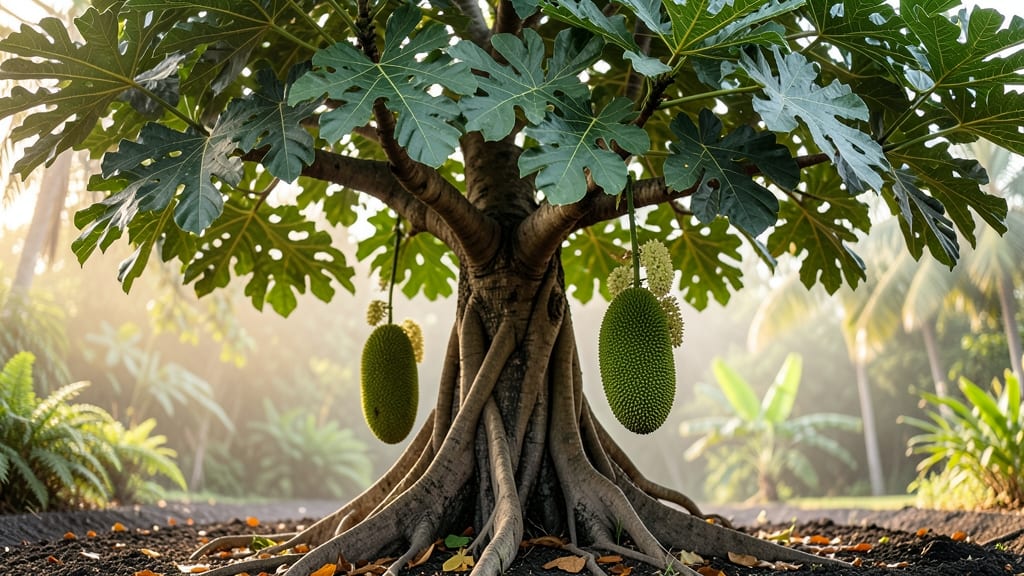
Jackfruit is the world’s largest tree-borne fruit, prized for its sweet, fibrous flesh that tastes like a tropical blend of pineapple, banana, and mango. This hardwood tree thrives in humid climates, producing enormous, spiky pods that can reach up to 80 pounds in weight.
This tropical giant isn't just impressive in size—its versatility in the kitchen makes it a star. 🌿 While many know it as a meat substitute, traditional uses in Southeast Asia include sweet curries and desserts made from ripe fruit.
The unripe version, with its dense, fibrous texture, mimics pulled pork perfectly, but its roots go deeper than plant-based diets. In nature, jackfruit trees grow up to 80 feet tall, with leaves that can span 3 feet wide, making them a true jungle giant.
What's fascinating is how the fruit develops: it starts as a massive inflorescence that attracts bats and insects for pollination, eventually transforming into those iconic spiky pods. 🌟 The tree's rapid growth—up to 5 feet per year—means gardeners can enjoy harvests within just 3-4 years of planting.
Whether you're growing it in containers or backyard gardens, jackfruit rewards patience with both beauty and bounty.
💡 In This Article
- Jackfruit Tree Growth and Botanical Characteristics
- Culinary Uses of Jackfruit Beyond Meat Substitutes
Jackfruit tree growth and botanical characteristics
The jackfruit tree (Artocarpus heterophyllus) originates from the Western Ghats of India but thrives across tropical regions worldwide, with ideal conditions in areas receiving 60-100 inches of rainfall annually.
This deciduous tree grows with remarkable speed—up to 5 feet per year—reaching heights of 60-80 feet at maturity, with trunks that can span 10 feet in diameter.
Its massive, glossy leaves are compound, featuring 7-9 leaflets that can stretch up to 2 feet long, creating a dense canopy that provides shade and habitat for wildlife.
The tree's most striking feature is its inflorescence, a massive, fleshy flower cluster that can weigh 20-40 pounds before transforming into fruit.
This structure attracts bats and insects for pollination, a critical step in fruit development. 🌿 What's fascinating is how the tree's roots spread extensively—sometimes up to 50 feet wide—to support its massive size. The bark is thick and deeply grooved, providing natural protection against pests and environmental stressors.
Jackfruit trees are typically propagated from seeds, which germinate within 2-3 weeks when planted in warm, humid conditions. Young trees produce fruit within 3-4 years, but full productivity occurs around 7-10 years.
The tree's rapid growth and hardiness make it an excellent choice for tropical and subtropical gardens, though it requires well-draining soil and protection from strong winds. In colder climates, it can be grown in containers and brought indoors during winter.
Botanically, jackfruit belongs to the mulberry family (Moraceae), sharing traits with breadfruit and figs. Its fruit develops from a single flower, making it a syncarp—a fused fruit structure that contributes to its impressive size.
The tree's ability to fix nitrogen in the soil also makes it beneficial for companion planting in tropical ecosystems. 🌱
One unique adaptation is the tree's response to drought: it sheds leaves to conserve water, a survival mechanism that allows it to endure dry periods. This characteristic makes jackfruit trees resilient in regions with seasonal rainfall fluctuations.
The tree's compound leaves also maximize sunlight capture, supporting its rapid growth and high fruit production.
For home gardeners, understanding these growth patterns helps in planning. Planting jackfruit trees near other tropical species creates a mutually beneficial microclimate, while their shade can protect smaller plants from intense sunlight.
The tree's extensive root system also improves soil structure over time, making it a valuable addition to any tropical garden.