
Trees
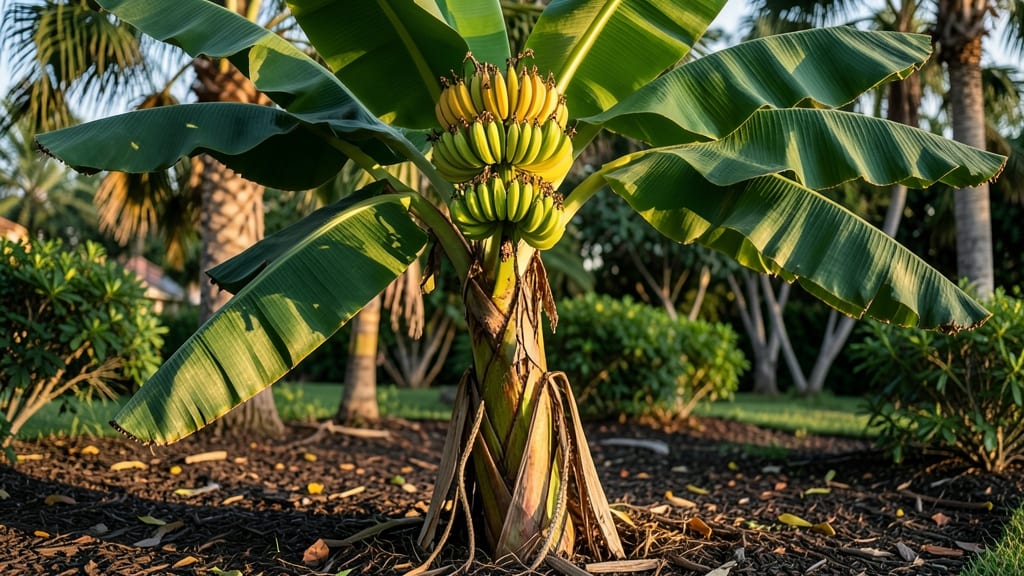
Banana trees produce fruit once every 12-24 months, but the timing depends on their variety, care, and growing conditions—so if you’re waiting for that first bunch, patience (and the right approach) is key.
If you’ve ever dreamed of harvesting your own bananas, understanding your banana tree’s fruiting cycle is the first step to success—because these tropical giants don’t produce fruit on a predictable schedule like apples or oranges.
Some varieties, like the Dwarf Cavendish, fruit annually, while others, such as the Red Dacca, may take two years between harvests. Climate, soil health, and even how much you prune can shift that timeline by months.
Below, I’ll break down the three stages of fruiting, what affects how often your 🍌 banana tree bears fruit, and the simple care tweaks that could turn a once-in-a-lifetime harvest into a yearly treat.
Banana tree fruiting cycle: 3 key stages and their timelines
Banana trees follow a fascinating three-stage fruiting cycle that can feel unpredictable to new growers. Unlike annual crops, these tropical giants produce fruit in distinct phases—each lasting weeks to months—before the tree naturally declines. Understanding these stages helps you time care properly and maximize your harvest potential.
The cycle begins with flower emergence, a dramatic event where a massive pseudo-stem unfurls into a towering flower spike. This stage reveals whether your tree will fruit at all, as some varieties bloom but never set fruit.
The timeline varies by climate and variety, but most tropical banana trees complete the full cycle in 9-12 months.
Here’s the breakdown of each stage, including what to expect and how to support your tree:
The flower emergence stage is your first clue about the tree’s fruiting intentions. When the pseudo-stem splits and reveals a purple flower spike, increase watering to 2 gallons per week and switch to a high-potassium fertilizer (like 6-10-10) to support fruit development.
This spike can grow up to 15 feet tall, so stake it if needed to prevent damage.
During fruit development (3-6 months), the tree’s energy shifts entirely to growing the bananas. You’ll notice the leaves at the base yellowing—this is normal as nutrients move upward.
Reduce nitrogen fertilizer to prevent leafy growth at the expense of fruit. Watch for banana aphids or fruit borers, which can ruin bunches if unchecked.
The final stage, maturation and harvest, is when your patience pays off. Bananas typically take 2-4 months to reach full color and ripeness. Harvest when the bunch turns yellow or brown (depending on variety) and the fruit feels slightly soft when pressed.
Cut the stalk 1-2 inches above the base to avoid damaging the tree.
After harvest, the mother plant usually dies, but don’t panic—suckers (baby plants) at the base will replace it. These can take 6-12 months to mature enough to fruit themselves.
In tropical climates, banana trees may produce 2-3 cycles per year, while cooler zones see one cycle annually or none if frost occurs.
Pro tip: Keep a gardening journal to track your tree’s cycle. Note when flowers appear, how long fruit takes to develop, and any care adjustments that worked. This helps you predict future harvests and refine your approach for next time.
🍌
What affects how often banana trees produce fruit
Banana trees are famously unpredictable when it comes to fruiting—some produce annually, others biennially, and a few only once in their lifetime. The key lies in understanding the environmental triggers and care practices that influence their reproductive cycle.
Unlike perennial fruit trees, bananas are monocarpic, meaning they often die after fruiting, though some varieties can recover or regrow from the base.
Your banana tree’s fruiting frequency depends on a mix of genetics, climate conditions, and growing practices. For example, dwarf Cavendish varieties typically fruit year-round in tropical climates, while plantain trees may take 12-18 months between harvests.
Even the same variety can behave differently based on where you live and how you care for it.
Here are the top 5 factors that determine how often your banana tree produces fruit, ranked by impact:
Dwarf Cavendish fruits year-round in ideal conditions, while Musa balbisiana types may fruit once every 2-3 years. Choose a variety matched to your climate for consistent harvests.
Bananas thrive in 70-85°F year-round. Cold snaps below 50°F shock the tree, halting fruiting. In Zone 9b or warmer, expect multiple flushes annually.
Consistent moisture and high-potassium fertilizer (6-10-10) trigger flowering. Drought stress or nutrient deficiencies delay or prevent fruiting entirely.
Bananas need 12+ hours of daylight to flower. Short-day varieties (like Red Dacca) fruit in response to shorter days, while long-day types may skip cycles in winter.
Removing suckers redirects energy to fruiting, while pests like banana weevils or diseases (e.g., Panama wilt) can kill the tree before it fruits.
To encourage frequent fruiting, start by selecting a climate-matched variety and maintaining consistent care. For example, in Zone 10, I’ve seen Dwarf Cavendish trees produce 3-4 bunches per year with regular fertilizing and watering.
In contrast, a plantain tree in Zone 9b might only fruit once every 18 months without supplemental heat during winter.
One common misconception is that banana trees fruit only once before dying. While monocarpic varieties (like Musa acuminata) do this, many commercial hybrids (e.g., Grand Naine) can regrow from the base and produce again in 6-12 months.
The trick is to protect the corm and provide optimal conditions for regrowth.
If your banana tree isn’t fruiting, check these 3 critical factors first: light levels, soil fertility, and temperature stability.
For instance, I once had a Lady Finger banana tree that refused to flower until I moved it to a sunnier spot and added compost tea to the soil. Within 3 months, it produced its first bunch!
🌱