
Companion Plants
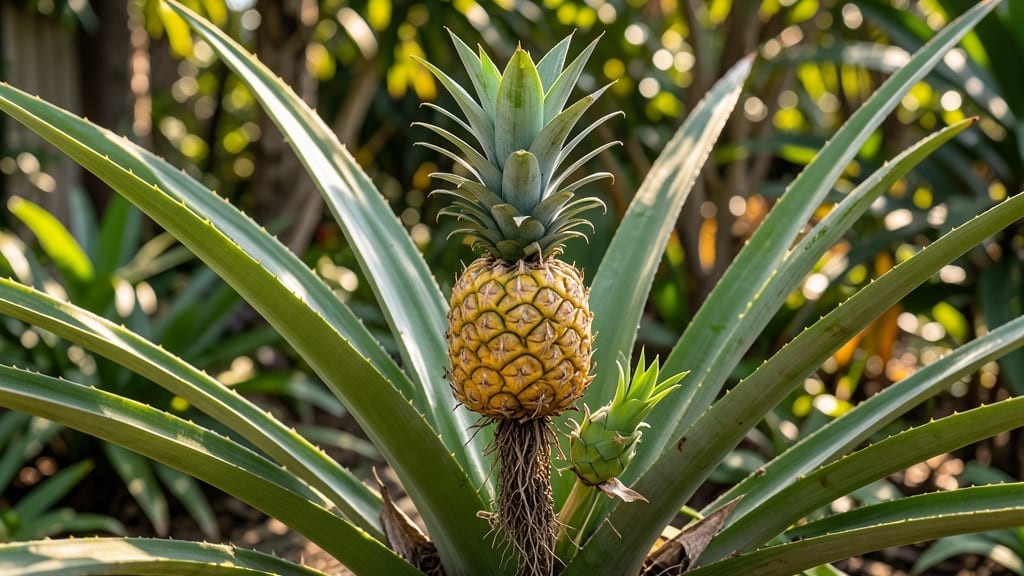
Pineapple plants die after fruiting because they redirect all their energy to producing the fruit, leaving the mother plant depleted. However, small offshoots called pups grow at the base, which you can separate and replant to grow new pineapple plants.
This life cycle is all about energy trade-offs. 🌱 The plant prioritizes fruit development over its own survival, which is why the leaves yellow and the stem weakens after fruiting. But don't worry—the pups (those little baby plants) are your ticket to more pineapples!
They're genetically identical to the mother plant, so they'll produce fruit too once mature. I've found that separating pups when they're about 1/3 the size of the mother plant gives them the best start. Just make sure each pup has its own set of roots before transplanting.
Here's a pro tip: the bigger the mother plant, the more pups it'll produce, meaning more future harvests. 🌟 If you're growing pineapples in containers, choose larger pots (at least 12 inches deep) to accommodate the pups.
And remember, it takes about 18-24 months for a pup to mature enough to fruit—patience is key!
💡 In This Article
- Why Pineapple Plants Die After Producing Fruit
- How to Harvest and Grow New Pineapple Plants from Offsets
Why pineapple plants die after producing fruit
The pineapple plant's life cycle is a dramatic example of nature's energy trade-offs. When a pineapple plant begins fruiting, it shifts nearly all its metabolic resources from leaf and root growth to fruit development.
This process is driven by hormonal changes, particularly an increase in auxin production in the fruit, which signals the plant to prioritize sugar production and cell expansion in the developing fruit over its own vegetative structures. 🌱 The mother plant's leaves may turn yellow and the stem weakens because the plant is essentially starving itself to nourish the fruit.
This biological mechanism is similar to how annual plants allocate energy in their final year. The pineapple plant's lifespan is typically 2-3 years from planting to fruiting, with the final 6-12 months dedicated entirely to fruit production.
During this time, the plant's roots shrink by up to 50% as nutrients are redirected to the fruit, which can weigh between 1-4 pounds depending on the variety. The energy cost is so high that the mother plant becomes senescent—its cells begin programmed death to ensure the fruit reaches maturity.
What makes this process fascinating is the plant's evolutionary strategy. Pineapples are monocarpic, meaning they fruit just once in their lifetime. However, they've developed a clever workaround: producing pups (offsets) around their base. These pups are genetically identical clones that can grow into independent plants.
The mother plant's decline is actually a survival mechanism for the species, ensuring that while one individual dies, its genetic legacy continues through the pups. 💫 This is why you'll often see 3-6 pups growing around a fruiting pineapple plant.
The hormonal shift isn't the only factor at play. The developing fruit also produces ethylene gas, a plant hormone that accelerates ripening and triggers senescence in the mother plant. This chemical signal works similarly to how fruit in your kitchen speeds up the ripening of nearby produce.
In the wild, this ensures the fruit is ready to disperse its seeds at the optimal time, even if it means sacrificing the parent plant.
Interestingly, this life cycle mirrors what happens with other monocarpic plants like bamboo, which flowers and dies after decades of vegetative growth. The key difference is that pineapples produce their "next generation" of plants simultaneously with the fruit, creating a built-in propagation system.
This dual-purpose approach explains why pineapple plants are so effective at spreading—even as the mother plant declines, the pups are already establishing themselves.
For gardeners, understanding this process helps explain why you shouldn't expect another fruit from the same plant. The energy investment is one-way, but the pups provide a renewable source of new plants.
With proper care, each pup can produce its own fruit cycle in 18-24 months, creating a continuous harvest system. 🌿 The trade-off is clear: one plant's death leads to multiple new opportunities.