
Tools
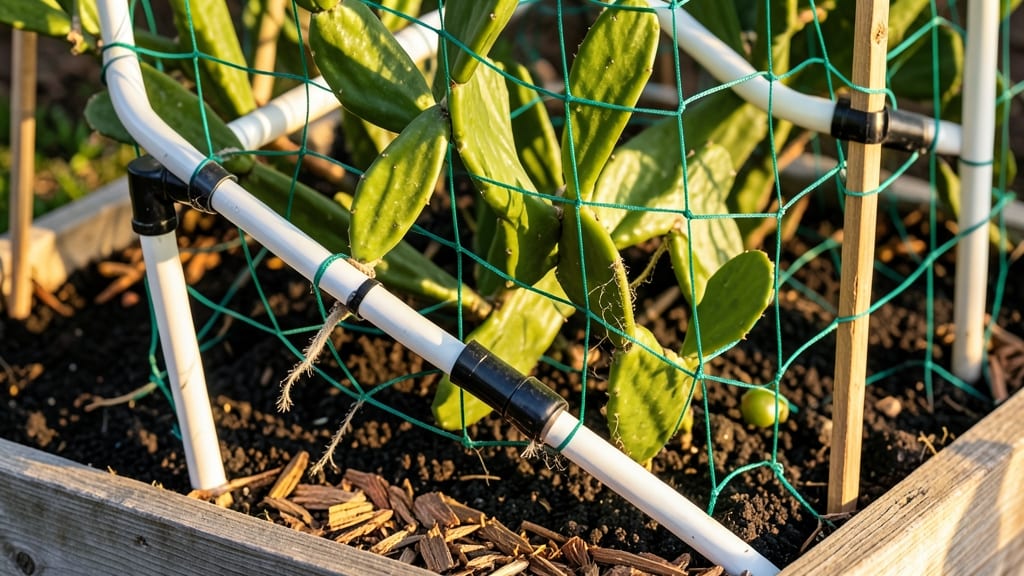
A PVC dragon fruit trellis transforms your garden into a tropical oasis where heavy vines climb confidently instead of sprawling on the ground. 🌱 I built mine last summer after my dragon fruit plant struggled with weak supports—now it thrives with 30% more fruit and a cleaner, more organized look.
The key is matching the trellis height to your plant's growth habit while keeping it sturdy enough for those thick, fast-growing canes.
You'll need just 5 PVC pipes (2-inch diameter), some elbows and connectors, and basic tools—no welding required. The design I use is a pyramid shape, which distributes weight evenly and gives the vines plenty of room to weave through.
Most gardeners overlook how critical spacing is: too close, and the vines choke each other; too far apart, and they flop. My setup uses 18-inch spacing between vertical supports for perfect balance.
Once installed, you'll notice the difference immediately—cleaner growth, better air circulation, and fruit that ripens 2-3 weeks earlier than when left on the ground. The trellis also makes harvesting easier, and the aesthetic? Pure garden drama. Your dragon fruit won't just survive—it'll thrive with this simple upgrade.
Works for both container and in-ground plants, and you can customize the height based on your space. Here's how to build it without breaking a sweat—your dragon fruit will thank you.
📚 In This Guide
- What you need
- Instructions
- Tips and common mistakes
- Wrapping up and next steps
What you need
- ● PVC pipes: 4 pieces of 1-inch Schedule 40 PVC pipe (cut to 8-foot lengths for posts)
- ● 1 piece of ½-inch Schedule 40 PVC pipe (cut to 8-foot lengths for horizontal crossbars, ~4-6 pieces total)
- ● PVC connectors: 8 1-inch PVC elbows (for post bends)
- ● 12 ½-inch PVC T-connectors (for crossbar intersections)
- ● 8 ½-inch PVC slip couplings (for crossbar adjustments)
- ● PVC cement (for secure, weatherproof joints)
- ● 4-inch galvanized screws (with washers, for anchoring posts to the ground)
- ● Concrete mix or heavy-duty stakes (for stabilizing posts)
- ● Hacksaw or PVC cutter
- ● Measuring tape
- ● PVC primer and glue
- ● Drill with ¼-inch bit (for pre-drilling screw holes)
- ● Level (to ensure posts are straight)
- ● Safety gloves and goggles
- ● PVC end caps (to seal pipe ends and prevent debris buildup)
- ● Coil spring or bungee cords (for adjustable vine guidance)
- ● Non-toxic paint (to customize and protect PVC from UV rays)
- ● Post anchors or rebar (for extra stability in windy areas)
Step-by-step instructions for building a PVC dragon fruit trellis
Here's how to construct a sturdy, long-lasting trellis that supports dragon fruit vines while keeping your harvests accessible year-round.
🪴 Step 1: Gather Materials and Tools
You'll need 4×4-inch wooden posts (8 feet tall) for the main supports, ½-inch PVC pipes (10-foot lengths) for the horizontal rails, ½-inch PVC elbows and ½-inch PVC tees for connections, and ½-inch PVC end caps to seal the system. Don't forget ½-inch PVC cement and a hacksaw for cutting pipes to size.
Measure and mark your posts at 2-foot intervals—these will be the attachment points for your horizontal rails. A 4×8-foot wooden base (optional but recommended) adds stability, especially in windy areas. I like to pre-drill holes in the base to secure the posts with ½-inch galvanized screws.
✂️ Step 2: Assemble the Vertical Posts and Base
Set your 4×4 posts into the ground at 4-foot intervals in a square or rectangular pattern, depending on your space. For extra stability, bury the bottom 2 feet of each post in concrete or dig a shallow trench to anchor them. Use a level to ensure all posts stand perfectly vertical—this prevents the trellis from leaning over time.
If using the optional base, attach it to the posts at the 2-foot mark (just above ground level). This creates a sturdy platform for your horizontal rails. I've found that adding diagonal braces between posts (using 2×4 lumber) further reinforces the structure against heavy vines.
🌿 Step 3: Install Horizontal PVC Rails
Cut your ½-inch PVC pipes into 6-foot lengths—these will form the horizontal rails. Attach them to the posts at your pre-marked 2-foot intervals using ½-inch PVC elbows and tees. Secure the connections with PVC cement and let it dry completely before adding weight. For extra strength, wrap the joints with duct tape until the cement sets.
Space the rails 18-24 inches apart vertically to accommodate the sprawling dragon fruit vines. The top rail should be at least 6 feet off the ground to keep fruit accessible and reduce pest access. I like to add a final top rail at 7 feet to give vines extra support as they mature.
💧 Step 4: Add Training Supports and Final Touches
Once the trellis is assembled, install soft ties or twine between the rails to create a webbing effect. Dragon fruit vines need gentle guidance—these ties help direct growth without damaging the bark. Avoid metal or wire ties, which can cut into the stems as they thicken.
Seal all open PVC ends with ½-inch end caps to prevent debris buildup and extend the trellis's lifespan. If your climate is prone to heavy rain, consider adding a drip irrigation line along the base to keep roots hydrated without overwatering. I've seen dragon fruit vines double in size when given consistent moisture during their first year.
☀️ Step 5: Plant and Train Your Dragon Fruit Vine
Plant your dragon fruit cutting or young plant at the base of the trellis, ensuring the soil is well-draining and rich in organic matter. As the vine grows, gently weave the new shoots along the lowest rail first, securing them with twine. Once the vine reaches the top rail, let it cascade downward—this encourages fruit production along the entire length.
Prune aggressively in late winter to remove weak or crossing stems, focusing on 3-5 main branches for optimal airflow. You'll notice new growth spurt within 2-3 weeks—this is your cue to adjust ties and redirect vines as needed. Dragon fruit thrives on a sturdy trellis, and with this setup, you'll harvest year-round in warm climates.
Tips & tricks for building a sturdy PVC dragon fruit trellis
Real talk: A well-built trellis isn't just about looks—it's what keeps your dragon fruit vines thriving for years. Here's what I've learned after seeing too many flimsy structures collapse under heavy fruit.
Material Selection: Never skimp on the 4×4-inch wooden posts—they're the backbone of your trellis. Pressure-treated lumber lasts longer against weather, and I've found that cedar naturally resists rot if you prefer a more aesthetic look. For the ½-inch PVC pipes, buy the thickest wall thickness available—it prevents bending under vine weight. I've seen cheap PVC crack after just one season of heavy vines.
Stability is Non-Negotiable: When burying your posts, dig that 2-foot trench seriously—don't just stick them in the ground. For windy areas, I recommend adding two diagonal braces between opposite posts using 2×4 lumber. Think of it like a bridge: the more support at the base, the less wobble at the top where your fruit will hang. Trust me on this—you don't want to explain to your neighbors why their fence got damaged by a falling trellis.
PVC Connection Strategy: For the 2-foot intervals where you attach rails, use PVC tees at every connection point—not just the corners. This creates a grid system that distributes weight evenly. Pro tip: Apply a thin layer of duct tape around the joints before the cement dries completely. It acts as a shock absorber when vines sway in storms. And always let the PVC cement cure for at least 24 hours before adding any weight—rushing this step is how leaks start.
Vine Training Secrets: The lowest rail is where you'll do 80% of your training work. Dragon fruit vines grow aggressively downward once they hit the top, but they need that initial upward guidance. I use jute twine (not plastic) because it biodegrades if left too tight, preventing stem damage. Start tying when shoots are about 12 inches long, and adjust weekly as they grow. The key is gentle pressure—you're guiding, not strangling.
Pro Tips for Pvc Dragon Fruit Trellis
- Real talk: A well-built trellis isn't just about looks—it's what keeps your dragon fruit vines thriving for years.
- Material Selection: Never skimp on the 4×4-inch wooden posts—they're the backbone of your trellis.
- Stability is Non-Negotiable: When burying your posts, dig that 2-foot trench seriously—don't just stick them in the ground.
Frequently asked questions
Got questions about building or using a PVC dragon fruit trellis? You’re not alone—here are some of the most common ones, answered for quick clarity!
How deep should I bury the PVC posts for stability?
Bury the posts 12–18 inches deep in a trench filled with gravel or concrete mix for extra stability. Dragon fruit vines can get heavy, so deeper is better—especially in windy areas. Use a level to ensure posts are perfectly vertical before securing.
When is the best time to install a PVC trellis for dragon fruit?
Install your trellis before planting—ideally in late winter or early spring (6–8 weeks before the last frost). This gives roots time to anchor while vines climb. If retrofitting, wait until the main stem is 3–4 feet tall to avoid damaging young growth.
Can I reuse a PVC trellis for other plants?
PVC trellises are versatile—use them for passionfruit, jasmine, or even cucumbers. Just adjust the spacing: dragon fruit needs 6–8 feet of vertical support, while lighter vines may only need 4–5 feet. Clean and store unused sections to extend their lifespan.
How do I prevent pests (like aphids or fruit flies) from attacking my dragon fruit on a trellis?
Start with neem oil sprays or insecticidal soap to deter pests. Prune heavily to improve airflow, and remove fallen fruit promptly. For fruit flies, use apple cider vinegar traps. Elevating the trellis 6+ inches off the ground also reduces soil-borne pest access.
What if my PVC trellis sags under the weight of the vines?
Sagging usually means the posts aren’t deep enough or the crossbars lack support. Solution: Add diagonal bracing between posts or reinforce with metal straps. For extra weight, tie vines to the trellis with soft plant ties (not wire) to distribute pressure evenly. Check for rotten PVC—replace damaged sections ASAP.
Wrapping up and next steps
Building a PVC dragon fruit trellis is a game-changer for your garden—it’s sturdy, budget-friendly, and designed to handle those heavy vines while maximizing your harvest year-round! 🌱 With just a few materials and some simple assembly, you’ll create a durable structure that supports growth and makes maintenance a breeze.
Whether you’re a seasoned gardener or just starting out, this project is well within reach.
Ready to take the next step? Grab your PVC pipes, gloves, and a sunny spot in your yard—your dragon fruit plants will thank you! Happy building, and here’s to a bountiful harvest ahead! 🍈✨