
Diseases
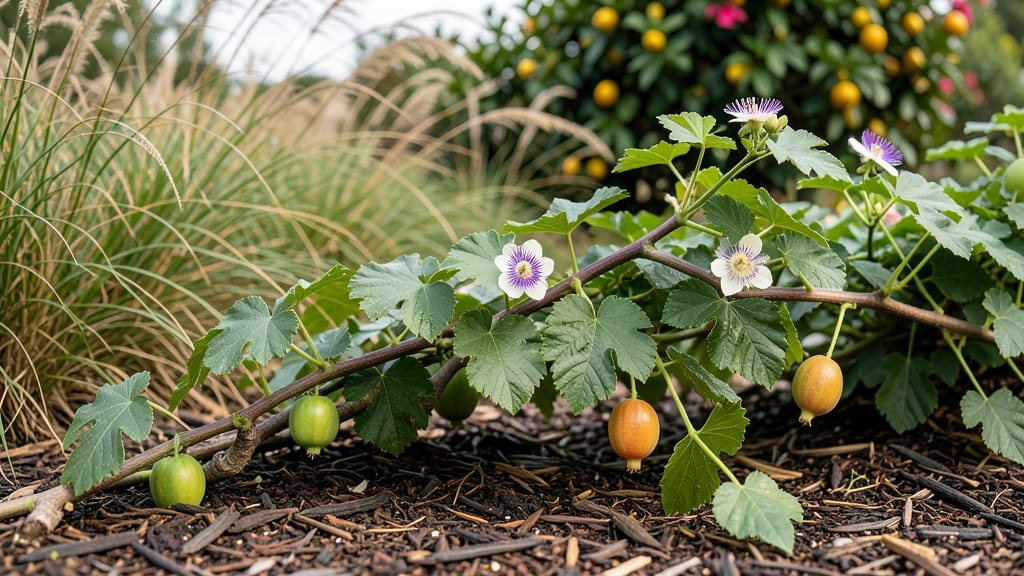
Passionfruit is not a citrus fruit—it belongs to the Passifloraceae family, known for its tropical vines and unique floral structure, while citrus fruits come from the Rutaceae family. Their flavors differ, with passionfruit offering tart-sweet pulp and citrus providing bright, acidic zest.
This botanical distinction matters because it affects everything from taste to growing conditions.
Passionfruit thrives in warm climates with 10-12 hours of sunlight daily, while citrus trees adapt better to slightly cooler zones. 🌿 The passionflower's intricate, crown-shaped bloom is another dead giveaway—citrus flowers are simpler, with just five petals.
I've seen gardeners confuse the two when planning tropical fruit mixes, leading to poor pollination or stunted growth.
What's especially interesting is how these families evolved separately. Citrus developed in Southeast Asia, while passionfruit originated in South America, adapting to different soil types and rainfall patterns. This explains why passionfruit vines need more frequent watering than citrus trees, which store moisture better in their thicker bark.
💡 In This Article
- Botanical Classification: Passionfruit vs Citrus Families
- Growing Passionfruit: Climate and Care Tips for Gardeners
Botanical classification: passionfruit vs citrus families
The key difference between passionfruit and citrus lies in their botanical families. Passionfruit belongs to the Passifloraceae family, while citrus fruits like oranges and lemons come from the Rutaceae family.
These families are completely distinct, with passionfruit's ancestors tracing back to South America and citrus evolving in Southeast Asia. 🌏 The genetic divergence is so significant that even their leaf structures differ—passionfruit leaves are deeply lobed, while citrus leaves are smooth and elliptical.
Let's look at the floral structure, which is one of the most striking differences. Passionfruit flowers are complex, with a crown of filament-like structures radiating from the center, giving them a unique, almost alien appearance. Citrus flowers, by contrast, have a simpler five-petaled structure with no crown.
This floral architecture affects pollination—passionfruit relies on bees and butterflies, while citrus often self-pollinates. The fruit's development also differs: passionfruit grows from a single ovary, while citrus fruits develop from multiple fused ovaries.
The chemical composition of their fruits further separates them. Passionfruit contains passionol, a compound that contributes to its tart-sweet flavor, while citrus fruits are rich in limonoids and flavonoids that give them their bright, acidic profiles.
The pulp texture is another clue—passionfruit's pulp is gelatinous and granular, while citrus pulp is more fibrous and segmented. These differences explain why passionfruit pairs well with tropical desserts, while citrus shines in savory dishes and bright dressings.
Gardeners often confuse these fruits because they both thrive in warm climates, but their care requirements differ significantly. Passionfruit vines need trellises or supports to grow vertically, while citrus trees grow as shrubs or small trees.
The vines also produce thorny tendrils, a trait absent in citrus. These physical differences make them easy to distinguish once you know what to look for in the garden or grocery store.
One fascinating aspect is how these families interact with pests. Passionfruit is susceptible to passionfruit woodiness virus, while citrus faces threats like citrus greening disease. Their distinct vulnerabilities mean gardeners must use family-specific pest controls.
For example, neem oil works for both, but copper-based sprays are more effective against citrus pests, while passionfruit benefits from biological controls like ladybugs for aphids.
Even their seeds tell a story. Passionfruit contains black, hard seeds that are edible when cooked, while citrus seeds are typically white and soft, often removed before consumption.
This seed difference reflects their evolutionary paths—passionfruit seeds are adapted for bird dispersal, while citrus seeds rely on water or animal consumption for spread. 🌱