
Trees
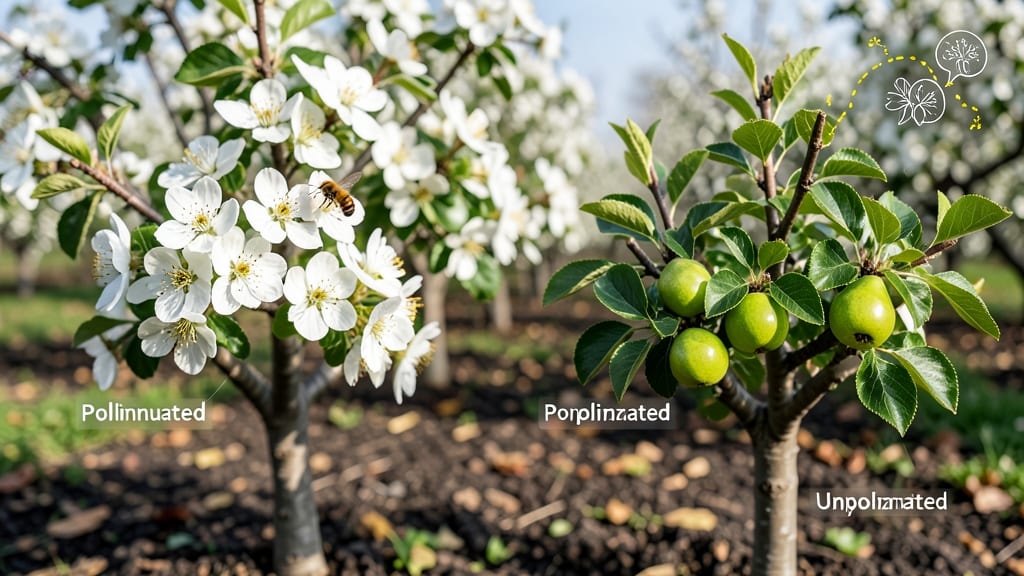
You'll need two pear trees to produce fruit for most varieties, since they rely on cross-pollination between different trees for fruit development—but some self-fertile types can bear fruit alone when conditions are ideal.
Pear trees typically depend on bees or wind to transfer pollen between different trees, which triggers fruit formation. 🌸 The lack of a second tree often results in poor fruit set or small, misshapen pears, even if flowers bloom.
However, certain varieties like Bartlett or Anjou have evolved to pollinate themselves, making them perfect for small gardens or urban spaces where planting two trees isn't practical. The key difference lies in their genetic makeup—self-fertile types produce compatible pollen, while others require genetic diversity for successful pollination.
For home gardeners, this means doing a bit of research before planting.
If space is limited, opting for a self-fertile variety ensures you won't miss out on harvests. 🍐 Just remember that even self-fertile trees may produce slightly better yields with a compatible partner nearby, thanks to the natural boost from cross-pollination.
💡 In This Article
- How Cross-Pollination Works in Pear Trees
- Best Self-Fertile Pear Varieties for Solo Planting
How cross-pollination works in pear trees
Pear trees rely on a delicate biological process called cross-pollination, where pollen from one tree's flowers fertilizes another's. This transfer typically happens through bees, wind, or other pollinators during the tree's flowering period, which usually occurs in late spring (April-May in most temperate zones).
When successful, this process triggers fruit development—without it, flowers may drop off without forming pears. The reason? Most pear varieties have incompatible pollen within the same tree, meaning their own pollen won't trigger fruit set.
Bees play a critical role by collecting pollen from one tree's flowers and depositing it on another's stigma (the receptive part of the flower).
This cross-transfer ensures genetic diversity, which strengthens the resulting fruit's resistance to diseases and pests. 🌸 For example, a Bartlett pear tree left alone will produce flowers but may yield only 5-10% of normal fruit because its pollen lacks the necessary genetic triggers for full fruit development.
The pollen from a compatible tree (like an Anjou) contains different proteins that "unlock" the fruit-forming process in Bartlett's flowers.
Temperature and weather conditions also influence pollination success. Ideal pollination occurs when daytime temperatures hover around 60-75°F with light winds—perfect for bee activity. Rain or cold snaps (below 50°F) can disrupt the process, reducing fruit set.
This is why some gardeners in colder climates plant two different varieties close together to maximize pollination chances, even if one variety is technically self-fertile. The combined pollen from both trees often results in a 20-30% higher yield than a single self-fertile tree alone.
Not all pear trees follow this rule, though. Some varieties, like Kieffer or Moonglow, are self-fertile, meaning their pollen can fertilize their own flowers. These trees produce fruit without needing a partner, thanks to genetic mutations that create compatible pollen.
The key difference lies in their flower structure: self-fertile varieties have flowers that release pollen at the same time their stigmas are receptive, while cross-pollinated varieties have staggered timing that requires external pollen.
Even self-fertile trees can benefit from cross-pollination. While they may produce fruit alone, introducing a second variety nearby can boost yields by 15-25% due to increased genetic diversity.
For instance, a Bartlett tree (self-fertile) paired with a Seckel (also self-fertile but with different pollen proteins) can produce larger, more uniform fruit. This is why many commercial orchards plant multiple varieties in close proximity, even if some are self-fertile.
Understanding this process helps gardeners make informed planting decisions. If space is limited, choosing a self-fertile variety ensures fruit production, but pairing it with a compatible tree can significantly improve harvest quality and quantity.
The trade-off? More trees mean more maintenance, but the reward is often worth it for serious fruit enthusiasts. 🍐