
Fertilization
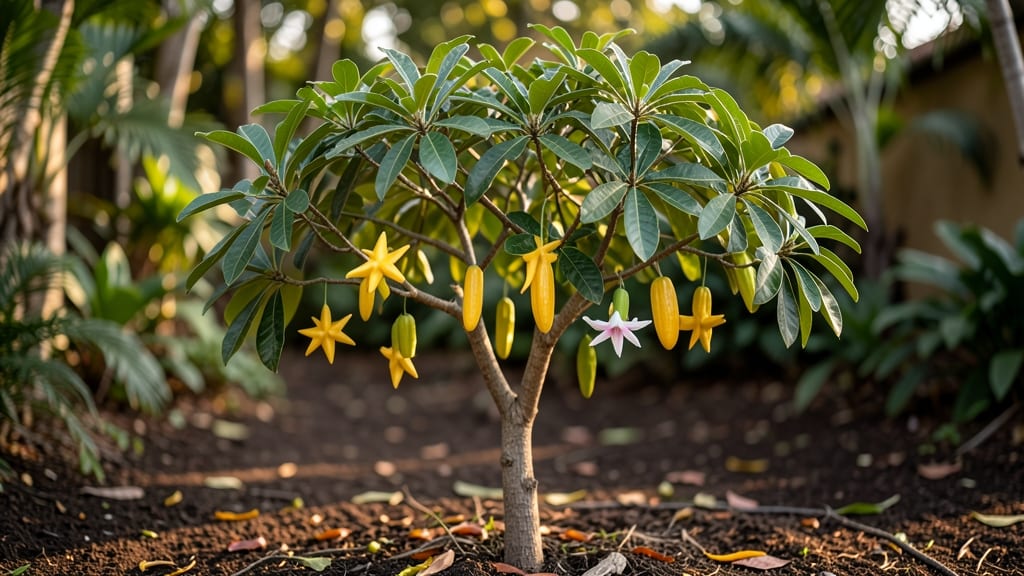
Star fruit grows best in tropical and subtropical regions, including Southeast Asia, the Caribbean, Florida, and parts of Central and South America where warm temperatures and high humidity create ideal growing conditions year-round.
Star fruit, also known as carambola, needs consistent warmth and humidity to thrive—think of places like Thailand, Vietnam, and Mexico where temperatures rarely dip below 60°F. 🌴 These regions provide the perfect balance of heat and moisture, allowing the fruit to develop its signature sweet-tart flavor.
Florida's subtropical climate has also made it a key U.S. producer, with commercial farms dotting the state's southern areas.
The fruit is highly sensitive to frost, which is why it struggles in temperate zones. Even brief cold snaps can damage the trees, so growers in marginal climates often use protective coverings.
Well-draining, slightly acidic soil with a pH between 5.5 and 6.5 further enhances growth, making these tropical environments nearly ideal for commercial cultivation.
💡 In This Article
- Optimal Climate and Soil Conditions for Star Fruit Cultivation
- Top Star Fruit Growing Regions Around the World
Optimal climate and soil conditions for star fruit cultivation
Star fruit trees, scientifically known as Averrhoa carambola, are tropical powerhouses that demand specific environmental conditions to flourish. The ideal temperature range for growth sits between 75°F and 85°F—anything below 60°F triggers stress responses, while prolonged exposure to 40°F or lower can kill the plant.
Frost is particularly devastating, causing cell damage that manifests as brown, leathery patches on leaves and fruit. This frost sensitivity explains why star fruit cultivation is confined to frost-free zones.
The fruit's development also hinges on humidity levels, with optimal growth occurring at 70-80% relative humidity. Low humidity (50% or below) leads to smaller fruits and thicker, less palatable skins.
In regions like Florida, growers often use overhead misting systems during dry seasons to maintain these moisture levels. Rainfall patterns matter too—star fruit trees prefer 40-60 inches annually, distributed evenly throughout the year, but they're sensitive to waterlogging, which can rot roots.
Soil composition plays a critical role in determining yield and fruit quality. Star fruit thrives in well-draining, slightly acidic soils with a pH between 5.5 and 6.5. Sandy loam soils are ideal because they allow excess water to drain while retaining enough moisture for deep root systems.
In heavier clay soils, growers often amend with organic matter like compost or peat moss to improve aeration. The roots need oxygen to function properly, and compacted soil can stunt growth or lead to nutrient deficiencies that show up as yellowing leaves or poor fruit set.
Nutrient availability is another key factor. Star fruit trees are heavy feeders, requiring balanced fertilization with nitrogen, phosphorus, and potassium. A typical fertilizer blend might contain 10-10-10 NPK ratio, applied in three split doses during the growing season.
Micronutrients like zinc and magnesium are equally important—deficiencies often appear as interveinal chlorosis (yellowing between leaf veins) or reduced fruit size. Growers in regions like Vietnam often use organic fertilizers derived from composted manure or green manure crops to maintain soil fertility naturally.
One fascinating adaptation of star fruit trees is their ability to flower and fruit year-round in tropical climates, though production peaks during warmer months.
In subtropical regions like Florida, trees may enter a brief dormancy during cooler winter months, but this doesn't match the true dormancy seen in temperate fruit trees.
The continuous growth cycle means star fruit can be harvested every 6-8 weeks once trees reach maturity (typically 3-5 years after planting), providing a steady supply of fruit.
Understanding these climate and soil requirements helps explain why star fruit cultivation is concentrated in specific regions. The combination of warm temperatures, high humidity, and well-draining soils creates the perfect storm for optimal growth and fruit development.
Without these conditions, even the hardiest star fruit trees struggle to produce the sweet, tangy fruit we know and love. 💫