
Container Gardens
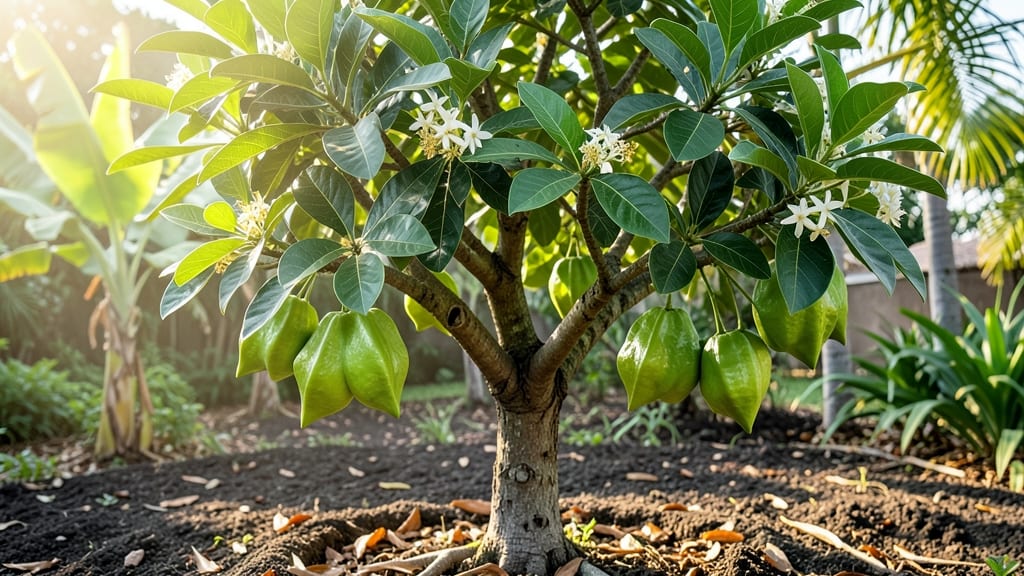
Star fruit grows best in USDA hardiness zones 10 through 12, where warm temperatures stay above 30°F year-round. Plant in early spring after frost danger passes, using well-draining soil and full sun exposure for strongest growth.
This tropical fruit demands warmth—any dip below 30°F can damage leaves or kill the tree, which is why zones 10-12 are non-negotiable. 🌞 Even in marginal zones like 9b, growers must use microclimate tricks (like container growing or frost blankets) to protect plants.
The soil needs to be slightly acidic (6.0-6.5 pH) and rich in organic matter, while companion plants like citrus or hibiscus help create the ideal humid microclimate.
For those outside these zones, container gardening becomes essential—move plants indoors during winter or grow them in greenhouses. Florida and California growers enjoy the best success, but even there, summer heat above 95°F can stress the tree, so afternoon shade helps maintain optimal conditions.
💡 In This Article
- USDA Hardiness Zones for Star Fruit Trees
- Best Planting Months and Soil Requirements
USDA hardiness zones for star fruit trees
The star fruit tree (Averrhoa carambola) is a tropical delight that absolutely refuses to tolerate cold. Its ideal range spans USDA zones 10 through 12, where winter temperatures never dip below 30°F.
This is because the tree's physiology is adapted to warm, humid conditions—its leaves contain water-storing cells that wilt and die when exposed to frost, a process called cold-induced desiccation.
Even brief exposure to 28°F can cause irreversible damage to the plant's vascular system, leading to blackened leaves and stunted growth.
Here's what happens when temperatures drop: the tree's cellular membranes rupture due to ice crystal formation, disrupting nutrient transport. In zone 9b, where winters occasionally reach 25°F, growers must use microclimate strategies like planting near south-facing walls or using frost blankets.
Container growing becomes essential in these areas—potted trees can be moved to protected spaces during cold snaps. The key temperature threshold is 32°F: below this, new growth stops, and the tree enters a survival mode that reduces fruit production for the next season.
What makes this particularly challenging is the tree's slow recovery. Unlike citrus trees that might bounce back from light frost, star fruit trees often produce smaller, misshapen fruits for up to two years after cold damage.
The tree's root system also suffers—roots exposed to below 40°F temperatures develop root rot more easily due to poor drainage in cold soils. This is why Florida's zone 10a (with winters around 30-35°F) is the northern limit where outdoor planting is feasible without constant protection.
For those in marginal zones, understanding heat tolerance is just as important. While the tree thrives in 75-85°F daytime temperatures, prolonged exposure above 95°F causes heat stress, visible as yellowing leaves and reduced flowering.
The tree's native habitat in Southeast Asia experiences monsoon seasons with high humidity—mimicking this with daily misting or mulching helps compensate for dry heat in places like Southern California's zone 11.
One surprising adaptation is the tree's ability to flower year-round in optimal conditions, but this requires consistent warmth. The flowers are highly sensitive to temperature fluctuations—below 65°F, they fail to pollinate properly, leading to fruit drop.
This is why growers in zone 10 often see better yields in spring and fall when temperatures are more stable. The tree's sweetest fruits develop when daytime highs are 80-85°F and nights stay above 60°F, creating the perfect balance for sugar accumulation.
For visual reference, imagine the star fruit tree's ideal range as a tropical belt that includes Hawaii, Puerto Rico, and coastal regions of Mexico. Even within this range, elevation matters—trees at 2,000 feet may experience cooler nights than those at sea level.
This is why microclimates become crucial: a 50-foot difference in elevation can mean a 5°F temperature difference, potentially pushing a zone 10a location into 9b territory during cold snaps.