
Fertilization
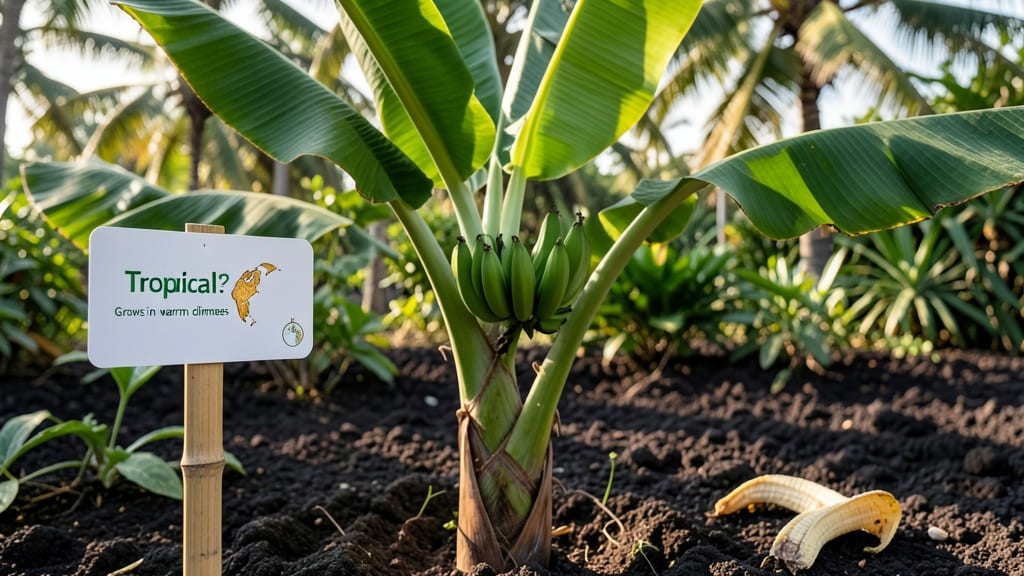
Yes, a banana is a tropical fruit botanically, thriving in Southeast Asia's warm, humid climates where it grows year-round. Its classification comes from its native habitat and the Musaceae family, even though modern farming now extends to subtropical regions.
A banana's tropical origins trace back to its need for 77–86°F temperatures and high humidity—conditions found in its native Southeast Asia. 🌿 The fruit's development process, called parthenocarpy (seedless growth), also aligns with tropical ecosystems.
While today's commercial farms stretch into subtropical zones like Costa Rica, these adaptations don't change the botanical classification.
What's fascinating is how bananas adapt: Cavendish varieties thrive in warmer subtropical areas, while plantains prefer true tropical climates. This flexibility explains why you'll find bananas in grocery stores worldwide, despite their tropical roots.
💡 In This Article
- Banana Botanical Classification: Why It’s Tropical
- Where Bananas Grow Today: Tropical vs Subtropical Regions
Banana botanical classification: why it’s tropical
The banana's tropical identity starts with its botanical family, Musaceae, which evolved specifically in Southeast Asia's equatorial climate. This family includes only two genera: Musa (bananas) and Ensete (false bananas).
The key adaptation is parthenocarpy—the fruit develops without fertilization, producing seedless bananas that thrive in tropical ecosystems where pollination is less critical. This process requires consistent warmth and humidity, making bananas fundamentally tropical in their reproductive strategy.
Climatically, bananas demand 77–86°F temperatures and 60–100 inches of annual rainfall—conditions found in Indonesia, Malaysia, and the Philippines, their ancestral homes.
The plants' large leaves (up to 8 feet long) maximize humidity retention, while their shallow root systems rely on frequent watering. 🌿 Even slight temperature drops below 60°F can stunt growth or cause fruit deformities, proving their tropical dependence.
Compare this to citrus trees, which tolerate 30–40°F ranges but still struggle outside subtropical zones.
What makes this classification fascinating is the banana's reproductive biology. Most tropical fruits rely on animal pollinators, but bananas developed asexual reproduction through vegetative propagation—using underground stems (rhizomes) to clone identical plants.
This adaptation ensures survival in dense, competitive tropical forests where seed dispersal is less reliable. The result? A fruit perfectly optimized for its native climate's stability and high biodiversity.
The confusion arises because modern agriculture has expanded banana cultivation into subtropical regions like Costa Rica and Ecuador. However, these areas still maintain consistent warmth year-round, with only slight seasonal variations.
The Cavendish variety, now dominant globally, was specifically bred for subtropical resilience, but it still requires protected microclimates and irrigation in cooler months. This adaptation doesn't change the botanical classification—it's like calling a cactus a desert plant even when grown in a greenhouse.
Here's the science behind the tropical requirement: bananas produce ethylene gas during ripening, which accelerates softening and sugar conversion.
This process works best in warm, humid conditions—below 55°F, ethylene production halts, leaving bananas hard and starchy. 🍌 This is why green bananas shipped to colder climates need controlled ripening chambers.
The tropical origin isn't just about where they grow; it's about the biochemical processes that define their development and flavor.
Consider this comparison: while mangoes (another tropical fruit) can survive in subtropical zones, their flavor and texture degrade without direct sunlight and high humidity**. Bananas, however, have evolved to be more adaptable within tropical/subtropical boundaries, which explains their global dominance.
The key takeaway? A banana's tropical classification isn't just about geography—it's about the entire biological system that evolved in those conditions.