
Pests
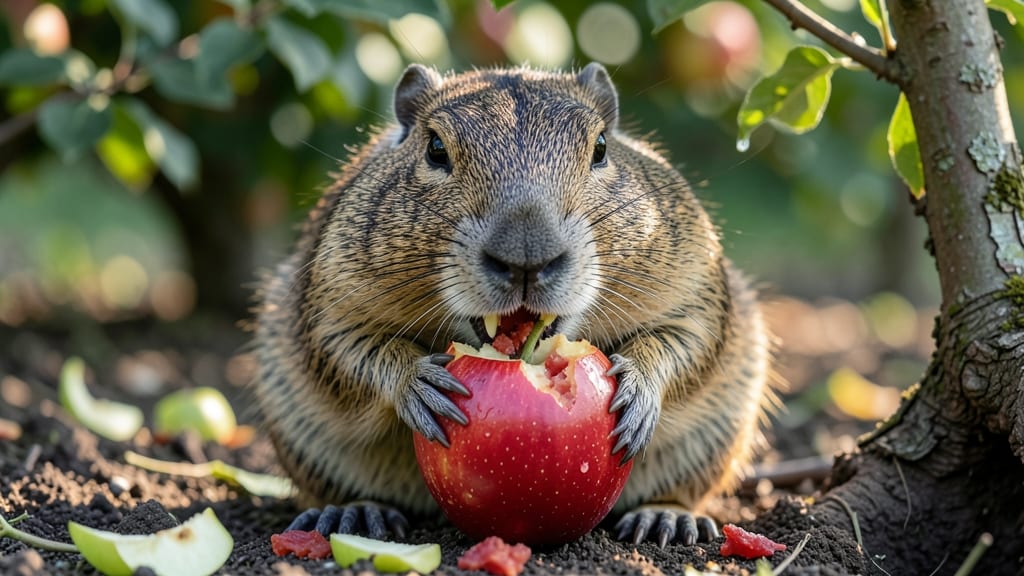
Groundhogs do eat fruit, but only in small quantities—berries, apples, and grapes are their occasional favorites. Their true diet centers on fibrous grasses, leaves, and vegetables, which provide the energy they need for burrowing and hibernation.
While groundhogs might snack on fruit when it's available, they're not fruit specialists. Their digestive systems are built for processing tough plant materials like clover, dandelions, and even tree bark. 🌱 This high-fiber diet helps them maintain steady energy levels, especially during hibernation when they rely on stored fat.
Interestingly, their burrowing behavior actually shapes their diet—digging requires strong jaw muscles, which they develop by chewing fibrous vegetation year-round.
For gardeners, this means protecting your berry bushes and fruit trees isn't just about fruit—it's about preventing damage to your entire landscape. Groundhogs will happily munch on young shoots and tender leaves if given the chance.
The key is understanding their true preferences: while they might take a few grapes or apples, their real target is the green, leafy growth that fuels their active lifestyle.
💡 In This Article
- Groundhog Diet Science: Why Vegetation Dominates Their Meals
- Fruit vs. Veggies: What Groundhogs Actually Prefer in Gardens
Groundhog diet science: why vegetation dominates their meals
Groundhogs evolved as herbivores with specialized digestive systems optimized for processing fibrous plant materials. Their long, muscular intestines (about 4-5 feet long) are designed to break down cellulose-rich foods like grasses, clover, and dandelions—plants that provide steady energy without requiring frequent meals.
This adaptation explains why they rarely turn to fruit as a primary food source, despite its sugar content. 🌿 Their digestive tract contains specialized bacteria that ferment fibrous plant matter, creating volatile fatty acids that fuel their bodies efficiently.
The key factor is nutritional balance. While fruit offers quick sugar energy, groundhogs need high-fiber, low-sugar foods to maintain their strong jaw muscles—critical for digging burrows (which can reach 20 feet deep) and gnawing through tough plant stems.
Their diet typically contains 80-90% vegetation, with grasses making up the largest portion. Studies show they consume about 1 pound of plant material daily in summer, shifting to roots and bark in winter when above-ground plants are scarce.
Seasonal availability plays a major role too. During spring and summer, when fruit is abundant, groundhogs might sample berries or fallen apples—but these make up only 5-10% of their diet.
The real reason they don't rely on fruit is digestive efficiency: fibrous plants provide long-lasting energy, while fruit's sugar content would cause rapid spikes and crashes in blood glucose levels. This would be problematic for an animal that needs consistent energy for both burrowing and hibernation preparation. 🐾
Interestingly, their burrowing behavior actually reinforces their plant-based diet. The physical demands of digging (which can take 2-3 weeks to complete a burrow system) require high calcium intake—found in leafy greens and grasses.
Fruit simply doesn't provide the necessary minerals in sufficient quantities. This ecological adaptation explains why you're more likely to find groundhog damage in vegetable gardens than orchards, despite their occasional fruit interest.
What most people don't realize is how their diet supports their hibernation strategy. Groundhogs store fat by consuming high-fiber foods that convert efficiently to body fat. The cellulose in plants breaks down slowly, allowing for gradual fat accumulation—a crucial adaptation for surviving 4-6 months of winter torpor.
Fruit, with its rapid digestion, wouldn't support this critical weight gain process. This physiological limitation explains why groundhogs will happily munch on your hostas or lettuce long before they show serious interest in your apple tree.
For gardeners, understanding this dietary science reveals why traditional fruit-based deterrents often fail. Groundhogs aren't attracted to fruit because they're fruit specialists—they're attracted to it because it's easy to eat when their preferred fibrous foods aren't available.
The real challenge is protecting the green, leafy plants** that make up their true dietary foundation. 🍃