
Fertilization
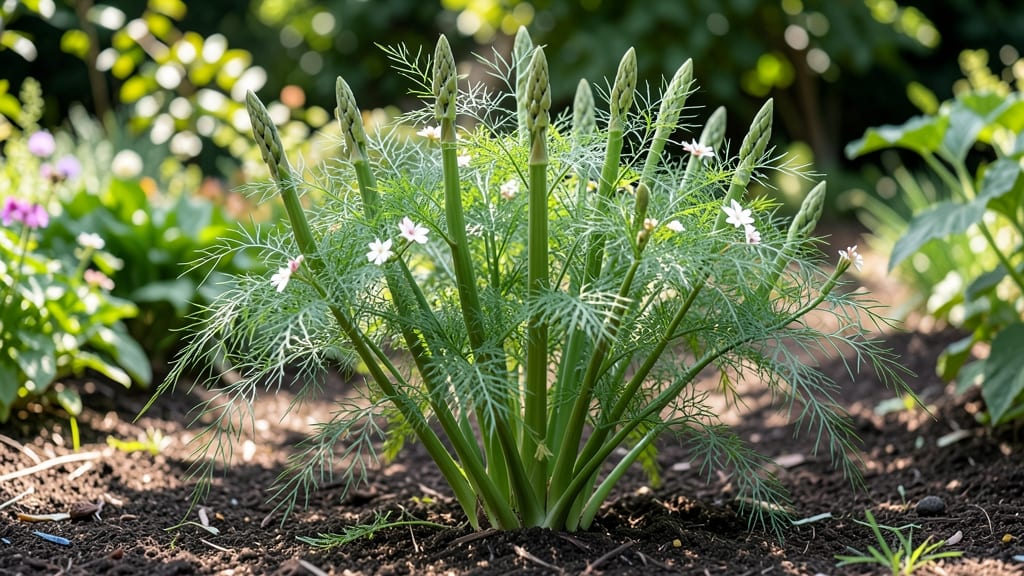
Asparagus is not a fruit—it’s a vegetable classified as a shoot from the plant’s perennial crown, harvested before the flower buds emerge. Botanically, fruits develop from flowers and contain seeds, while asparagus stems are edible vegetative growths with no reproductive function.
You’d be surprised how often people assume asparagus belongs in the fruit category—likely because it’s sweet when roasted or grilled. 🌱 But botanically, fruits are defined by their role in plant reproduction: they develop from flowers and contain seeds.
Asparagus, on the other hand, is a vegetative shoot harvested from the plant’s crown before flowering, making it a classic example of how culinary and scientific classifications don’t always align.
This distinction matters for gardeners too, since asparagus plants thrive when you focus on nurturing their crowns rather than fruit-bearing structures.
What’s fascinating is how this classification affects how we use asparagus in cooking. Because it’s a shoot, it’s packed with nutrients like folate and fiber—ideal for spring dishes.
Unlike fruits, which often ripen on the vine, asparagus is best harvested young for tenderness, which is why you’ll find peak seasonality in early spring. This also explains why asparagus doesn’t store well like many fruits—its structure isn’t designed for long-term preservation.
💡 In This Article
- Botanical Classification: Why Asparagus Isn’t a Fruit
- Culinary and Nutritional Benefits of Asparagus
Botanical classification: why asparagus isn’t a fruit
The key difference lies in asparagus’s role in plant reproduction. True fruits, like tomatoes or peppers, develop from fertilized flowers and contain seeds to propagate the species. Asparagus, however, is a vegetative shoot—a young, edible stem that grows from the plant’s underground crown (Asparagus officinalis).
This shoot emerges in spring as the plant prepares to flower, but gardeners harvest it before it reaches the flowering stage, ensuring tender, fibrous spears. 🌱
Botanically, asparagus is classified as a perennial herbaceous plant, meaning it lives for multiple years and produces shoots annually from the same crown. Unlike fruits, which develop from flowers, asparagus stems are purely vegetative growths.
The plant’s reproductive organs—the flowers and berries—appear later in the season, but these are rarely consumed. Even the small red berries that form after flowering are toxic if ingested, highlighting the stark contrast between asparagus’s edible shoots and true fruits.
This distinction is rooted in plant morphology. Fruits evolve from the ovary of a flower and contain seeds, while asparagus stems are part of the plant’s vegetative system, designed for growth rather than reproduction.
For example, a tomato is a fruit because it houses seeds inside its flesh, but asparagus spears are simply elongated stems with no reproductive function. This is why asparagus is grouped with other vegetables like broccoli or Brussels sprouts—all are edible plant parts that aren’t fruits.
What makes this even more interesting is how asparagus’s classification affects its growth cycle. The plant’s crown, a dense network of roots and shoots, stores energy to produce new spears each year. Unlike fruit-bearing plants, which focus energy on developing seeds, asparagus prioritizes shoot growth.
This is why gardeners often wait 2-3 years before harvesting asparagus—allowing the crown to establish a strong root system for sustained production.
The confusion likely stems from asparagus’s sweet, almost fruity flavor when cooked, especially when roasted or grilled. However, this is purely a culinary perception, not a botanical reality.
The sugars in asparagus caramelize during cooking, creating a sweetness that mimics some fruits, but the plant itself remains a vegetable by scientific standards. 💡
Consider this comparison: while a strawberry is a fruit (with seeds on its surface), asparagus is a shoot with no seeds or reproductive structures. This fundamental difference is why asparagus doesn’t behave like a fruit in storage—it wilts quickly when cut, unlike fruits that can ripen off the vine.
Understanding this helps gardeners and cooks alike appreciate asparagus’s unique place in both the garden and the kitchen.
For those curious about other "misclassified" plants, think of corn—botanically a grain (fruit), but culinary treated as a vegetable. Asparagus, however, is a clear-cut case of a vegetable shoot, not a fruit, and its classification is backed by decades of botanical research.