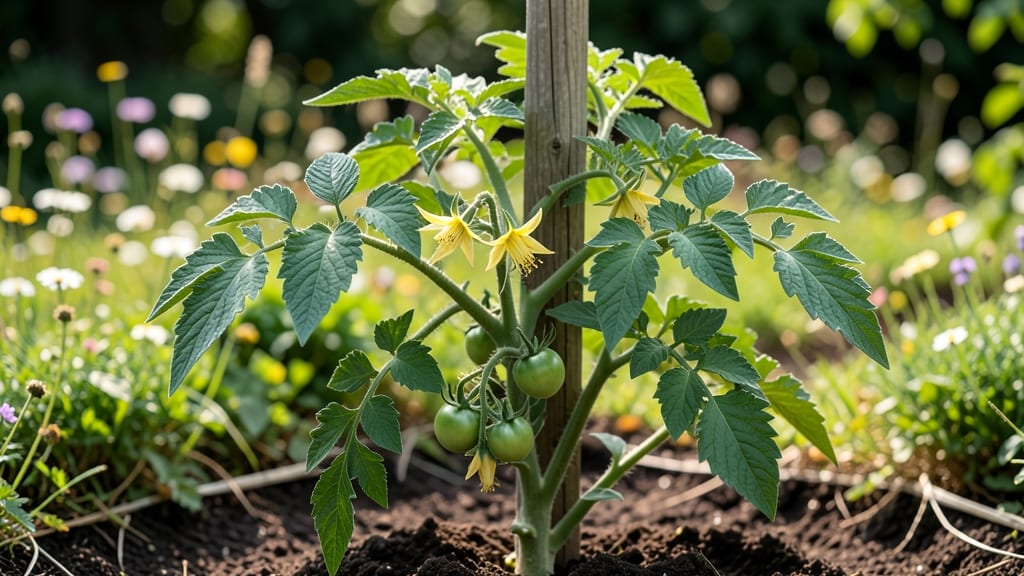
Tomatoes will start fruiting anywhere from 50 to 90 days after planting 🍅, but the exact timing depends on your variety, climate, and growing conditions.
Picture this: you’ve nurtured your seedlings through frost, cheered on the first blooms, and now you’re staring at those stubborn green tomatoes wondering, “Why haven’t they ripened yet?” The answer isn’t just about waiting—it’s about understanding the factors that speed up or stall fruiting.
Determinate varieties like ‘Roma’ might fruit in as little as 60 days, while indeterminate types like ‘Brandywine’ can take closer to 80 days—and that’s before accounting for heat waves, cool snaps, or poor pollination.
In Zone 6a, where spring nights linger chilly, fruiting can lag until July, even with perfect care.
Below, I’ll break down the exact timeline by variety, how temperature and sunlight play tricks on your plants, and the 5 signs that tell you fruiting is finally around the corner—plus how to troubleshoot delays before they happen.
Tomato fruiting timeline: exact days after planting by variety type
Predicting when your tomato plants will fruit isn’t just about counting days—it’s about understanding the genetics of your variety and the growth stages they pass through. Determinate and indeterminate tomatoes behave like night and day, with fruiting windows that can vary by 40–60 days depending on the type.
If you’ve ever wondered why your heirloom tomato took twice as long to fruit as your neighbor’s cherry tomatoes, the answer lies in these key differences.
Most tomato varieties follow a predictable vegetative-to-fruiting transition after transplanting, but the timeline shifts based on whether you’re growing bush types (determinate) or vining types (indeterminate).
For example, a cherry tomato like ‘Sweet 100’ might start producing fruit in just 50–55 days, while a beefsteak like ‘Brandywine’ could take 70–85 days to bear its first ripe tomatoes.
Let’s break down the exact timelines you can expect for each type, plus the growth milestones that signal fruiting is around the corner.
| Variety Type |
Days to First Fruit |
Peak Fruiting Window |
Key Growth Milestones |
Example Varieties |
| Determinate (Bush) |
50–60 days |
60–75 days (all at once) |
Flower clusters appear at 4–5 weeks; fruit sets within 2 weeks |
‘Roma’, ‘Celebrity’, ‘Patio’ |
| Indeterminate (Vining) |
60–85 days |
75–100+ days (continuous) |
First flowers at 5–6 weeks; fruit ripens sequentially |
‘Sungold’, ‘Brandywine’, ‘Better Boy’ |
| Cherry Tomatoes |
45–55 days |
55–70 days (prolific) |
Compact growth; flowers appear at 3–4 weeks |
‘Sweet 100’, ‘Sun Gold’, ‘Tiny Tim’ |
| Heirloom Tomatoes |
70–90 days |
90–120+ days (slower) |
Longer vegetative phase; first fruit at 8–10 weeks |
‘Brandywine’, ‘Cherokee Purple’, ‘Black Krim’ |
| Beefsteak Tomatoes |
75–85 days |
90–110 days (late but heavy) |
Large fruit requires 6+ weeks to mature after flowering |
‘Big Beef’, ‘Arkansas Traveler’, ‘Cherokee Chocolate’ |
Climate Zone impact: how temperature and sunlight accelerate or delay fruiting
Your tomato plants' fruiting timeline isn't set in stone—it's heavily influenced by your USDA hardiness zone and local sunlight conditions. In warmer zones (8-11), tomatoes often start fruiting 4-6 weeks earlier than in cooler zones (3-6).
For example, a cherry tomato in Zone 9 might fruit in just 50-60 days, while the same variety in Zone 5 could take 70-80 days.
Day-length sensitivity also plays a role. Long-day plants (like many heirlooms) thrive with 14+ hours of daylight, while short-day varieties (common in tropical zones) may delay fruiting if exposed to too much light.
In northern climates (Zones 3-5), shorter summer days can slow fruit set, while southern zones (7-11) often see accelerated growth due to extended sunlight.
🌡️ Temperature thresholds are critical: tomatoes need consistent daytime temps above 70°F (21°C) and nighttime temps above 55°F (13°C) to set fruit. Below 50°F (10°C), flowering stops entirely.
In Zone 6, early spring planting may result in delayed fruiting if nights stay cool, while Zone 10 gardeners can plant year-round with minimal delays.
🌡️ Climate Impact on Tomato Fruiting Speed
🌡️ Zone 3-5
3/10
Cold delays fruiting; expect 70-90 days to first fruit
🌡️ Zone 6-7
6/10
Moderate climate; 55-70 days typical for most varieties
🌡️ Zone 8-9
8/10
Warmth accelerates growth; 45-60 days common for fast varieties
🌡️ Zone 10-11
9/10
Tropical conditions; 30-50 days possible with ideal sunlight
⚠️ Note: Adjust planting dates in Zones 3-6 by using row covers or greenhouses to extend the season.
Sunlight intensity matters just as much as duration. Direct sunlight (not filtered light) triggers photosynthesis and flower production. In shady microclimates (like under trees), tomatoes may produce fewer flowers and delay fruiting by 2-4 weeks.
I once grew Sungold cherry tomatoes in a partially shaded patio—they fruited 3 weeks later than my full-sun plants, despite identical care.
To accelerate fruiting in cooler zones, try these seasonal adjustments:
- Start seeds indoors 6-8 weeks early and transplant after last frost
- Use black plastic mulch to warm soil 5-10°F faster
- Choose early-maturing varieties like 'Early Girl' (55 days) or 'Stupice' (50 days)
For hot climates (Zones 8-11), focus on shade cloth during peak afternoon heat to prevent blossom drop.
🌱 Pro tip: Monitor your local growing degree days (GDD)—tomatoes need 1,000-1,500 GDD to fruit. Use a weather station or online calculator to track progress and adjust expectations based on your zone's typical GDD accumulation rate.
★★★★★5.0(11 reviews)