
Planting
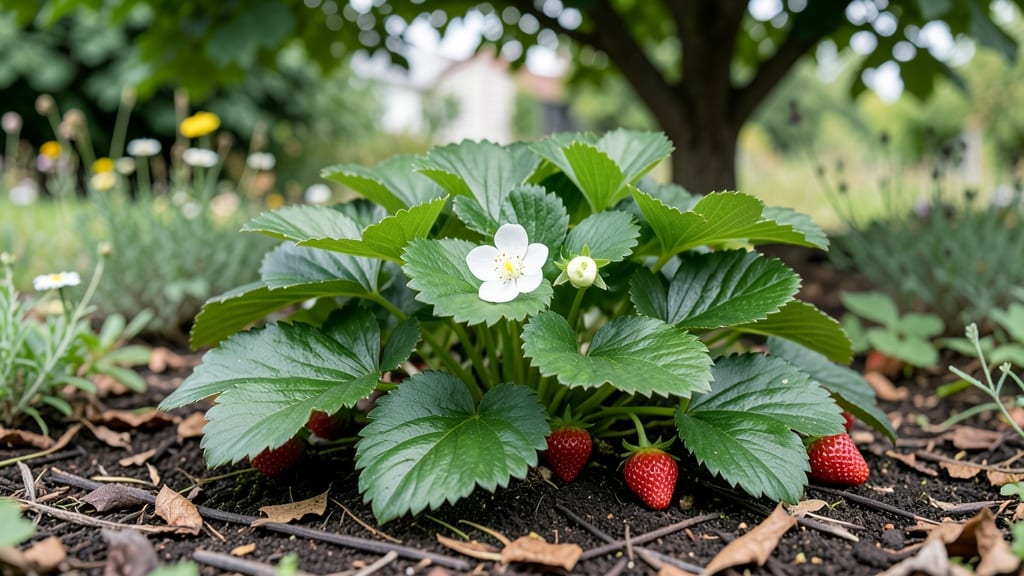
Your strawberry plant will produce fruit 90 to 120 days after transplanting, depending on the variety—June-bearing types fruit once in early summer, everbearing varieties yield two harvests (spring and fall), and day-neutral types deliver continuous fruit from late spring until frost. Proper chilling hours and sunlight exposure are key to triggering blooming.
Strawberry plants need specific conditions to fruit, and their timing varies dramatically by type. June-bearing varieties, like Jewel or Chandler, focus all their energy on one big harvest in late spring to early summer, while everbearing types such as Seascape produce smaller crops in both spring and fall.
Day-neutral varieties, like Albion, keep producing as long as temperatures stay mild. 🌱 The secret to faster fruiting lies in proper winter chilling (many varieties need 4-8 weeks below 40°F) and consistent sunlight—at least 6-8 hours daily—to encourage blooming.
Without these, your plant might just send up leaves instead of fruit.
What's interesting is how climate zone affects this timeline. In warmer regions (USDA Zones 8-10), June-bearing varieties might fruit later in summer, while in cooler zones (Zones 3-6), they'll often produce earlier. Everbearing types in Zone 7 can sometimes yield a third harvest if summer temperatures don't get too hot.
The key is to match your variety to your local growing conditions—some strawberries simply won't fruit reliably outside their ideal range.
💡 In This Article
- Strawberry Variety Types and Their Fruiting Timelines
- Optimizing Strawberry Plant Growth for Faster Fruit Production
Strawberry variety types and their fruiting timelines
Strawberry fruiting cycles are controlled by two key biological triggers: vernalization (cold exposure) and photoperiod (daylight length). June-bearing varieties need 4-8 weeks of temperatures below 40°F to break dormancy, which is why they produce their single massive harvest in late spring—typically 60-70 days after blooming begins.
Popular June-bearers like Chandler or Allstar store energy in their crowns during winter, then channel it all into fruit production when days lengthen. 🌸
The everbearing types, such as Seascape or Ozark Beauty, have a different strategy—they produce two harvests because they can bloom multiple times per season. Their first flush comes in spring after chilling, and a second smaller harvest appears in fall if temperatures stay mild.
Day-neutral varieties like Albion or Tristar skip the cold requirement entirely and fruit continuously from late spring until frost, making them ideal for warm climates where June-bearers might struggle.
Climate zones dramatically shift these timelines. In USDA Zone 5, June-bearing varieties might fruit in early June, while in Zone 9, the same plants could delay until August due to milder winters.
Everbearers in Zone 7 often produce a third harvest if summer temperatures stay below 85°F, while day-neutral types in Zone 10 can keep fruiting until November. The key is matching your variety to local conditions—some strawberries simply won't set fruit reliably outside their ideal temperature ranges.
What most gardeners don't realize is how light affects fruiting. Strawberries need 6-8 hours of direct sunlight daily to produce flowers, but too much heat (above 90°F) can actually stop blooming. This is why everbearing types often struggle in desert climates—they'll produce leaves but few berries.
The solution? Provide afternoon shade during peak summer months or choose heat-tolerant varieties like Camarosa for warmer regions. 🌡️
Here's how the timelines break down by type:
- June-bearing: Single harvest in late spring to early summer (60-70 days after blooming)
- Everbearing: Two harvests (spring and fall) with possible third if conditions are ideal
- Day-neutral: Continuous production from late spring to frost (every 2-3 weeks)
The secret to faster fruiting lies in understanding these biological triggers. For June-bearers, ensure proper winter chilling; for everbearers, manage summer temperatures; and for day-neutral types, maintain consistent moisture. Each variety has its own sweet spot—knowing yours means knowing when to expect those first juicy berries! 🍓