
Planting
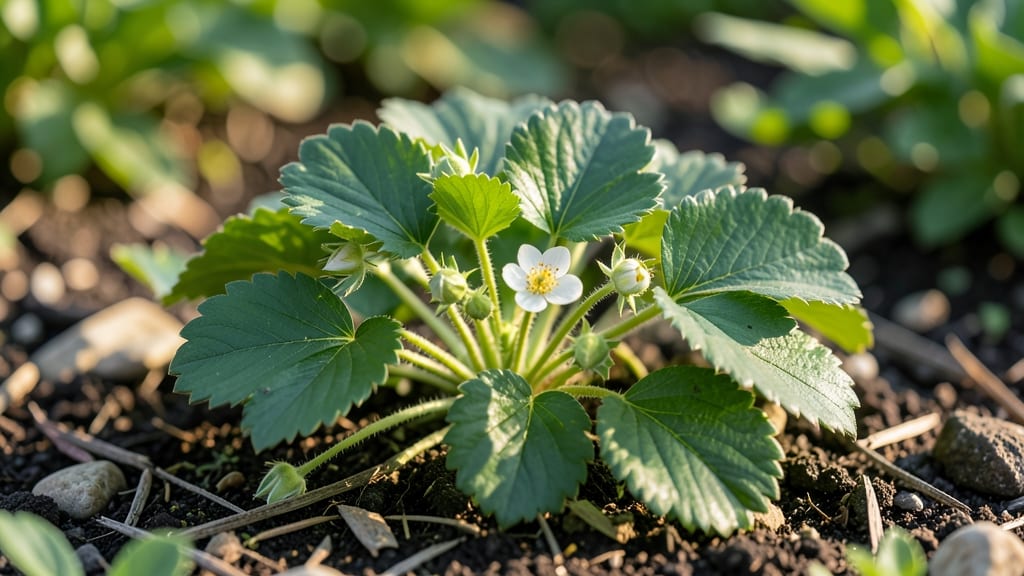
Strawberry plants before fruit are where the real foundation happens—skip this stage, and your harvest will suffer. 🌱 I’ve watched weak plants struggle to fruit because they missed the early care window, while others exploded with berries because their roots and leaves got the right start.
The secret isn’t complicated: it’s about soil, sunlight, and consistent watering before a single berry appears.
Your first move is soil prep—strawberries hate soggy roots but won’t thrive in dry dirt either. Mix in compost to create loose, well-draining soil, and plant crowns (where leaves meet roots) just above soil level.
After planting, water deeply but avoid wetting the leaves to prevent disease. A 3-inch layer of mulch keeps moisture steady and blocks weeds, which is especially critical in the first 4-6 weeks when roots establish.
Sunlight is non-negotiable: 6-10 hours of direct sun daily gives you strong plants that fruit abundantly. If your spot gets less, supplement with a grow light. Watch for bright green, glossy leaves—that’s your sign of success.
Yellowing or curled leaves mean overwatering or pests, while slow growth signals poor soil or shade. Fix these early, and your plants will reward you with strong runners and deep roots long before the first berry ripens.
Here’s the kicker: most gardeners rush to fertilize too soon, but strawberries need low nitrogen early on to encourage roots, not leaves. Wait until 4-6 weeks after planting before adding a balanced fertilizer.
By then, your plants should look like they’re ready to take over—because they will be. That’s when the real magic begins.
📚 In This Guide
- What you need
- Instructions
- Tips and common mistakes
- Wrapping up and next steps
What you need
- ● Strawberry plants: 6–12 bare-root or potted plants (choose disease-resistant varieties like Albion or Seascape for beginners).
- ● Well-draining soil: 5–10 bags (2–3 cubic feet each) of a mix like 50% garden soil + 50% compost (or pre-mixed strawberry soil).
- ● Organic fertilizer: 1 lb of balanced 10-10-10 or fish emulsion (for early root boost).
- ● Mulch: 1–2 bags of straw or pine needles (to retain moisture and suppress weeds).
- ○ Containers (optional): 5–10 5–7 gallon pots with drainage holes (if growing in containers).
- ● Garden trowel or hand shovel (for planting and soil prep).
- ● Gloves (to protect hands from thorns and soil).
- ● Watering can or hose with gentle nozzle (avoid blasting roots!).
- ● Pruning shears (for trimming excess leaves or runners later).
- ○ pH test kit (optional): To check soil pH (ideal: 5.5–6.5).
- ● A sunny spot with 6–8 hours of direct sunlight daily.
- ● Proper spacing: 12–18 inches between plants (24 inches in containers).
- ● Water source nearby (strawberries need 1–1.5 inches of water weekly).
- ● Patience! Early care (first 4–6 weeks) is critical for root establishment.
Strawberry plants before fruit: essential early care for robust growth
Here's how to build a strong foundation—before a single berry appears—so your strawberries thrive all season.
🌱 Step 1: Select and Plant Healthy Bare-Root Strawberries
Choose June-bearing, everbearing, or day-neutral varieties based on your climate. I recommend bare-root plants in early spring—they establish roots faster than potted ones. Soak the roots for 10-15 minutes in lukewarm water before planting to revive them. You'll see the roots plump up slightly—that's your signal they're ready.
Dig holes slightly deeper than the root ball but no wider—strawberries hate loose soil around their crowns. Space plants 18-24 inches apart in rows 3-4 feet apart for airflow. The crown (where leaves meet roots) should sit just above soil level—burying it too deep causes rot, while leaving it exposed invites disease.
💧 Step 2: Water Deeply and Mulch Immediately
Water deeply right after planting—1-2 gallons per plant—to settle soil around roots. Strawberries need 1-1.5 inches of water weekly, but deep, infrequent watering encourages strong roots. You'll know you're doing it right when the soil 1-2 inches down stays moist but not soggy.
Apply 3-4 inches of straw mulch (not hay—it contains weed seeds) around each plant, leaving a 2-inch gap around the crown. This keeps roots cool, retains moisture, and prevents soil-borne diseases. Refresh mulch every 3-4 months as it breaks down—you'll notice fewer weeds and healthier foliage.
☀️ Step 3: Provide Full Sun and Fertilize Lightly
Strawberries need 6-10 hours of full sun daily—no compromises. I plant mine in south-facing beds where they get morning sun and afternoon shade in hot climates. If your plants lean toward the light, rotate them quarter-turn weekly to prevent lopsided growth.
Fertilize lightly in early spring with 10-10-10 at ½ the recommended rate. Too much nitrogen now means lush leaves but weak roots—your goal is balanced growth. Side-dress with composted manure in late summer for winter hardiness. You'll see deep green leaves and thick stems as signs of proper feeding.
✂️ Step 4: Prune and Train for Maximum Yield
Remove weak runners (thin, leggy stems) in the first year—they drain energy from root development. Keep only 2-3 of the strongest runners per plant, pinning them down with U-shaped wire stakes to encourage rooting. You'll notice new plants forming at the tips—these will become your next year's crop.
Trim yellow or diseased leaves immediately to prevent spread. In late summer, cut back old foliage to 4-6 inches tall to redirect energy into root growth. This might look drastic, but you'll see sturdy new shoots by spring—a sign your plant is storing energy for fruit production.
⏰ Step 5: Monitor for Pests and Soil Health
Check weekly for slugs, aphids, or spider mites—early intervention prevents outbreaks. I spray neem oil at dusk if I spot chewed leaves or sticky residue (aphid honeydew). Avoid chemical sprays; they harm beneficial insects strawberries rely on.
Test soil pH annually—strawberries thrive in 5.5-6.5. If your soil is too acidic, add lime; if alkaline, mix in sulfur. Healthy soil means vibrant leaves, fewer pests, and stronger roots—the foundation for your first harvest.
Tips & tricks for perfect strawberry plant establishment
These early-care secrets will help your strawberries develop the strong root systems they need to produce abundant fruit later.
Root Revival Technique: That 10-15 minute soak in lukewarm water isn't just about hydration—it's about waking up dormant roots. I like to add a pinch of unbleached flour to the water (not in the instructions, but optional!) to encourage beneficial microbial activity around the roots. You'll see the roots plump up noticeably, which means they're ready to establish quickly in your soil.
Crown Placement Precision: Positioning the crown just above soil level is critical—this prevents crown rot while allowing easy access to sunlight. I use a small wooden stake to mark the ideal crown level in each hole before planting. This visual guide helps me maintain consistency, especially when planting multiple rows.
Watering Strategy: The 1-2 gallons per plant immediately after planting isn't just about settling soil—it's about creating an oxygen-rich environment around the roots. I water slowly at the base rather than pouring from above, which prevents soil compaction. For the weekly 1-1.5 inches of water, I use a rain gauge to measure—this ensures consistent moisture without overwatering.
Mulch Maintenance: Refreshing that 3-4 inch straw mulch every 3-4 months is one of the most underrated steps. I keep a supply of clean straw on hand and apply it after heavy rains when the existing mulch breaks down fastest. The key is maintaining that 2-inch gap around the crown—this prevents rot while still protecting roots from temperature extremes.
Pro Tips for Strawberry Plant Before Fruit
- These early-care secrets will help your strawberries develop the strong root systems they need to produce abundant fr...
- Root Revival Technique: That 10-15 minute soak in lukewarm water isn't just about hydration—it's about waking up dorm...
- Crown Placement Precision: Positioning the crown just above soil level is critical—this prevents crown rot while allo...
Frequently asked questions
Got questions about nurturing your strawberry plant before it bears fruit? You're not alone! Here are some of the most common concerns—plus expert answers to help you grow a thriving plant from the ground up.
How long does it take for a strawberry plant to produce fruit after planting?
Most strawberry varieties take 4-6 weeks to establish roots after planting, followed by 6-10 weeks before flowering and fruiting. June-bearing types fruit in the first year, while everbearing and day-neutral varieties may take 2-3 months to produce berries. Patience is key—focus on strong early growth!
Why aren’t my strawberry plants growing leaves before fruit?
If your plant is only producing flowers (or fruit) with minimal leaves, it’s likely over-fertilized or stressed. Strawberries prioritize foliage first—if they’re flowering early, reduce nitrogen (use a balanced 10-10-10 fertilizer) and ensure they get 6+ hours of sunlight daily. Prune excess flowers to redirect energy to roots and leaves.
What’s the best way to tell if my strawberry plant is healthy before fruiting?
A healthy strawberry plant before fruit has:
- Bright green, glossy leaves (no yellowing or spots).
- White, fuzzy roots (if you gently dig around the crown).
- Compact, bushy growth (not leggy or sparse).
- Small, green runners (optional, but a good sign!).
Can I plant strawberries in early spring or fall for earlier fruit?
Yes! Planting in early spring (4-6 weeks before last frost) or late summer/fall (6-8 weeks before first frost) can give you a head start. However, fall-planted strawberries may need winter protection (mulch or row covers) to survive freezing temps. June-bearing varieties planted in fall often fruit earlier the next year.
What should I do if my strawberry plant gets pests or disease before fruiting?
Act fast! Common early-stage issues include:
- Slugs/snails: Use beer traps or diatomaceous earth.
- Aphids: Spray with soapy water or introduce ladybugs.
- Fungal spots: Remove affected leaves, improve airflow, and apply copper fungicide.
- Powdery mildew: Prune for sunlight and use neem oil.
Wrapping up and next steps
Growing strong strawberry plants before fruit even appears is all about patience, preparation, and proactive care! 🌱 By focusing on healthy soil, proper spacing, and consistent watering, you’ve set the stage for a bountiful harvest.
Remember, every leaf and runner you nurture today will translate into sweeter, juicier berries tomorrow.
Now that you’re armed with these early-care secrets, it’s time to roll up your sleeves and get growing! Start with just one plant—whether in a container or garden bed—and watch your confidence (and strawberry patch!) flourish. Happy planting! 🍓✨