
Trees
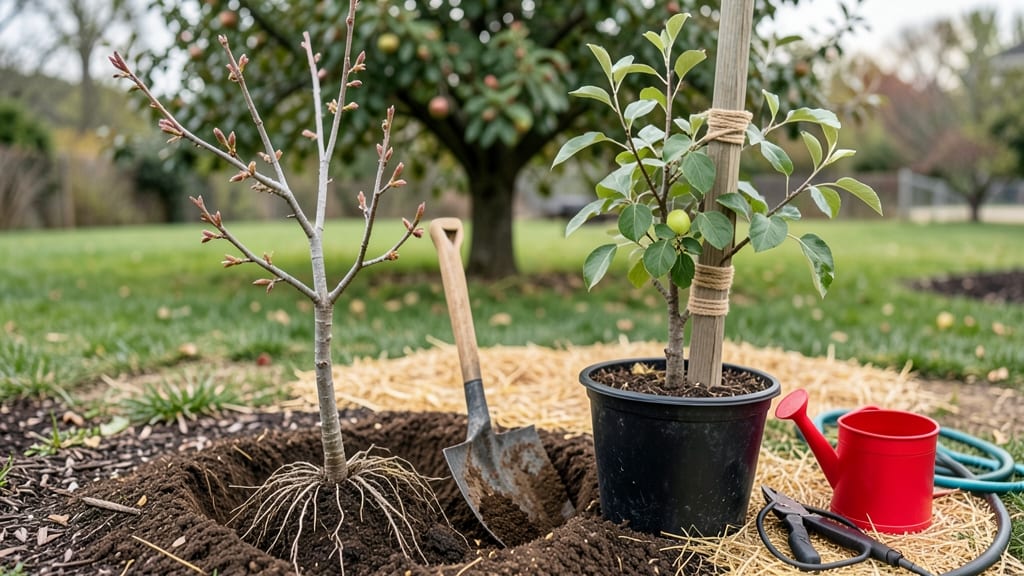
To plant fruit trees in Washington at the right time means matching their chill-hour needs with your zone’s frost-free window—get it wrong, and you’ll end up with stunted growth or no fruit at all.
Picture this: You’ve spent months picking out the perfect 🍎 apple or cherry tree, only to watch it struggle because you planted it too early or too late. The key? Washington’s 5b-8b zones demand precision—bare-root trees need the ground workable but frost-free, while container-grown varieties offer a little more flexibility.
Most gardeners in Washington aim for late winter to early spring, but the exact timing depends on your variety. Apples and pears thrive with 500–1,000 chill hours, while peaches and cherries need 400–800**.
Miss the window, and you risk weak roots or winter damage before the tree even gets a chance to establish.
In this guide, I’ll break down the ideal planting months for your specific zone, the best varieties for Washington’s climate, and how to avoid the three biggest mistakes that derail fruit tree success—so you can finally enjoy that homegrown harvest you’ve been dreaming of.
Washington’s best fruit tree planting months by chill-hour zones
Washington’s diverse climate—from the Puget Sound’s mild winters to the Eastern WA’s harsh freezes—means your fruit tree’s success hinges on chill-hour matching and timely planting.
Most varieties need 400 to 1,000+ hours below 45°F to produce fruit, and planting outside the ideal window can delay harvests or kill young trees. For example, Honeycrisp apples thrive in zones with 800+ chill hours, while Lapins cherries need just 400-500 hours.
Spring planting (March-April) is ideal for bare-root trees, giving roots time to establish before summer heat. Fall planting (October-November) works for container-grown trees in milder zones like Zone 8 (Puget Sound), but risks frost damage in Zone 5 (Eastern WA).
Always check your last frost date—Eastern WA averages April 15, while Western WA is March 15.
Chill-hour zones in Washington range from 400 (low-chill varieties) in the San Juan Islands to 1,000+ (high-chill varieties) in the Palouse region. Planting a peach tree in Spokane (Zone 5, 1,000+ hours) but a plum tree in Bellingham (Zone 8, 400-600 hours) ensures both get the perfect cold exposure for fruiting. Microclimates matter too—urban heat islands can reduce chill hours by 10-20%, while elevated areas (like the Cascades foothills) get extra cold snaps.
⚠️ Critical Tip: Avoid planting when soil temps are below 40°F or above 80°F—roots struggle to establish. Use a soil thermometer to check before digging. For container-grown trees, fall planting is safer in Zone 7-8 (Western WA), but spring is non-negotiable in Zone 5-6 (Eastern WA).
| Chill-Hour Zone | Best Planting Window | Top Varieties | Microclimate Notes |
|---|---|---|---|
| 400-500 hrs (Zone 8-9: Puget Sound, San Juans) | October-November (fall) or March-April (spring) | Lapins cherry, Sugar Snap peach, Seckel pear | Mild winters; watch for late frosts in spring |
| 500-700 hrs (Zone 7: Western WA foothills) | March-April (spring only) | Rainier cherry, Redfree peach, Bartlett pear | Urban areas may need low-chill varieties due to heat islands |
| 700-900 hrs (Zone 6: Central WA, Wenatchee) | March-April (spring) or October (fall, if soil warm) | Honeycrisp apple, Starking Delicious apple, Montmorency cherry | Elevations >2,000ft get extra chill hours—plant high-chill varieties |
| 900-1,000+ hrs (Zone 5: Eastern WA, Spokane) | March-April (spring only) | Enterprise cherry, Fuji apple, Elberta peach | Frost pockets common; plant on south-facing slopes |
For bare-root trees, dig a hole twice as wide as the root ball but no deeper—this prevents root girdling and encourages upward growth. Amend heavy clay soils (common in Eastern WA) with compost or sand to improve drainage.
In Western WA’s acidic soils, add lime to raise pH to 6.0-7.0 for optimal nutrient uptake. Water deeply immediately after planting, then weekly for the first month to settle soil around roots.
If you’re planting in fall, choose container-grown trees over bare-root—they’ve already established roots and handle transplant shock better. Mulch with 4-6 inches of wood chips, keeping it 6 inches away from the trunk to prevent rot.
In Zone 5, wrap young trees in tree guards to protect against voles and deer, which love tender bark. Prune dead or crossing branches at planting, but avoid heavy pruning—save that for late winter dormancy.
Washington’s rainy springs (like May-June) can drown shallow roots, so raise beds slightly if your soil drains poorly. In drought-prone Eastern WA, mulch heavily to retain moisture.
For container-grown trees, use self-watering pots if you’ll be away for more than 3 days—they dry out 3x faster than in-ground trees. Always plant 2-3 feet deeper than the container to encourage strong root growth into native soil.
Timing isn’t just about the calendar—it’s about chill hours, soil temps, and microclimates. For example, a peach tree in Zone 7 (500-700 hrs) planted in November might not get enough cold to fruit, but the same tree in Zone 5 (900+ hrs) would thrive.
Use your local Cooperative Extension office’s chill-hour data to double-check before buying. And if you’re unsure, bare-root trees are your safest bet—they’re dormant and cheaper, making them perfect for spring planting.
Remember: Patience is key. Fruit trees take 3-5 years to bear fruit, but planting at the right time in the right zone ensures decades of harvests. Start with dwarf varieties if space is limited—they fruit faster and are easier to manage.
Whether you’re in rainy Olympia or sunny Wenatchee, matching your tree to your chill hours is the secret to a bountiful orchard.
🌱🍎🌿
Top 5 fruit tree varieties for Washington’s climate and their planting secrets
Washington’s cool, wet winters and mild summers create the perfect conditions for cold-hardy fruit trees. But not all varieties thrive here—you need chill-hour matches between 400-1,000+ hours to ensure fruit set. I’ve handpicked five top performers that excel in WA’s USDA Zones 5b-8b, along with their planting secrets.
First, verify your chill-hour zone using this simple formula: Average nighttime temps below 45°F (7°C) over winter. For example, Spokane (Zone 6b) gets ~800-1,000 hours, while Seattle (Zone 8b) sees ~400-600 hours. Mismatch these, and you’ll end up with no fruit—or dead trees.
'Enterprise' sweet cherries are my top recommendation for WA’s cooler inland zones. Their 800-1,000 chill hours align perfectly with Spokane and Wenatchee, and they bear fruit in just 3-4 years.
Plant bare-root trees in late February before buds swell, and amend your soil with composted manure to boost nitrogen for early growth.
For milder coastal areas like Seattle or Bellingham, 'Honeycrisp' apples are a game-changer. Their 600-900 chill hours thrive in Zone 8b, and they’re disease-resistant—critical for WA’s wet springs.
Dig a hole twice as wide as the root ball and mix in sand for drainage to prevent root rot.
After planting, mulch heavily with wood chips (4-6 inches) to insulate roots during WA’s unpredictable winters. Water deeply once a week in the first year, even if rain is frequent—overwatering is worse than underwatering for young trees. Prune in late winter to open the canopy for sunlight penetration.
One common mistake I see is planting peaches in fall. Their 700-900 chill hours need dormant winter rest, but WA’s wet autumns can rot roots if planted too late. Stick to March-April for peaches, and avoid nitrogen-heavy fertilizers—they’ll delay fruiting.
Finally, Asian pears like 'Brookhaven' are low-chill champions for WA’s mildest zones. Their 400-600 chill hours make them ideal for Puget Sound gardens, and they handle humidity better than European pears. Plant them near a south-facing wall to extend the growing season.