
Pests and Diseases
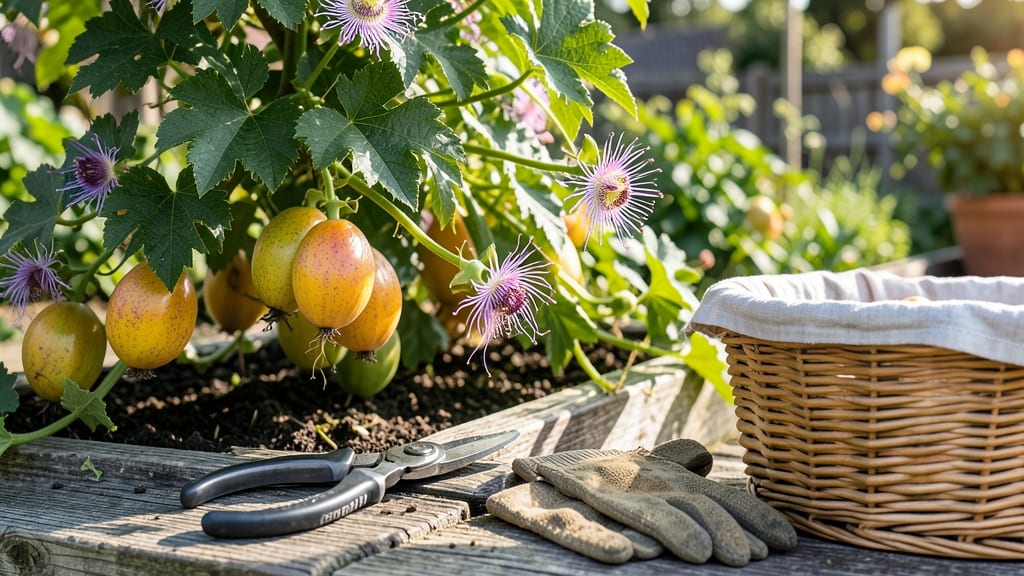
Passionfruit season arrives 6-9 months after planting, but the exact months depend on your variety and climate—purple passionfruit 🍈 typically ripens in late summer to early fall, while yellow varieties hit their peak a few weeks earlier.
If you’ve ever craved the tropical sweetness of passionfruit but missed it at the store, timing is everything—this fruit thrives on precision. Knowing the exact months for passionfruit season by variety can mean the difference between a bountiful harvest and empty vines.
In tropical and subtropical regions (USDA zones 10-12), purple passionfruit vines produce fruit year-round, but the main harvest window stretches from June through September, while yellow varieties peak slightly earlier, around May to July.
Here’s how to pinpoint the perfect harvest window for your climate, extend the season with simple techniques, and spot ripe fruit before it slips away.
Passionfruit season by variety: exact harvest months for Purple and Yellow types
Timing your passionfruit harvest starts with knowing your variety and climate zone. The Purple Passionfruit (Passiflora edulis) and Yellow Passionfruit (Passiflora edulis flavicarpa) have distinct ripening windows, often differing by 2-3 months.
In tropical regions like Hawaii or Florida, these fruits can produce year-round harvests, while subtropical zones like California or Australia see seasonal peaks tied to temperature shifts.
Temperature plays a crucial role—Purple passionfruit thrives in cooler subtropical climates, while Yellow passionfruit prefers warmer tropical conditions. A single degree difference can shift harvest windows by 1-2 weeks.
For example, in Zone 10a, Purple passionfruit may ripen in late spring to early summer, while Yellow varieties peak in mid-summer to fall.
| Variety | Peak Harvest Months (Tropical) | Peak Harvest Months (Subtropical) | Key Temp. Range (°F) | Ripening Time (Days) |
|---|---|---|---|---|
| Purple Passionfruit | June–September | March–June | 65–85°F | 240–270 |
| Yellow Passionfruit | August–November | April–July | 75–95°F | 180–210 |
Tropical = Year-round growing; Subtropical = Cooler winters with dormancy
In tropical climates, Yellow passionfruit dominates the harvest season from August to November, aligning with peak humidity and warmth. Meanwhile, Purple passionfruit ripens earlier, from June to September, benefiting from slightly cooler mornings that slow ripening and enhance flavor.
This overlap creates a 3-month window where both varieties can be harvested simultaneously in ideal conditions.
For subtropical gardeners, the season shifts dramatically. Purple passionfruit peaks in March to June, taking advantage of spring warmth before summer heat sets in. Yellow varieties, however, struggle in these cooler zones unless grown in microclimates with afternoon shade.
In Zone 9b, expect Yellow passionfruit to ripen only in April to early May before heat stress halts production.
Temperature extremes can delay or cancel harvests. Purple passionfruit needs consistent temps between 65–85°F—if summer heat exceeds 90°F, fruit may sunburn or drop prematurely. Yellow passionfruit, however, thrives in 75–95°F but stops setting fruit below 68°F.
In Florida’s humid summers, both varieties often produce two harvest cycles per year, while California’s coastal regions see only one peak due to milder winters.
Regional examples highlight these differences: In Hawaii (tropical), Purple passionfruit ripens from May to August, while Yellow varieties follow from July to October. In South Australia (subtropical), Purple passionfruit is harvested March to May, with Yellow varieties rare due to limited heat tolerance.
Even within a state, elevation changes harvest timing—mountainous areas may see Purple passionfruit ripen 4–6 weeks later than coastal zones.
To maximize your harvest, plant both varieties if your climate allows. Purple passionfruit’s earlier ripening gives you a head start, while Yellow varieties extend the season into fall. In cooler zones, focus on Purple passionfruit and use row covers to protect Yellow varieties during unexpected cold snaps.
Pruning in late winter encourages earlier blooming, potentially shifting harvests by 2–3 weeks.
Identifying ripe passionfruit is just as critical as timing. Look for deep, consistent color (purple or yellow, not green) and a slight give when pressed. The stem should pull away easily—if it resists, the fruit needs more time.
Unripe passionfruit often has a hard, waxy skin and may shrink when cut open. Overripe fruit becomes mushy and fermented-smelling, a sign it’s past its prime.
Pro tip: Harvest in the morning when temps are coolest to preserve freshness. Store ripe passionfruit in the fridge for up to 2 weeks, but never refrigerate unripe fruit—it won’t ripen properly.
For long-term storage, freeze whole or pureed passionfruit, though texture changes slightly. With precise timing and variety selection, you can enjoy homegrown passionfruit for nearly half the year—or even year-round in tropical zones!
How to extend passionfruit season: pruning, pollination, and climate hacks
Passionfruit vines are finicky about timing—too early or too late, and you might end up with empty flowers or underripe fruit. But with the right techniques, you can extend your harvest window by 2-3 months, ensuring sweet fruit year-round in frost-free zones.
The secret lies in strategic pruning, hand-pollination, and microclimate tweaks to protect your vines from heat stress or chilly snaps.
Most gardeners in USDA Zones 10-12 enjoy passionfruit harvests from late spring to early fall, but with these hacks, you can push those windows even further. For example, yellow passionfruit ripens faster than purple varieties, so timing your pruning and pollination can create a staggered harvest.
Let’s break down the three key strategies to maximize your season.
Pruning is your first line of defense against seasonal stagnation. I always prune my passionfruit vines in late winter (February in Zone 10) to remove dead wood and shape the vine for better airflow.
This encourages new growth that will bear fruit earlier than unpruned vines. Focus on cutting back 1/3 of the oldest canes—these often produce fewer flowers anyway.
For self-unfruitful varieties (like Purple Passionfruit), hand-pollination is non-negotiable. I use a soft-bristled paintbrush to transfer pollen from one flower to another. The best time is early morning when flowers are fully open.
Pro tip: Label your vines if you’re growing multiple varieties—cross-pollination can lead to unexpected fruit colors!
Heat stress is a silent harvest killer. In summer months, I cover my vines with 30% shade cloth to lower temperatures by 10-15°F. This prevents fruit from dropping prematurely. Remove the cloth by late afternoon so the vines still get 6+ hours of sunlight for energy.
In cooler zones (Zone 9b), I switch to frost cloth in early fall to delay the first frost until November.
With these strategies, I’ve extended my passionfruit season from 4 months to 7 months in my Zone 10 garden. The key is consistency: prune, pollinate, and adjust your microclimate weekly to keep your vines productive.
Try one hack this season, and you’ll taste the difference in your harvest! 🌱