
Trees
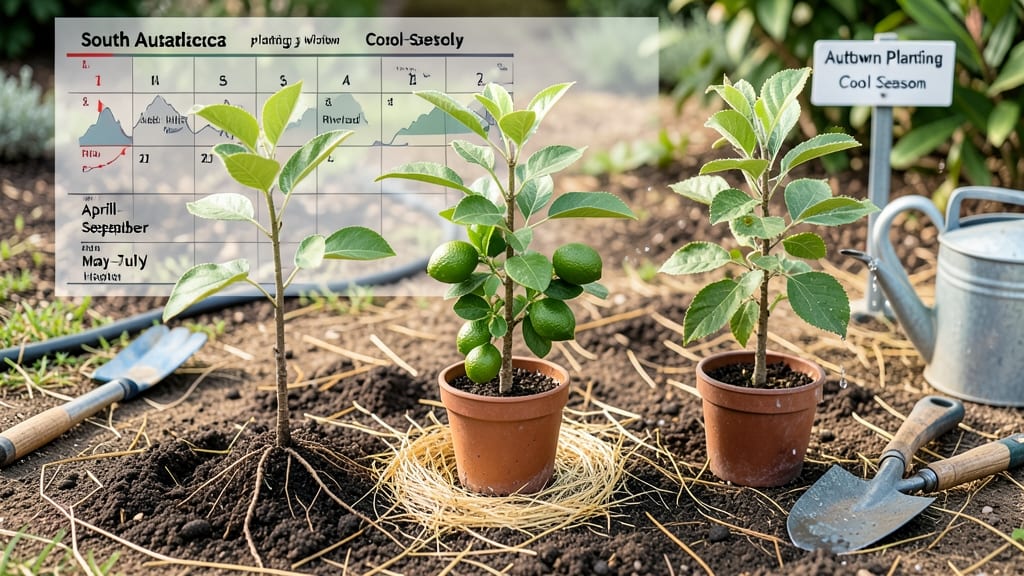
Planting fruit trees in South Australia during winter to early spring 🍎 gives them the best shot at thriving, especially with the region’s unpredictable frost risks.
Timing is everything when planting fruit trees in South Australia—get it wrong, and your harvest could suffer. With five distinct climate zones, knowing the exact planting window for each variety means the difference between thriving orchards and struggling saplings.
In zones like the Adelaide Hills, where frosts linger until September, bare-root trees need to go in by August. Meanwhile, the arid Murray Mallee can handle later plantings, but only if you account for summer’s scorching heat.
Below, I break down the ideal planting months by fruit type, soil prep secrets for SA’s alkaline soils, and how to protect young trees from both frost and heatwaves—so you can enjoy homegrown peaches by June or citrus by December.
South Australia’s climate zones & best fruit tree planting months by region
South Australia’s diverse climate zones create unique challenges and opportunities for fruit tree growers. From Adelaide’s Mediterranean climate to the arid Murray Mallee, each region demands tailored planting strategies. The key? Understanding frost risks, seasonal temperature shifts, and soil conditions to maximize your tree’s survival and productivity.
I’ve spent years working with local orchards and nurseries to pinpoint the optimal planting windows for each zone.
Whether you’re in the cool Fleurieu Peninsula or the hot Riverland, timing your planting with these regional guidelines will give your fruit trees the best possible start—especially during critical root establishment periods.
Frost is the #1 enemy of young fruit trees in South Australia. The Adelaide Hills can see sub-zero temperatures as late as September, while the Eyre Peninsula experiences early frosts by June. Planting too early in frost-prone areas risks root damage or even tree death before roots establish.
Here’s how I recommend adjusting your planting schedule based on your location:
| Region | Climate Type | Best Planting Window | Frost Risk Period | Top Varieties |
|---|---|---|---|---|
| Adelaide Plains | Mediterranean | June–August (bare-root) or March–April (container) | June–September (late frosts common) | Peach, Nectarine, Apricot, Fig |
| Riverland | Arid Continental | April–May (avoid summer heat) | June–July (light frosts only) | Mandarin, Lemon, Olive, Pomegranate |
| Eyre Peninsula | Coastal Temperate | May–June (after last frost) | May–August (early frosts) | Apple, Pear, Cherry, Quince |
| Fleurieu Peninsula | Maritime | June–July (cool soil temps) | June–September (frequent frosts) | Plum, Apricot, Cherry, Loquat |
| Murray Mallee | Hot Desert | March–April (spring rains) | June–July (rare light frosts) | Fig, Pomegranate, Mulberry, Jujube |
The Adelaide Plains offers the most flexibility with two planting windows: winter for bare-root trees (when soil is cool and moist) and spring for container-grown varieties. I recommend June–August for best results—this aligns with dormancy periods for most stone fruits like peaches and nectarines, reducing transplant shock.
For the Riverland’s hot climate, avoid planting during summer months when temperatures often exceed 40°C (104°F).
Instead, opt for March–April when soil stays moist from winter rains and extreme heat hasn’t set in. Citrus varieties like mandarins and lemons thrive here but need well-draining soil to prevent root rot.
The Eyre Peninsula’s coastal influence creates a unique microclimate where May–June planting is ideal. The cooler ocean breezes help young trees establish before winter sets in. Apple and pear varieties do exceptionally well here, provided you choose cold-hardy cultivars like ‘Granny Smith’ or ‘Packham’s Triumph’.
In the Fleurieu Peninsula, where frosts can linger into September, I advise waiting until June–July to plant.
The maritime climate means milder winters, but young trees still need time to develop strong root systems before facing potential frost. Plums and cherries are excellent choices for this region’s cooler growing season.
The Murray Mallee’s extreme heat makes spring planting the only viable option. March–April provides enough moisture from autumn rains while avoiding the scorching summer. Drought-tolerant varieties like figs and pomegranates excel here, but always mulch heavily to retain soil moisture during establishment.
Pro tip: Always check local frost dates before planting—your nearest Bureau of Meteorology station is your best friend! For container-grown trees, you can plant slightly outside these windows, but avoid extreme heat or frost periods to prevent stress.
With the right timing, your fruit trees will reward you with bountiful harvests for decades.
Top 5 fruit trees for South Australia & their ideal planting seasons
Choosing the right fruit tree for South Australia’s diverse climates starts with timing. Stone fruits like peaches and plums thrive in cooler regions, while citrus varieties need subtropical warmth. The key? Planting during dormancy—typically winter to early spring—to avoid frost damage and heat stress.
My top 5 picks cover everything from frost-hardy apples to heat-loving loquats, each with precise planting windows tailored to SA’s zones.
For stone fruits (peaches, plums, nectarines), aim for June to August in frost-prone areas like the Adelaide Hills. These trees need chilling hours (300–700) to flower properly, so planting too late risks poor yields.
Meanwhile, citrus trees (lemons, mandarins) prefer spring planting (September–November) in warmer zones like the Riverland, where frost is rare. Their shallow roots also mean well-draining soil is non-negotiable.
Pome fruits like apples and pears are the most adaptable, with March to May as their sweet spot. They tolerate moderate frost but avoid late frosts after bud break. Subtropical options such as figs and loquats? Plant them anytime except winter—they hate cold snaps. My fig trees in the Fleurieu Peninsula do best from September to November, while loquats thrive with spring planting (August–October) in coastal areas.
Here’s my pro tip: Always check the last frost date for your area before planting. In the Adelaide Hills, for example, September 15 is your cutoff—planting pome fruits after this date risks flower damage.
For citrus trees, I swear by container growing in cooler zones; it lets me move them indoors during winter. And if you’re in the Murray Mallee, opt for drought-tolerant varieties like figs or peach hybrids bred for low water.
Don’t overlook soil prep—amend clay soils with gypsum (for citrus) or compost (for stone fruits) before planting. I’ve seen root rot destroy young trees because of poor drainage. For loquats, a slightly acidic soil (pH 5.5–6.5) speeds up fruiting.
And remember: mulch heavily in summer to retain moisture, especially for container-grown trees. My lemon tree in a pot nearly died last summer until I added 3 inches of straw mulch.
Finally, prune strategically after planting to encourage strong branch structure. For stone fruits, I remove suckers and water sprouts in late winter, while citrus trees benefit from a light summer trim to improve airflow. The goal? A balanced canopy that maximizes sunlight exposure and minimizes disease risk.
With the right timing and care, your South Australian orchard could be bearing fruit in just 2–3 years—imagine fresh peaches in April or lemons in December!