
Container Gardens
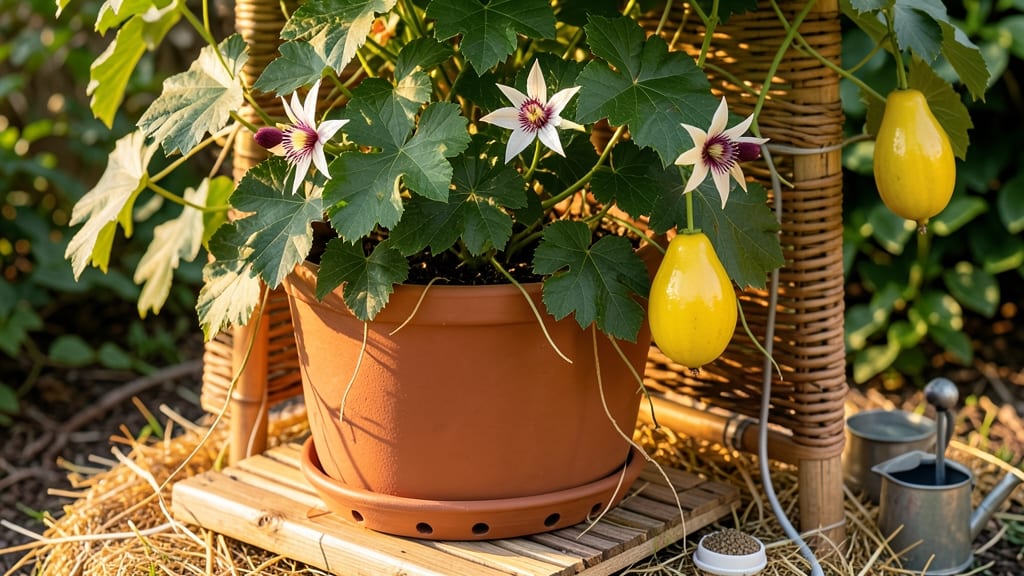
Growing passionfruit vines in pots lets you enjoy tropical fruit without a yard—my first harvest came just 18 months after planting a compact 'Panama Red' vine. 🌱 The key is choosing dwarf varieties and giving them the right conditions, which I learned the hard way when my first attempt flopped from overwatering.
You’ll need a 15-gallon container with drainage, well-draining potting mix, and a trellis for support. Passionfruit vines thrive in full sun (6+ hours daily) and need consistent moisture but hate soggy roots—stick your finger in the soil first before watering.
Prune aggressively in late winter to encourage bushier growth and more fruit. By summer, you’ll be snipping ripe fruit straight from your patio with sweet-tart flavors that outshine store-bought.
The vines stay manageable (unlike their in-ground cousins) and produce for years with proper care—just watch for spider mites on hot days. Works in zones 8-11 (or indoors near sunny windows in cooler climates). Here’s how to keep them thriving all year—no yard required!
📚 In This Guide
- What you need
- Instructions
- Tips and common mistakes
- Wrapping up and next steps
What you need
- ● Container: 1–2 large pots (15–20 gallons each) with drainage holes. Pro tip: 💡 Opt for fabric grow bags for better aeration!
- ● Potting Mix: 1 bag (1–2 cubic feet) of well-draining, organic mix (e.g., 60% coconut coir, 30% perlite, 10% compost).
- ● Passionfruit Plant: 1–2 compact varieties (e.g., Passiflora edulis 'Purple Gem' or 'Sweet Gem'). Check local nurseries for disease-resistant starts!
- ● Support Structure: 1 trellis, cage, or sturdy stakes (6–8 ft tall) for vertical growth.
- ● Fertilizer: Balanced organic fertilizer (e.g., 10-10-10) or citrus-specific blend.
- ● Mulch: 1 bag of organic mulch (e.g., straw or shredded bark) to retain moisture.
- ● Hand Trowel – For planting and soil adjustments.
- ● Watering Can or Hose – With a gentle spray nozzle for hydration.
- ● Pruning Shears – To shape vines and remove dead growth.
- ○ pH Test Kit (Optional) – Aim for a soil pH of 6.0–7.0 for optimal growth.
- ○ Slow-Release Granules (Optional) – For nutrient boosts during fruiting season.
Step-by-Step instructions for growing passionfruit vines in containers
Here’s my foolproof method for growing compact passionfruit varieties in pots—perfect for small spaces or patios.
🪴 Step 1: Select the Right Pot and Soil Mix
Choose a 5-gallon container or larger with multiple drainage holes—passionfruit vines need room to spread and excellent drainage to prevent root rot. I use terra cotta pots because they wick away excess moisture, but any sturdy plastic or fabric grow bag works too. Fill the bottom 2 inches with gravel or broken pottery to improve drainage.
Next, mix two-thirds potting soil with one-third perlite or orchid bark for aeration. Passionfruit vines thrive in well-draining, slightly acidic soil (pH 6.0–7.0). Avoid garden soil—it compacts and suffocates roots. Moisten the mix until it’s damp but not soggy before planting.
🌱 Step 2: Plant Your Passionfruit Vine
Gently remove your compact passionfruit vine (like ‘Panama Red’ or ‘Purple Haze’) from its nursery pot and loosen the roots if they’re circling. Place it in the container so the crown sits just above the soil line—burying it too deep invites rot. Fill in around the roots with your prepared mix, pressing lightly to eliminate air pockets.
Water deeply until it drains from the bottom holes, then let it sit for 10–15 minutes to settle. I always add a slow-release fertilizer (10-10-10) at planting time—just sprinkle 1 tablespoon into the soil and mix it in. This gives the vine a nutrient boost without overwhelming it.
☀️ Step 3: Position for Maximum Sun and Support
Passionfruit vines need full sun (6+ hours daily) to produce fruit, so place your pot in the sunniest spot—a south- or west-facing patio works best. If you’re in a hot climate, provide afternoon shade to prevent leaf scorch. I use a trellis or sturdy wire cage to support the vine as it grows—passionfruit tendrils can reach 10–15 feet, but compact varieties stay manageable.
Train the main stem along the trellis early to encourage upward growth. Once the vine climbs, it’ll produce more flowers and fruit. Water deeply 2–3 times per week, letting the top 2 inches of soil dry out between waterings. Overwatering is the #1 killer—yellowing leaves mean you’re drowning the roots.
💧 Step 4: Feed and Prune for Year-Round Fruit
Feed your vine every 4–6 weeks during growing season (spring–fall) with a balanced liquid fertilizer (20-20-20). I dilute it to half-strength to avoid burning the roots. In winter, cut back to monthly feedings or use a low-nitrogen fertilizer (like 5-10-10) to support dormancy. Passionfruit vines flower best when they’re well-fed but not overcrowded—prune back 1/3 of the oldest growth each year to encourage new, fruiting branches.
Watch for passionfruit buds (they look like tiny green trumpets) in late spring. These will turn into flowers, and if pollinated, fruit within 8–10 weeks. Hand-pollinate if needed by gently shaking the vine or using a small brush to transfer pollen. Patience pays off—your first harvest may take 6–12 months, but after that, you’ll get year-round fruit with proper care.
✂️ Step 5: Overwinter and Maintain for Next Year
If you’re in a cold climate, move your pot to a garage or sheltered patio before first frost. Keep it barely moist and reduce watering—overwatering in winter stresses the vine. Prune back dead or diseased branches and fertilize lightly in early spring to kickstart growth. In warmer zones, continue normal care but watch for pests like spider mites—spray with neem oil if you spot webbing or yellowing leaves.
Here’s the thing—passionfruit vines in pots thrive on neglect after they’re established, but they reward consistency. A well-fed, sun-drenched vine with regular pruning will give you sweet, aromatic fruit for years. Just remember: patience is key—these vines grow fast, but the first harvest is worth the wait.
Tips & tricks for growing thriving passionfruit vines in containers
A few strategic moves will help your container-grown passionfruit vine flourish—and actually produce those coveted tropical fruits. These are the details that separate a struggling plant from one that rewards you with year-round harvests.
Drainage is Non-Negotiable: In Step 1, when you're setting up your 5-gallon container, don't just rely on the drainage holes—create a proper drainage layer. I've seen too many well-intentioned gardeners skip this and end up with root rot within months. Use that 2 inches of gravel or broken pottery at the bottom, then add a layer of coarse perlite on top before your soil mix. This two-layer system prevents clogging and ensures water flows freely. The terra cotta pots work beautifully because they naturally wick away excess moisture, but if you use plastic, add extra perlite to compensate for its moisture-retaining properties.
The Soil Mix Makes All the Difference: That two-thirds potting soil to one-third perlite/orchid bark ratio in Step 1 is crucial, but here's what I've learned about execution: don't just eyeball it. Weigh your components if possible—potting soil is surprisingly dense. The perlite should make up exactly one-third by volume, not just "a handful." Passionfruit roots need both aeration and moisture retention, and this mix strikes the perfect balance. Pro tip: Add a handful of worm castings to your mix at planting time for an extra nutrient boost that won't burn tender roots. The slightly acidic pH (6.0-7.0) is also non-negotiable—test your soil if you're unsure, as many commercial potting mixes run neutral or alkaline.
Watering Wisdom for Container Vines: The instructions mention watering deeply 2-3 times per week, but timing matters just as much as quantity. In Step 3, when you're establishing your watering routine, pay attention to the 10-15 minute settling period after initial watering. This isn't just about letting excess water drain—it's about allowing the soil to properly absorb moisture. I've found that watering in the morning gives the roots all day to absorb what they need before evening evaporation. And here's a visual cue: when the top 2 inches of soil feel dry to the touch (about the depth of your index finger), it's time to water again. Yellowing leaves are almost always a sign of overwatering, not underwatering.
Support System Secrets: While the instructions mention trellises or wire cages, I've discovered that the type of support makes a surprising difference in fruit production. For compact varieties, I recommend a 5-foot tall obelisk trellis rather than a traditional cage. This encourages vertical growth which receives more sunlight—critical for fruit development. Install your support immediately after planting in Step 2, and train the main stem along it. The vine's tendrils will naturally cling, but give them a gentle nudge in the right direction. You'll notice more buds form on upward-growing branches than on horizontal ones.
Pro Tips for Passionfruit Vines In Pots
- A few strategic moves will help your container-grown passionfruit vine flourish—and actually produce those coveted tropical fruits.
- Drainage is Non-Negotiable: In Step 1, when you're setting up your 5-gallon container, don't just rely on the drainage holes—create a proper drainage layer.
- The Soil Mix Makes All the Difference: That two-thirds potting soil to one-third perlite/orchid bark ratio in Step 1 is crucial, but here's what I've learned about execution: don't just eyeball it.
Frequently asked questions
Got questions about growing passionfruit vines in pots?
You’re not alone! Here are answers to the most common concerns—from setup to harvest—so you can enjoy sweet, tropical fruit without the fuss.
What’s the best pot size for passionfruit vines?
Passionfruit vines thrive in 10–15 gallon containers with drainage holes. Smaller pots (5+ gallons) work for dwarf varieties like ‘Itoh’ or ‘Purple Gold,’ but expect slower growth. Pro tip: Use a pot at least 12 inches deep to accommodate roots and a sturdy trellis for climbing.
When should I plant passionfruit in pots?
Plant in spring after the last frost (USDA Zones 8–11) or early summer in cooler climates. Vines are tender—avoid planting when temps drop below 50°F (10°C). If you’re in a warm zone, you can plant year-round, but late winter/early spring gives vines time to establish before summer heat.
Can I grow passionfruit in pots indoors?
Yes, but with big caveats! Passionfruit needs 6+ hours of sunlight daily—a south-facing window or grow lights work. Expect smaller yields indoors, and vines may grow leggy. If indoors, rotate pots weekly for even light exposure. For best results, keep them on a sunny patio or balcony during warmer months.
Why aren’t my passionfruit vines producing fruit?
Common culprits: lack of pollinators (hand-pollinate with a small brush), inadequate sunlight (<6 hours/day), or poor nutrition. Feed with a balanced fertilizer (10-10-10) every 4–6 weeks and ensure pots are big enough. Fun fact: Vines need 1–2 years to mature before fruiting—patience is key!
How do I overwinter passionfruit vines in pots?
Move pots to a cool, bright spot (50–60°F / 10–15°C) like a garage or basement. Reduce watering and stop fertilizing. If temps drop below 32°F (0°C), wrap pots in bubble wrap or frost cloth. Resume care in spring when temps rise. Pro tip: Prune lightly in late winter to encourage new growth.
What can I do if my passionfruit vine gets too large for its pot?
If roots circle the pot or growth stalls, it’s time to repot! Choose a container 2–3 inches larger in diameter and refresh the soil with a well-draining potting mix. Trim 1/3 of the foliage to reduce stress. Warning: Repotting stresses vines, so do it in spring before flowering.
Wrapping up and next steps
Growing passionfruit vines in pots is a rewarding way to enjoy sweet, tropical harvests—even in small spaces! With the right compact varieties, proper care, and a little patience, you’ll be savoring homegrown fruit year-round.
Whether you’re a beginner or a seasoned gardener, this setup makes it easy to turn your balcony, patio, or windowsill into a productive oasis.
Ready to dive in? Start by choosing your vine and prepping your pot—then watch your garden flourish! 🌱✨ Review the essentials and get planting today!