
Advice
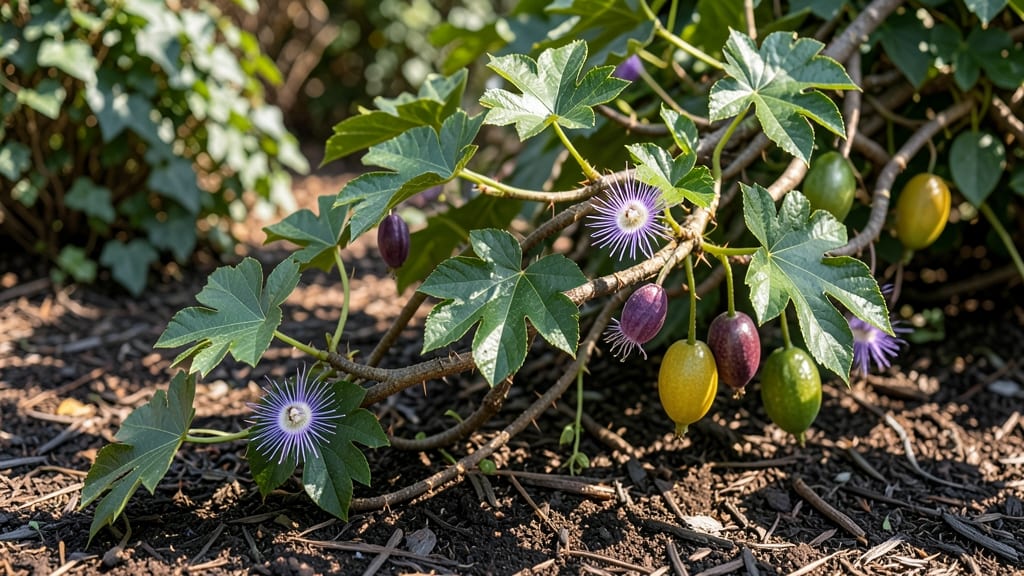
What's passion fruit is a tropical vine fruit with a wrinkled, purple or yellow skin and a tangy-sweet, tropical pulp packed with tiny edible seeds. It thrives in warm climates and is prized for its vibrant flavor and versatility in culinary and gardening uses.
What's passion fruit stands out in the tropical fruit world thanks to its complex flavor profile—think citrusy tartness balanced with floral sweetness. 🌿 The fruit grows on fast-climbing vines that produce striking, intricate flowers before yielding its signature oval-shaped fruit.
While purple passion fruit is more common, yellow varieties offer a milder, sweeter taste that works beautifully in desserts.
Beyond its delicious pulp, passion fruit vines are a gardener's dream. They're drought-tolerant once established and can produce fruit year-round in warm climates. The seeds, often discarded, are actually edible and packed with nutrients, making the whole fruit usable from skin to core.
💡 In This Article
- Botanical Profile of Passion Fruit: Growth and Varieties
- Culinary and Gardening Uses of Passion Fruit
Botanical profile of passion fruit: growth and varieties
The passion fruit vine belongs to the Passiflora genus, which contains over 500 species, but only a few are cultivated commercially. The most popular varieties are Passiflora edulis (purple passion fruit) and Passiflora ligularis (yellow passion fruit).
What makes these plants fascinating is their complex floral structure, often called the "passionflower," which symbolizes the crucifixion in Christian iconography. This flower contains all four plant parts—petals, sepals, stamens, and pistils—arranged in a symmetrical, almost geometric pattern.
Passion fruit thrives in tropical and subtropical climates with temperatures between 60-90°F, though it can tolerate brief dips to 30°F if mature. The vines prefer well-draining soil with a pH between 6.0-7.5 and need 6-8 hours of sunlight daily.
Unlike many tropical plants, passion fruit vines are perennial in warm climates, meaning they can produce fruit for 5-10 years with proper care. The yellow variety typically ripens 2-3 weeks earlier than the purple, offering a longer harvest window.
Fruit development begins after pollination, which can occur naturally (via bees) or through hand-pollination for home gardeners. The fruit takes 90-120 days to mature, during which time it swells from a marble-sized bud to its final 2-4 inch oval shape.
The wrinkled skin isn't just for show—it's a protective layer that thickens as the fruit ripens, helping it retain moisture in dry climates. Inside, the pulp's vibrant color (purple or yellow) comes from anthocyanins and carotenoids, respectively, which also contribute to its antioxidant properties.
One unique feature of passion fruit is its helicoid structure—the seeds spiral inward like a tiny staircase. This isn't just an interesting quirk; it's an evolutionary adaptation that helps distribute seeds efficiently when the fruit rots.
The seeds themselves are edible and nutritious, containing healthy fats and fiber, though they have a slightly bitter taste that many people find pleasant when mixed with the sweet pulp.
For gardeners, choosing between purple and yellow varieties comes down to flavor preference and growing conditions.
Purple passion fruit has a more intense, tart flavor with 10-15% acidity, making it ideal for juices and savory dishes, while yellow passion fruit is sweeter and less acidic (around 5-8% acidity), perfect for desserts and smoothies.
Both varieties produce fruit year-round in tropical climates but may need winter protection in cooler regions.
Here's what most people don't realize about passion fruit growth: the vines are fast-growing, often reaching 20-30 feet in a single season if given proper support. Without trellising, they can sprawl across the ground, which makes them great for living fences in rural areas.
The vines also produce edible leaves that can be used in teas or as a garnish, adding another layer of utility to this versatile plant. 🌱