
Propagation
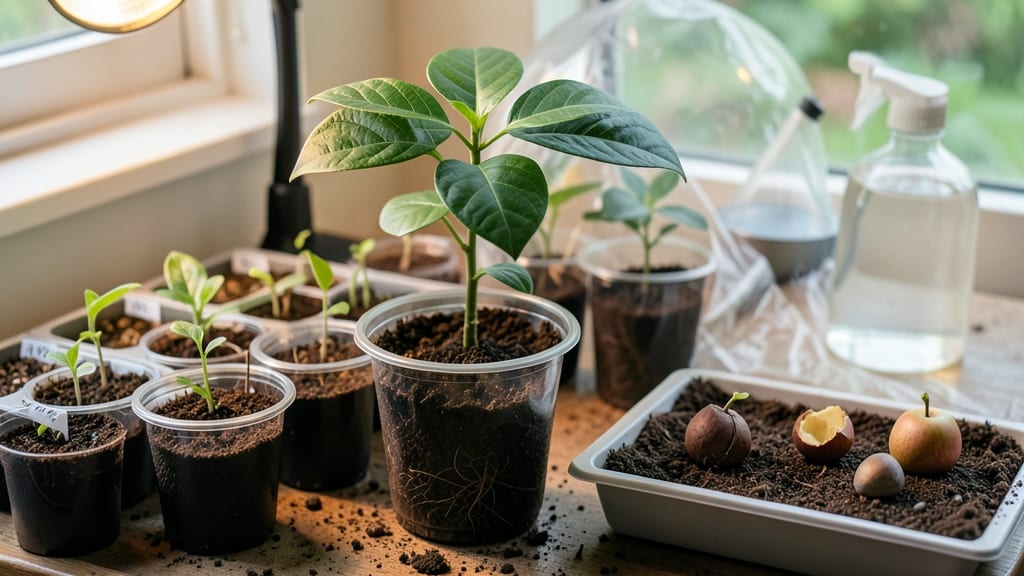
Propagating fruit trees from seed unlocks the potential for future harvests you can’t buy—if you master the germination process. 🌱 I've struggled with weak seedlings before, but these techniques produce sturdy, vigorous trees that outperform nursery stock over time.
The secret starts with seed selection: choose fresh, plump seeds from your favorite varieties. Some trees like apples and pears need stratification (cold treatment) to break dormancy, while others like avocados sprout in weeks with the right moisture.
Patience pays off—most fruit trees take 3-5 years to bear fruit, but the roots develop stronger than grafted trees.
You'll end up with hardy young trees ready for transplanting once they've developed their second set of true leaves. The key is keeping them moist but not soggy, and giving them bright indirect light until they're ready for the ground.
These seedlings grow faster and handle stress better than their nursery counterparts.
Perfect for homesteaders, orchard dreamers, or anyone tired of store-bought trees that never quite thrive. Here's how to turn seeds into fruit-bearing giants—with fewer failures along the way.
📚 In This Guide
- What you need
- Instructions
- Tips and common mistakes
- Wrapping up and next steps
What you need
- ● Fresh fruit seeds – Harvest from ripe, organic fruit (e.g., apples, citrus, avocados). Aim for 5-10 seeds per variety for better success rates.
- ● Well-draining potting mix – A blend of 50% peat moss or coconut coir and 50% perlite or vermiculite (sterilized). Avoid garden soil—it’s too dense!
- ● Small pots or seed trays – 2-3 inch diameter containers with drainage holes (one per seed). Clear plastic or biodegradable pots work great.
- ● Watering can or spray bottle – For gentle moisture control (overwatering is the #1 killer of tiny seeds!).
- ● Plastic wrap or humidity dome – To create a mini greenhouse effect and retain warmth.
- ● Grow lights or sunny windowsill – Seeds need 12-16 hours of light daily (a south-facing window or LED grow light works).
- ○ Heat mat (optional but helpful) – Keeps soil at 70-85°F (21-29°C) for faster germination.
- ● Small hand trowel or spoon – For planting seeds ½ inch deep.
- ● Fine-mist spray bottle – Keeps seeds moist without disturbing them.
- ● Labeling tags & marker – Track varieties (e.g., "Honeycrisp Apple" or "Navel Orange").
- ● Pruning shears (later stage) – For transplanting seedlings into larger pots.
- ● Patience – Germination can take 2-12 weeks, depending on the fruit type!
- ● Consistent warmth – Most seeds thrive in 70-85°F (21-29°C).
- ● Space for growth – Seedlings need room to stretch before transplanting outdoors.
Step-by-Step guide to propagating fruit trees from seed
Here’s the method I’ve used to grow vigorous fruit trees from seed—with the secrets that make all the difference.
🌱 Step 1: Select and Prepare the Seeds
Start with fresh, plump seeds from ripe fruit—older seeds lose viability. Remove any remaining fruit flesh and rinse the seeds thoroughly under cool water. I like to soak them in a bowl of water for 24 hours to soften the outer coating and speed up germination. This step is especially critical for stone fruits like peaches or plums, where the seed coat can be tough and slow to break.
After soaking, drain the water and let the seeds air-dry slightly on a paper towel for 30 minutes. This prevents mold while keeping them moist enough to plant. If you’re working with seeds from tropical fruits like avocado, pierce the large seed with a toothpick to help water penetrate—this is the key to breaking dormancy for those varieties.
🪴 Step 2: Plant in Moist, Well-Draining Soil
Fill small pots—3-4 inches deep—with a mix of equal parts potting soil and perlite to ensure drainage. Press the soil down lightly to remove air pockets, then make a small hole—about ½ inch deep—for each seed. Gently place the seed in the hole with the flat side down (for stone fruits) or the pointed end up (for citrus or avocado). Cover it with a thin layer of soil, just enough to hold it in place.
Water the soil until it’s evenly moist but not soggy. You’ll know it’s right when water runs through the drainage hole without pooling. Place the pots in a warm spot—70-75°F—where they’ll stay consistently warm. A seedling heat mat helps maintain this temperature, especially if your home runs cooler. Avoid cold drafts, which can stall germination entirely.
⏰ Step 3: Provide Warmth and Monitor Germination
Germination can take anywhere from 2 weeks to 3 months, depending on the fruit type. Stone fruits like cherries or plums often sprout within 3-4 weeks, while citrus or avocado seeds may take 6-8 weeks. Keep the soil moist but never waterlogged—overwatering at this stage causes rot before the seedling even emerges.
Once the first true leaves appear—not the initial seed leaves—remove any weaker seedlings to give the strongest one room to grow. This is where patience pays off: Weak seedlings will struggle to develop into sturdy trees. If you’re growing multiple varieties, label each pot immediately to avoid confusion as they grow.
☀️ Step 4: Transition to Light and Gradual Hardening
After the seedlings have 3-4 sets of true leaves, it’s time to introduce them to brighter light. Move them to a south-facing window or under a grow light for 12-14 hours daily. Without enough light, seedlings stretch toward the source (called "legginess"), which weakens their stems. You’ll spot leggy growth as thin, pale stems with leaves spaced far apart—this is a red flag to adjust their light immediately.
Once the seedlings are 4-6 inches tall, begin hardening them off. Start by placing them outside in a shaded, sheltered spot for 1-2 hours the first day, then gradually increase their time outdoors over 7-10 days. This slow transition prevents shock and helps them adapt to wind and direct sun. By the time they’re ready for the ground, they’ll be tough enough to handle outdoor conditions.
Tips & tricks for propagating fruit trees from seed
These little-known techniques will help you bypass the most common pitfalls and grow fruit trees that thrive from the start.
Seed Selection: If you're working with stone fruits like peaches or apricots, choose seeds from fruit that's fully ripe but not overripe. The seed's viability drops dramatically after just a few days off the tree, so use them within 24 hours of harvesting. For tropical varieties like avocado, larger seeds tend to produce stronger seedlings—look for seeds that weigh at least 1.5 ounces.
Soaking Strategy: The 24-hour soak in Step 1 is non-negotiable for stone fruits, but here's what nobody tells you—use filtered water at room temperature (around 70°F) for best results. Tap water with chlorine can inhibit germination, so if you must use it, let it sit uncovered for 24 hours first to allow chlorine to evaporate. For tropical seeds like avocado, the toothpick trick works best when you pierce the seed in three places around the middle rather than just one.
Germination Environment: Maintaining that 70-75°F range in Step 2 is crucial, but don't rely solely on your thermostat reading. Place an inexpensive digital thermometer in the pot to monitor soil temperature—it should stay consistently within that range. If your home runs cooler, a simple seedling heat mat (around $15) will make all the difference. Avoid placing pots near drafty windows or vents, as temperature fluctuations can shock the seeds before they even sprout.
Light Transition: When moving seedlings to brighter light in Step 4, resist the urge to rush it. Gradually increase exposure over 3-4 days rather than the full 12-14 hours immediately. Start with 2-3 hours daily and watch for color changes in the leaves—healthy leaves will develop a deeper green as they adapt. This slow transition prevents the shock that causes leggy growth, which is nearly impossible to correct later.
Pro Tips for Propagating Fruit Trees From Seed
- These little-known techniques will help you bypass the most common pitfalls and grow fruit trees that thrive from the start.
- Seed Selection: If you're working with stone fruits like peaches or apricots, choose seeds from fruit that's fully ripe but not overripe.
- Soaking Strategy: The 24-hour soak in Step 1 is non-negotiable for stone fruits, but here's what nobody tells you—use filtered water at room temperature (around 70°F) for best results.
Frequently asked questions
Got questions about growing fruit trees from seed? You’re not alone—this method takes patience and know-how! Below, we’ve answered the most common queries to help you avoid pitfalls and boost your success rate.
How long does it take for fruit tree seeds to germinate?
Germination time varies by species, but most fruit tree seeds take 4–12 weeks to sprout. Stone fruits (peaches, cherries) often germinate faster (2–4 weeks) in warm conditions, while citrus or avocado seeds may take 2–3 months. Patience is key—keep soil moist and warm (70–85°F) to encourage speedy growth. Pro tip: Some seeds (like apples) need a cold stratification period to break dormancy!
Will seeds from store-bought fruit grow into true-to-type trees?
Probably not! Most commercial fruit (like grocery-store apples or peaches) is hybridized for flavor, size, or shelf life—not for seed propagation. Seedlings may grow, but they’ll likely produce wild, unpredictable fruit (smaller, tart, or inedible). For reliable trees, grafted nursery stock is your best bet—or save seeds from heirloom varieties grown by trusted local sources.
Can I speed up germination with any tricks?
Yes! Try these shortcuts:
- Warmth: Use a seedling heat mat (70–85°F) to mimic tropical conditions.
- Scarification: Nick the seed coat with sandpaper or soak in warm water for 24 hours to weaken it.
- Light exposure: Some seeds (like figs) need light to germinate—plant them shallowly.
- Hormone rooters: Dip seeds in a rooting hormone to encourage faster sprouting.
Warning: Avoid overwatering—soggy soil can cause rot!
What do I do if my seeds rot instead of sprouting?
Seed rot is a common issue, often caused by too much moisture, poor drainage, or fungal growth. If you notice mold or a foul smell, act fast:
- Discard the affected seeds and sterilize your container with a 10% bleach solution.
- Use a well-draining mix (50% perlite/pumice, 50% peat or coco coir).
- Water gently from the bottom (use a tray) to avoid oversaturating the soil.
- Consider paper towel germination for stubborn seeds—fold them in a damp paper towel and place in a sealed bag until sprouts appear.
Prevention is easier than cleanup—sterilize tools and keep humidity in check!
How do I care for seedlings once they sprout?
New sprouts need gentle but consistent care:
- Light: Move seedlings to a sunny window or under grow lights (12–14 hours/day).
- Water: Keep soil moist but not soggy—overwatering is the #1 killer of young plants.
- Fertilizer: Wait until seedlings have 2–3 true leaves before using a diluted liquid fertilizer (half-strength).
- Hardening off: Acclimate seedlings to outdoor conditions over 1–2 weeks before transplanting.
Fun fact: Seedlings grow faster in pots with good airflow—avoid overcrowding!
Wrapping up and next steps
Propagating fruit trees from seed is a rewarding journey that connects you to nature’s cycle—one tiny sprout at a time! 🌱 While it demands patience and care, the joy of nurturing a tree from scratch and watching it grow into a thriving fruit-bearing plant is unmatched.
Start small, stay consistent, and don’t hesitate to experiment with different techniques to find what works best for your climate and favorite fruits.
Ready to take the next step? Plant your first seed today and let the magic of growth unfold. If you’re eager to dive deeper, explore local gardening forums or connect with fellow enthusiasts to share tips and triumphs. Happy growing!