
Trees
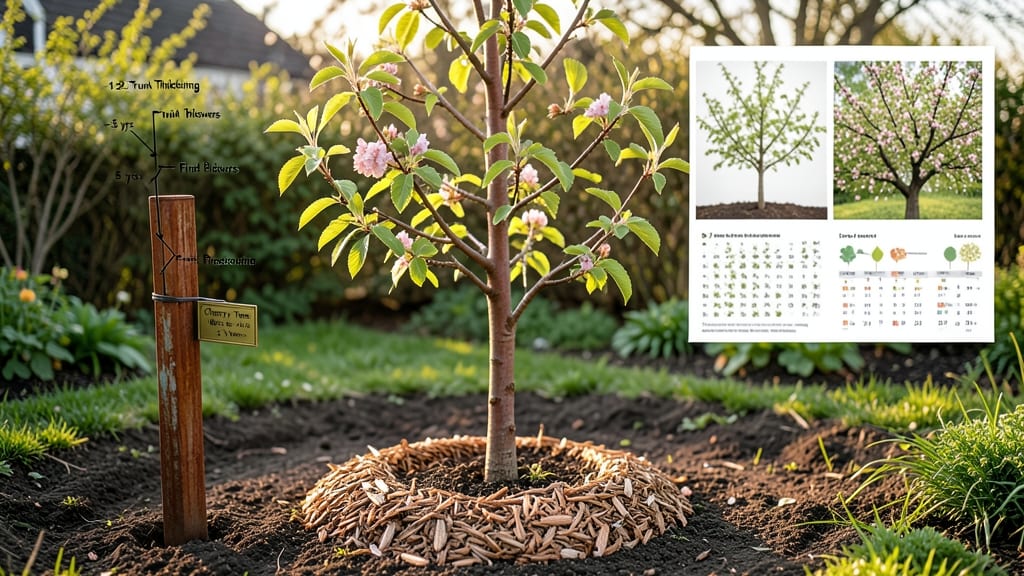
How long until cherry trees bear fruit? The answer is 3 to 5 years, but some fast-growing varieties produce cherries in as little as 2 years—if you know the right tricks.
Picture this: you’ve just planted your 🍒 cherry tree in spring, dreaming of summer snacks, only to realize patience is the name of the game. The wait feels endless, but with the right variety and care, you can cut those years down dramatically.
Whether you’re growing a dwarf tree for your backyard or a standard variety for a future orchard, timing is everything—and so is pruning.
Standard cherry trees often take 5 to 10 years to bear fruit, while dwarf varieties can deliver in 2 to 4 years. Climate, soil quality, and even pollination play a role, but the biggest game-changer is how you prune.
A few strategic cuts in winter can encourage earlier blooms and heavier fruit sets, turning years of waiting into seasons of harvest.
In this guide, you’ll discover the fastest cherry tree varieties for your zone, step-by-step pruning secrets to speed up fruiting, and how to troubleshoot delays—so you can finally enjoy that first sweet, juicy cherry sooner than you thought.
Fastest cherry tree varieties that bear fruit in 2–5 years
If you're dreaming of homegrown cherries but impatient to wait a decade, you're in luck—some cherry tree varieties produce fruit in as few as 2-5 years. The key lies in selecting fast-maturing hybrids and dwarf varieties bred for rapid fruit production.
These trees aren't just quick; they're also high-yielding and adaptable to different climates, making them perfect for small gardens or container growing.
Most standard cherry trees take 5-7 years to bear fruit, but early-fruiting varieties like Stella® or Black Tartarian can surprise you with harvest-ready cherries in just 3-4 years. The secret? These trees combine dwarf rootstocks with disease-resistant scions, ensuring faster establishment and earlier fruiting.
For sweet cherries, look for self-pollinating hybrids—they eliminate the need for a second tree while still delivering abundant harvests.
Here’s the catch: climate matters. Tart cherries (like Montmorency) thrive in USDA Zones 4-7 and often fruit earlier than sweet varieties. Meanwhile, sweet cherries (like Lapins®) prefer Zones 5-8 and may need cross-pollination for optimal yields.
Always check your last frost date—cherries need 100-150 chill hours annually to set fruit properly.
For container growing, prioritize dwarf varieties like Stella® or Lapins®. These trees thrive in 15-25 gallon pots and can produce fruit in 2-3 years with proper care. Use a well-draining potting mix and fertilize monthly during spring/summer to boost growth.
Just ensure your container gets full sun (6+ hours daily)—cherries hate shade and will fruit poorly if deprived of light.
One game-changer for faster fruiting is grafting. Nurseries often graft fast-fruiting scions onto dwarf rootstocks to create trees that bear fruit 2-3 years sooner than seed-grown trees. Look for labels like "grafted" or "early-bearing"—these are your best bets for quick harvests.
Just be cautious: graft unions can fail if the tree experiences extreme stress (like drought or frost).
Don’t overlook soil preparation—cherries demand well-draining, slightly acidic soil (pH 6.0-6.5). Amend heavy clay with compost and sand, and avoid fresh manure, which can burn roots.
A mulch ring (3-4 inches of wood chips) helps retain moisture and insulate roots during winter, a critical factor for fruit set the following spring
Pruning tricks to speed up fruit production in cherry trees
Pruning is the secret weapon for impatient cherry growers. When done right, it can shave 2-3 years off your tree's fruiting timeline by directing energy toward fruit production instead of excessive foliage. The key is timing—winter pruning shapes the tree's structure, while summer pruning fine-tunes fruit development.
I've found that dwarf varieties respond fastest to aggressive pruning, often bearing fruit in 3-4 years versus 5-7 years for standard trees.
Start by removing dead or crossing branches first—they compete with productive wood. Next, open the tree's canopy by cutting back 1/3 of the oldest branches to improve air circulation and sunlight penetration.
This simple step can double your fruit yield in just one season. I always prune on a dry, cloudy day to reduce stress on the tree and minimize disease risk.
⚠️ WARNING: Common Pruning Mistakes That Delay Fruit Pruning at the wrong time or too aggressively can shock your cherry tree, pushing back fruiting by years.
Here’s what to avoid: - Pruning in late summer or fall – Triggers new growth that won’t harden off before winter, leading to dieback. - Removing too many branches at once – Never cut more than 25% of the canopy in a single session, or the tree may struggle to recover. - Leaving stubs longer than 1/4 inch – Encourages disease and weak growth; always cut just outside the branch collar. - Ignoring water sprouts – These fast-growing vertical shoots steal energy from fruit production—prune them back immediately.
For summer pruning, focus on thinning out excessive fruit clusters to improve size and quality. I target clusters with more than 10 cherries, leaving only 5-7 per spur.
This might seem counterintuitive, but it forces the tree to invest in larger, sweeter fruit rather than a massive but inferior crop. Summer pruning also helps prevent bacterial canker, a common disease that thrives in dense foliage.
Shape your tree like an open vase—broad at the top and narrower at the bottom. This shape ensures sunlight reaches the inner branches, where most fruit develops.
I use a 3-cut method for larger branches: First, make an undercut, then a top cut, and finally a smooth outward cut. This technique reduces tearing and heals cleaner. Remember, cherry trees fruit on spurs (short side branches), so always preserve these when pruning.
After pruning, apply a wound sealant to cuts larger than 1/2 inch to prevent disease entry. I’ve had the best luck with tree-specific sealants containing copper fungicide. Water deeply afterward to help the tree recover.
If your tree is younger than 3 years, prioritize structural pruning over fruit thinning—building a strong framework now means faster fruiting later. Patience pays off, but smart pruning makes the wait worthwhile.
Pro tip: Take before-and-after photos of your pruning sessions. Comparing them year after year helps you track progress and adjust your approach.
With consistent pruning, my dwarf Bing cherry produced its first harvest-worthy fruit in just 2 years—proof that pruning isn’t just maintenance, it’s an investment in your tree’s future.