
Pruning
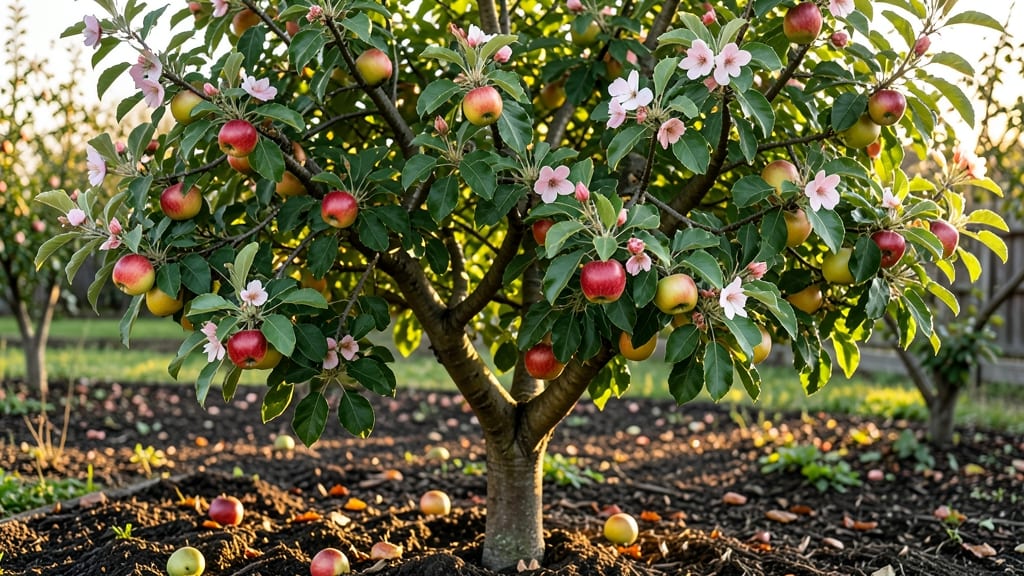
A picture of an apple tree with fruits reveals four key seasonal stages: delicate white blossoms in spring, tiny green fruitlets in early summer, firm developing apples in late summer, and fully colored mature fruit in fall, each with distinct leaf and bark features.
A well-composed photo of an apple tree captures not just the fruit but the entire lifecycle of the tree. 🍏 In spring, you'll notice clusters of white blossoms that transform into tiny green fruitlets by early summer—this is when the tree sets its fruit crop.
By late summer, the apples grow larger and develop their signature color, while the leaves turn a deeper green. The fall stage shows fully mature fruit with crisp bark and vibrant foliage, making it the perfect time for harvest photos.
What makes these seasonal changes visually striking is how each stage presents unique textures and colors. For example, the glossy green of new leaves contrasts sharply with the matte finish of developing fruit. 🌿 The bark also tells a story—younger trees have smoother bark that develops ridges as they mature.
These visual cues help identify not just the season but also the specific apple variety, from the red blush of 'Fuji' to the golden hue of 'Gala'.
💡 In This Article
- Identifying Apple Tree Fruit Development Stages Visually
- Best Times to Photograph Apple Trees for Seasonal Guides
Identifying apple tree fruit development stages visually
Apple trees undergo dramatic visual transformations throughout the year, with each stage revealing distinct characteristics. In late winter to early spring, you'll spot swollen buds that eventually burst into clusters of white-pink blossoms—these delicate flowers last only 7-10 days but are critical for fruit production.
The blossoms' color intensity varies by variety, with 'Granny Smith' showing pale pink hues while 'Honeycrisp' displays pure white petals. 🌸 These flowers are highly sensitive to frost, which can damage them before pollination occurs.
By late spring to early summer, successful pollination results in tiny green fruitlets about the size of a pea. This is the fruit set stage, where only 10-20% of blossoms typically develop into fruit due to natural thinning processes.
The leaves at this stage are bright green with serrated edges, and you might notice calyx cups (the leaf-like structures at the fruit's base) that help identify the variety. For example, 'McIntosh' apples have pointed calyx cups, while 'Golden Delicious' features rounded ones.
The late summer phase brings rapid growth as apples increase in size and develop their signature colors. The skin becomes firmer, and the fruit's blush or yellow tones emerge—'Red Delicious' shows deep red stripes, while 'Ambrosia' develops a golden-green hue.
The leaves turn a deeper green and may show signs of rust or mildew if the tree is stressed. This is also when the bark begins showing horizontal lenticels (porous spots) that allow gas exchange, a key visual clue for identifying mature trees. 🌿
In fall, the tree reaches its most photogenic stage with fully mature fruit. Apples achieve their final color, size (2-4 inches depending on variety), and texture—some like 'Pink Lady' develop a waxy coating, while others like 'Jazz' remain slightly matte.
The leaves transition from green to shades of orange or red, creating stunning backdrops. Bark becomes more pronounced with deep ridges, especially in older trees, and the ground may show fallen leaves and dropped fruit, signaling harvest time.
What most photographers overlook is how lighting conditions affect these visual cues. Morning light enhances the glossy sheen of new leaves and fruit, while afternoon light brings out the depth of red hues. The angle of sunlight also creates dramatic shadows that highlight the tree's three-dimensional structure.
For example, a low-angle shot emphasizes the height of the tree and the density of branches, while a top-down view showcases the symmetry of the fruit distribution.
Understanding these stages helps you anticipate the best times for photography. Early spring captures the ephemeral beauty of blossoms, while late summer offers the dynamic growth of developing fruit. The fall stage provides the richest colors and textures, making it ideal for commercial or artistic shots.
Each season presents unique opportunities to highlight the tree's lifecycle through your lens. 📸