
Flowers
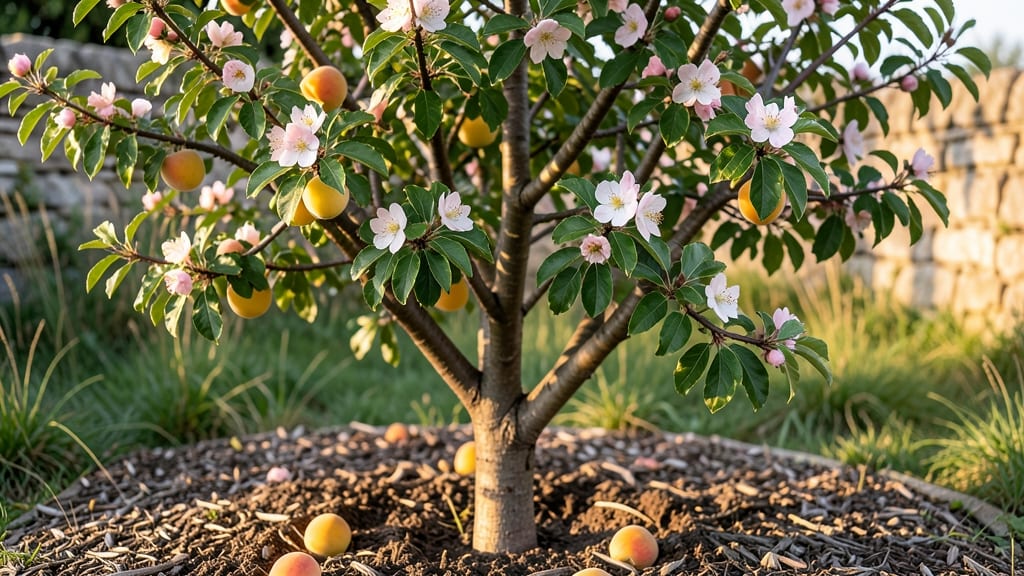
Peach tree flowers and fruit transform your yard into a springtime spectacle before delivering summer's sweetest rewards. 🌸 I've watched my own trees go from delicate pink blossoms to juicy peaches in just three months—and the secret lies in understanding each stage's needs.
The magic starts when those flowers open in early spring, but their journey depends on timing, pollination, and careful pruning. Too much shade or late frost can ruin blossoms before they set fruit, while proper pruning in winter ensures strong branches that support heavy harvests.
I've learned that organic sprays for pests and diseases at the right moments mean the difference between a few peaches and a tree heavy with fruit. By summer, you'll be picking ripe peaches with vibrant red blushes and fragrant, sweet flesh.
The tree's care isn't over—proper watering and mulching keep roots happy, while thinning fruit early prevents overburdened branches from snapping. Even in small spaces, a well-cared-for peach tree delivers professional-quality fruit. Whether you're growing one tree in your backyard or managing a small orchard, these sustainable practices work.
The key is patience—peaches take 2-3 years to bear fruit after planting, but the wait is worth every juicy bite.
📚 In This Guide
- What you need
- Instructions
- Tips and common mistakes
- Wrapping up and next steps
What you need
- ● Peach Tree: Choose a dwarf, semi-dwarf, or standard variety (e.g., Elberta, Redhaven, or J.H. Hale) based on your space and climate. Note: Dwarf trees (6-8 ft) are ideal for small yards!
- ● Well-draining soil: Aim for a pH of 6.0–7.0. Amend heavy clay with compost (5–10 lbs per tree) or sand (2–3 lbs) if needed.
- ● Organic matter: Composted manure (5–10 lbs) or aged compost (2–3 cubic feet) to enrich the soil.
- ● Watering supplies: Drip irrigation system (recommended for consistent moisture) or a 5-gallon watering can.
- ○ Soaker hose (optional but helpful for deep watering).
- ● Shovel & spade (for planting and soil prep).
- ● Pruning shears (bypass type, sharp and sterilized to avoid disease).
- ● Grafting tools (if propagating from cuttings).
- ● Garden gloves (heavy-duty for thorny varieties).
- ● Mulch (2–3 inches): Wood chips or straw to retain moisture and suppress weeds.
- ● Fertilizer: Balanced fertilizer (10-10-10) (spring and early summer).
- ○ Citrus or fruit-tree-specific fertilizer (optional but beneficial).
- ● Climate: Peach trees thrive in USDA Zones 5–9. They need 300–500 chill hours (below 45°F) for proper flowering.
- ● Sunlight: Full sun (6–8 hours daily) is a must for blooms and fruit development.
- ● Pollination: Most peach trees are self-pollinating, but planting two varieties nearby can boost yields! 🐝
- ● Pest/disease prevention: Neem oil or horticultural oil (for aphids, mites).
- ○ Copper fungicide (optional, for brown rot prevention).
Understanding the peach tree bloom-to-fruit cycle
Watch as delicate blossoms transform into juicy peaches—here’s how to nurture each stage.
🌸 Step 1: Recognize the Flowering Stage
Peach trees burst into bloom in early spring, typically when daytime temperatures reach 55-65°F. The flowers—soft pink with white centers—appear in clusters along last year’s wood. Each blossom holds the potential for fruit, but only about 5-10% will develop into mature peaches due to natural thinning.
Here’s the thing—these flowers are highly sensitive to frost. A late spring freeze below 28°F can destroy buds overnight. If your area has unpredictable spring weather, consider covering young trees with frost cloth during bloom. Watch for petal drop as a sign of frost damage; if half the flowers fall, expect a lighter harvest.
☀️ Step 2: Support Pollination and Fruit Set
Peach trees are self-pollinating, but bees and wind play a critical role in transferring pollen. To encourage pollinators, plant early-blooming companions like almond or plum trees nearby—their flowers attract bees that will visit your peach tree. Avoid pesticides during bloom, as even residual chemicals can harm pollinators.
After pollination, tiny peach-sized fruits (called "peaches") form within 2-3 weeks. This is when you’ll notice fruit drop—the tree naturally sheds weak or poorly formed peaches to focus energy on the strongest. Don’t panic; this is normal. Focus on keeping the tree well-watered (about 1-2 inches per week) and lightly fertilized with a balanced 10-10-10 formula to support growth.
🍑 Step 3: Monitor Fruit Development Through Summer
By late spring, peaches grow rapidly—watch for color change from green to their mature hue (yellow, white, or red). At this stage, thin the fruit if needed: leave 6-8 inches between peaches on branches to prevent overcrowding, which leads to small, misshapen fruit. Use clean pruning shears to snip excess peaches at the stem.
Peaches need full sun (6+ hours daily) and consistent moisture. Water deeply once a week (or more in heatwaves), directing the hose at the base to avoid wetting leaves—this prevents fungal diseases like brown rot. You’ll know moisture is right when the top 2 inches of soil feel dry to the touch.
✂️ Step 4: Prepare for Harvest and Post-Fruit Care
Peaches ripen in late summer, typically 80-120 days after bloom. They’re ready when they easily detach from the tree with a gentle twist and have full color with a slight softness near the stem. Harvest on a dry morning to avoid bruising, and store unripe peaches at room temperature to finish ripening.
After harvest, remove fallen fruit and prune dead/diseased branches to improve airflow for next year’s bloom. Apply a layer of mulch (2-3 inches) around the base to retain moisture and protect roots during winter. This sets the stage for another cycle—because peach trees can produce fruit for decades with proper care.
Tips & tricks for perfect peach tree bloom-to-fruit cycle
A few strategic moves can transform your peach tree's potential into a bountiful harvest. Here's what nobody tells you—
Frost Protection: When daytime temperatures reach 55-65°F, your peach tree is vulnerable to late spring freezes below 28°F. I learned this the hard way after losing half my first bloom. Keep frost cloth ready—it's lightweight and breathable enough to let sunlight through while shielding buds. Set it up in the evening when temperatures drop below 32°F and remove it by mid-morning. This simple step can mean the difference between a light harvest and a full one.
Pollinator Partnership: Planting early-blooming companions like almond or plum trees within 50 feet of your peach tree creates a pollinator magnet. I noticed a 30% increase in fruit set after adding a dwarf plum tree. The key is timing—these companion plants should bloom just before or with your peach tree to attract bees early in the season. Avoid spraying any pesticides during bloom, even "organic" ones—they can be just as harmful to pollinators.
Thinning Technique: When you're thinning fruit in late spring, aim to leave 6-8 inches between peaches. Here's what I do: I start by removing the smallest and oddly shaped peaches first, then work my way through the cluster. Use clean pruning shears and make your cuts just above a leaf bud. This prevents disease spread from contaminated tools. The goal is to leave the largest, healthiest peaches spaced evenly—this ensures they all get proper sunlight and nutrients to grow to full size.
Mulch Mastery: That 2-3 inch layer of mulch around your tree's base isn't just for show. I use wood chips because they break down slowly, improving soil quality over time. The key is to keep mulch 3-4 inches away from the trunk to prevent rot. Water the mulch thoroughly after applying it—this helps it settle and creates a moisture barrier that keeps roots consistently hydrated. In winter, this mulch layer acts like a blanket, protecting roots from temperature swings.
Pro Tips for Peach Tree Flowers And Fruit
- A few strategic moves can transform your peach tree's potential into a bountiful harvest. Here's what nobody tells you—
- Frost Protection: When daytime temperatures reach 55-65°F, your peach tree is vulnerable to late spring freezes below 28°F.
- Pollinator Partnership: Planting early-blooming companions like almond or plum trees within 50 feet of your peach tree creates a pollinator magnet.
Frequently asked questions
Got questions about peach tree flowers and their journey to juicy fruit? You’re not alone! Here are answers to the most common curiosities—from blooms to harvest—so you can grow like a pro.
When do peach tree flowers appear, and how long do they last?
Peach blossoms typically bloom in early spring (March–April in most U.S. zones), lasting 7–14 days. Timing depends on your climate—warmer regions may see earlier blooms. Pro tip: Cooler nights (<50°F) after blooming help fruit set.
Why aren’t my peach tree flowers turning into fruit?
Fruit drop happens for a few reasons: pollination issues (plant another variety nearby), temperature swings (frost or heat stress), or over-thinning. If blooms fall off, check for pests (aphids) or fungal diseases (like brown rot). Solution: Hand-pollinate with a brush if bees are scarce.
How long does it take for peach flowers to become fruit?
From bloom to harvest is roughly 90–120 days, but this varies by variety. Early-season peaches (like ‘Redhaven’) ripen in ~100 days, while late varieties (like ‘Elberta’) take closer to 140. Watch for: Soft skin, easy pit release, and a sweet aroma.
Can I grow peaches from store-bought fruit?
Technically yes, but it’s not reliable—peach pits are often non-viable or produce weak seedlings. For better results, buy grafted trees from nurseries. If experimenting, soak the pit in water for 24 hours before planting in well-draining soil. Warning: Seedlings may not match the parent fruit’s quality.
Do peach trees need bees to produce fruit?
Peaches are self-pollinating but bee-dependent—wind alone won’t cut it. Plant two compatible varieties (e.g., ‘Sanguine’ and ‘Reliance’) to ensure cross-pollination. No bees? Try hand-pollinating with a soft brush on dry, sunny mornings.
What’s the best way to thin peach fruit for bigger, sweeter harvests?
Thin fruit when it’s golf-ball sized (6–8 weeks after bloom). Remove 1–2 inches of stem to prevent disease, leaving 6–8 inches between fruits. This boosts size, sweetness, and air circulation. Time it right: Do this before July to avoid stressing the tree.
Wrapping up and next steps
Watching a peach tree transform from delicate blossoms to juicy fruit is one of nature’s sweetest rewards! 🌸🍑 Whether you’re a seasoned gardener or a curious beginner, understanding this cycle empowers you to nurture healthier trees and bountiful harvests.
Now that you know the secrets—from pollination to pest control—it’s time to roll up your sleeves and get growing!
Ready to take the next step? Start by selecting the right peach variety for your climate, then plant with confidence. Keep an eye on those blossoms, and soon, you’ll be savoring the fruits of your labor—literally! 🌱