
Pruning
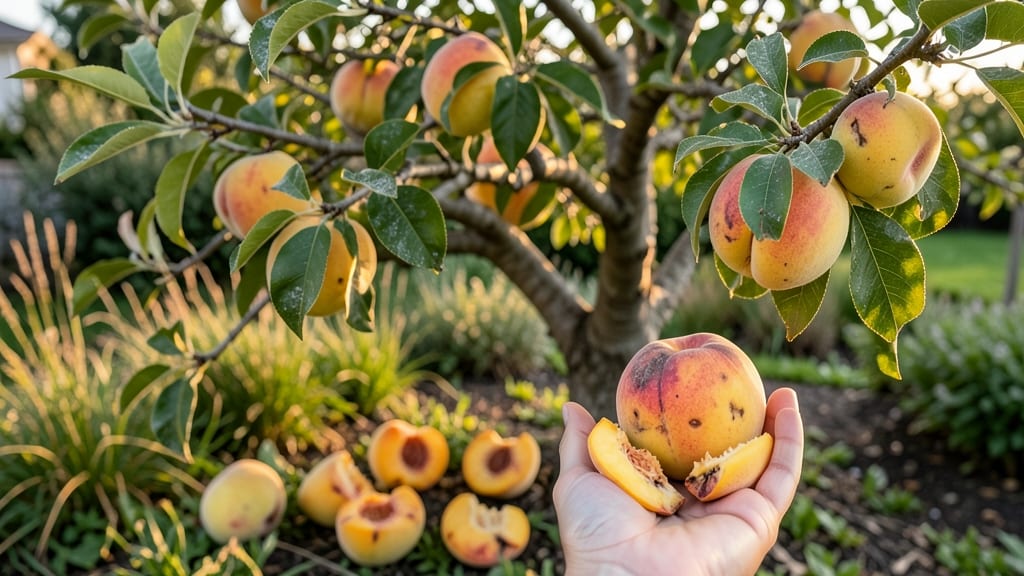
Peach trees dropping fruit before it ripens is the most frustrating part of growing them—until you learn the pruning tricks that actually work. 🌱 I’ve watched my harvest shrink from bushels to handfuls, but these targeted cuts and timing shifts made all the difference last season.
The problem usually starts with overcrowded branches or too much nitrogen, which sends energy into leaves instead of fruit. Prune in late winter to open the canopy, and thin clusters in early spring to reduce competition—just leave one peach per cluster.
Water deeply but infrequently, and avoid heavy fertilizer after blooming. By summer, you’ll see fewer dropped fruits and bigger, sweeter peaches hanging on the tree. The key is balancing growth and fruit retention through precise cuts and smart care. Let’s turn that disappointment into a harvest.
Start with your pruners and a sharp eye for branches crossing or rubbing—these create weak spots where fruit drops. Remove any dead, diseased, or water-sprouting branches first, then cut back to an outward-facing bud to encourage better airflow.
Thinning fruit clusters by hand (yes, it’s tedious) reduces stress on the tree and improves size. Pests like aphids and borers also trigger fruit drop by sapping energy. Spray neem oil early in the season and monitor for signs of infestation.
Even a small infestation can cause enough stress to make fruit fall prematurely, so stay vigilant.
Consistent watering is just as critical as pruning—peach trees hate drought stress or soggy roots. Deep water once a week (more in extreme heat) and mulch heavily to keep moisture steady. Avoid fertilizing after June, as late-season growth attracts pests and weakens fruit retention.
With these adjustments, your tree will focus on keeping fruit on the branches where it belongs. The payoff? A tree heavy with juicy peaches by late summer—no more bitter disappointment, just sweet success.
Root Causes Behind Fruit Loss
Understanding why peaches prematurely drop from the tree is the first step to preventing it—and saving your harvest. 🌱🍑 Fruit drop isn’t just random; it’s a natural (or sometimes stressed) response to environmental, biological, or cultural factors.
Below, we break down the key triggers and why they force your peaches to let go before ripening.
Peach trees are sensitive to sudden changes in temperature, humidity, or wind. When conditions swing from one extreme to another—like a heatwave followed by a cold snap—the tree’s metabolism gets thrown off balance.
- Heat Stress: High temperatures (above 90°F/32°C) can cause sunscald on fruit, leading to premature detachment. The tree’s protective wax layer breaks down, and cells die, triggering drop. - Cold Damage: Late frosts or early freezes (below 28°F/-2°C) can kill blossoms and developing fruit.
Even if the tree survives, the shock signals the plant to abort weak or damaged fruit to conserve energy. - Wind & Hail: Physical trauma from storms weakens fruit stems. The tree sheds injured peaches to avoid energy waste on fruit that won’t mature properly.
💡 Pro Tip: Use frost cloths in spring and shade cloth in summer to buffer temperature swings. Mulch also helps regulate soil temperature.
Peach trees need a precise balance of nutrients to support fruit development. Too much or too little of a key element can lead to nutritional stress, forcing the tree to drop fruit.
| Nutrient Issue | Symptoms | Why It Causes Drop |
|---|---|---|
| Nitrogen Deficiency | Yellowing leaves, stunted growth | The tree prioritizes leaf growth over fruit, leading to early abscission (fruit drop). |
| Potassium Deficiency | Weak stems, brown leaf edges | Potassium strengthens cell walls; without it, fruit softens and detaches easily. |
| Boron Deficiency | Cracked fruit, small peaches | Boron is critical for cell wall integrity; deficiency causes fruit to split and fall. |
| Over-Fertilization | Burnt leaves, excessive vegetative growth | Too much nitrogen or salts stresses roots, reducing water/fruit support. |
✨ Action Step: Test your soil (pH 6.0–6.5 is ideal for peaches) and amend with compost, wood ash (for boron), or a balanced fertilizer (10-10-10 or 5-10-10).
Hidden invaders can sap the tree’s energy or directly damage fruit, leading to premature drop. Common culprits include:
- Peach Tree Borers: Larvae burrow into the cambium layer, disrupting water/nutrient flow.
The tree drops fruit to survive. - **Brown Rot (Monilinia fructicola): Fungal spores infect blossoms and fruit, causing mummified peaches that fall before ripening. - Aphids & Scale Insects: These sap-suckers weaken the tree, reducing its ability to support fruit loads. - Birds & Wildlife: Overripe or damaged fruit is pecked or gnawed, accelerating natural drop.
🔥 Prevention: Apply dormant oil (for borers), copper fungicide (for brown rot), and netting (to deter birds). Prune for air circulation to reduce humidity-related diseases.
Peach trees have a finite energy budget. When they bear too much fruit or are poorly pruned, they sacrifice weaker fruit to save the strongest.
- Thinning Failure: If you skip hand-thinning (removing excess fruit early), the tree self-thins—dropping small, crowded peaches to let the rest grow larger. - Overcrowded Canopy: Dense branches block sunlight, leading to uneven ripening and drop.
Poor air flow also traps moisture, inviting rot. - Root Restriction: Compacted soil or root-bound trees struggle to support heavy fruit loads, causing premature detachment.
👨🍳 Pruning Fix: In late winter/early spring, prune to:
- Remove water sprouts (vertical shoots).
- Open the canopy for sunlight penetration.
- Limit branches to 1/3 of the tree’s height to reduce weight stress.
Peach trees follow a natural fruiting cycle, and certain stages make them more prone to drop:
- June Drop (Natural Thinning): 4–6 weeks after blossoming, the tree sheds 50–90% of fruit to ensure remaining peaches get enough nutrients.
- Post-Bloom Stress: If pollination is poor (due to weather or lack of bees), the tree aborts unpollinated flowers/fruit.
- Hormonal Shifts: Ethylene gas (a plant hormone) spikes during stress or ripening, which can trigger abscission (fruit detachment).
🎯 Solution: Avoid over-watering during flowering (soggy soil = poor pollination). Hand-thin after June drop** to reduce stress on the tree.
Fixing Peach Tree Fruit Drop
Preventing fruit drop in your peach tree starts with understanding the root cause—whether it’s environmental stress, improper pruning, or pest pressure. Once you identify the issue, the fix is often straightforward. Below, we break down practical solutions for each common trigger, along with prevention tips to keep your harvest thriving.
Fix: Adjust your pruning strategy to balance growth and fruit production.
- 🔥 Correct Pruning Technique
- Prune during late winter or early spring (before buds swell) to avoid stressing the tree.
- Remove no more than 25% of the canopy in one season—aggressive cuts shock the tree.
- Focus on open-center pruning: Thin out crowded branches to improve airflow and sunlight penetration.
- 🍳 Prune for Fruit Zones
- Target last year’s growth (wood from the previous season) where most peaches form.
- Cut back suckers and water sprouts (fast-growing vertical shoots) to redirect energy to fruit.
- 👨🍳 Post-Pruning Care
- Apply a balanced fertilizer (10-10-10) after pruning to replenish nutrients.
- Water deeply to help the tree recover.
✨ Prevention Tip: Prune only when necessary—healthy trees need minimal intervention. Avoid "clean-up" pruning mid-season, which can trigger stress-related drop.
Fix: Stabilize growing conditions to reduce premature fruit loss.
- 💡 Watering Adjustments
- Deep water 1–2 times per week (1–2 inches per session) during dry spells.
- Use mulch (straw or wood chips) to retain moisture and regulate soil temperature.
- Avoid overwatering, which can cause root rot and weaken the tree.
- 🌞 Shade & Heat Management
- If your tree is in a hot, sunny spot, provide partial afternoon shade during peak summer.
- Drip irrigation (vs. sprinklers) reduces leaf burn and stress.
- 🍎 Cold Protection
- Young trees need winter mulch (6–8 inches) to insulate roots.
- Late frost? Cover blossoms with frost cloth if temperatures dip below 28°F.
🎯 Prevention Tip: Plant peach trees in microclimates with afternoon shade (e.g., near a fence or building) to buffer extreme heat.
Fix: Target pests and diseases before they trigger fruit drop.
- 🔪 Pest Control
- Handpick or spray peach tree borers (look for sawdust-like frass near the trunk).
- Use neem oil or insecticidal soap for aphids and mites (apply in early morning).
- Beneficial insects (ladybugs, lacewings) can be introduced for natural control.
- 🌡️ Disease Management
- Prune out infected branches (brown rot appears as mummified fruit).
- Sanitize tools with rubbing alcohol between cuts to prevent spread.
- Fungicide spray (copper-based or sulfur) in early spring and after rain.
💡 Pro Tip: Thin fruit early (when peaches are golf-ball size) to reduce disease pressure—fewer fruits = better airflow.
Fix: Test soil and supplement as needed.
- 📊 Soil Testing First!
- Send a soil sample to your local extension office for pH and nutrient analysis.
- Ideal pH for peaches: 6.0–7.0 (adjust with lime or sulfur if needed).
- 💪 Fertilizer Fixes
- Nitrogen (N): Use alfalfa meal or fish emulsion for a slow-release boost.
- Zinc/Boron: Apply chelated micronutrients if leaves show yellowing or stunted growth.
- Avoid over-fertilizing—too much nitrogen promotes leafy growth over fruit.
✨ Prevention Tip: Side-dress with compost in early spring to build soil health long-term.
Fix: Thin fruit to match the tree’s capacity.
- 🍳 Hand-Thinning Technique
- Remove excess fruit when they’re 1–2 inches wide, leaving 6–8 inches between peaches.
- Focus on smaller, weaker branches—they can’t support heavy loads.
- 🌱 Structural Support
- Stake young trees to prevent branch breakage from fruit weight.
- Prune out weak crotches where branches meet the trunk.
🎯 Prevention Tip: Dwarf or semi-dwarf varieties handle fruit loads better than standard trees—consider them for small spaces!
If natural thinning isn’t enough, hormonal thinners (like NAA or ethephon) can help—but use sparingly and follow label instructions.
🔥 Quick Recap:
| Cause | Fix | Prevent |
|---|---|---|
| Overpruning | Light pruning, fertilize | Prune only in dormant season |
| Heat/Drought | Deep water, mulch | Plant in sheltered microclimate |
| Pests/Diseases | Neem oil, fungicide, prune out | Monitor early, thin fruit |
| Nutrient Deficiency | Soil test, targeted fertilizer | Compost annually |
| Overloaded Branches | Hand-thin fruit | Choose dwarf varieties |
Frequently asked questions
Why does my peach tree drop fruit even when it looks healthy?
Even healthy trees experience June drop, a natural process where 50-90% of fruit falls 4-6 weeks after blooming. This helps the remaining peaches grow larger by redirecting the tree's energy. If drop happens later or excessively, check for nutrient deficiencies (like boron or potassium) or pest stress like aphids.
How can I tell if my peach tree is dropping fruit because of pests or environmental stress?
Look for visual clues: Pest damage often shows as sticky residue (aphids), chewed leaves (borers), or mummified fruit (brown rot). Environmental stress appears as uneven ripening, small peaches, or yellowing leaves. Check the soil too—dry, cracked earth or waterlogged roots both trigger drop.
Is it too late to save my peaches if they're already falling?
Not necessarily! First, hand-thin remaining fruit to 6-8 inches apart to reduce stress. Then focus on consistent watering (1-2 inches per week) and mulching to stabilize the tree. If pests are the issue, apply neem oil immediately—it's safe for fruit but effective against many common pests.
Should I fertilize my peach tree after I see fruit drop?
Only if your soil test shows deficiencies! Over-fertilizing after drop can worsen the problem by promoting leafy growth over fruit. Instead, use a balanced fertilizer (like 10-10-10) in early spring and focus on compost for long-term soil health. Avoid nitrogen-heavy fertilizers after June.
Can I prevent fruit drop next year just by pruning differently?
Pruning helps, but it's only part of the solution. Open-center pruning (removing 25% or less of the canopy) improves airflow, but you'll also need to: thin fruit early, water deeply but infrequently, and monitor for pests. The key is balancing structure (pruning) with stress reduction (proper care).