
Vegetables
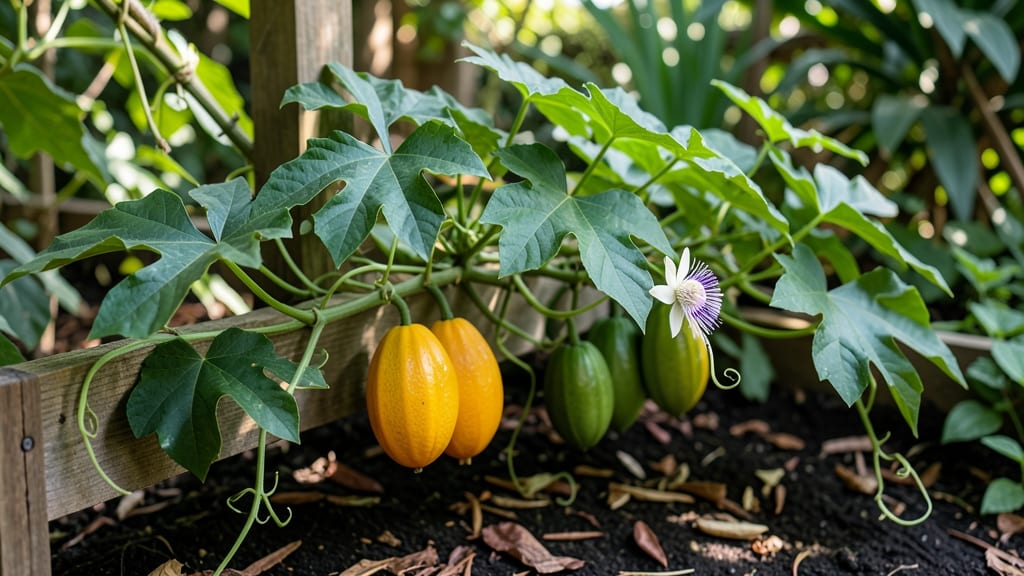
Growing passion vine fruit means turning your trellis into a tropical oasis with edible rewards. 🌿 I’ve watched my vines climb, bloom, and produce sweet, tangy fruit in just three months—starting from a single cutting.
The secret lies in mimicking their natural tropical habitat while keeping them manageable in home gardens.
You’ll need a sturdy trellis or fence for those fast-growing vines, well-draining soil rich in organic matter, and 6+ hours of sunlight daily. Passion vines like Passiflora edulis thrive in warm climates but can be grown in containers and brought indoors during winter.
The real magic happens when you hand-pollinate those exotic-looking blooms—it’s easier than it looks!
In 90 days, you’ll go from planting to harvesting juicy, seed-speckled fruit perfect for smoothies or fresh eating. The vines stay productive for years, and the more you prune, the bushier (and fruitier) they grow. Just watch for pests like spider mites and keep the soil consistently moist—not soggy.
Perfect for warm climates but adaptable with containers—even urban gardeners can grow these tropical gems. Let’s get those vines climbing and fruiting!
📚 In This Guide
- What you need
- Instructions
- Tips and common mistakes
- Wrapping up and next steps
What you need
- ● Passion vine seeds or young plants: 10–20 seeds (if starting from scratch) or 2–3 healthy nursery-grown plants (for faster results).
- ● Pro tip: Choose Purple Passionfruit (Passiflora edulis) for classic flavor or Golden Passionfruit (Passiflora edulis flavicarpa) for a sweeter twist!
- ● Growing containers or garden space: 5–10 gallon pots (if container-growing) with drainage holes.
- ● Full-sun location (6+ hours daily) in a warm, sheltered spot (zones 8–11; colder climates need winter protection).
- ● Well-draining soil mix: 50% high-quality potting soil + 30% perlite/pumice + 20% compost (or coconut coir for moisture retention).
- ○ Optional: Add worm castings (1 cup per pot) for extra nutrients.
- ● Fertilizer: Balanced organic fertilizer (10-10-10 or 5-5-5 NPK ratio) or fish emulsion (diluted to half-strength).
- ● Apply every 4–6 weeks during growing season.
- ● Trellis or sturdy fence (passion vines need 10–20 feet of climbing space!).
- ● Pruning shears (for shaping and harvesting).
- ● Mulch (straw or wood chips) to retain moisture and suppress weeds.
- ● pH test kit (ideal soil pH: 6.0–7.0).
- ● Spray bottle (for misting seedlings).
- ● Pollination aid (a small paintbrush or hand-held vibrator to help flowers set fruit in greenhouses).
Step-by-Step instructions for cultivating passion vine fruit
Here’s how to nurture a thriving passion vine from seed to fruit-bearing plant in just three months.
🌱 Step 1: Start Seeds Indoors for Early Growth
Passion vine seeds germinate best in warmth—aim for 75-80°F soil temperature. Plant 2-3 seeds per 3-inch pot (or a shared cell tray) in sterile seed-starting mix, pressing them ¼ inch deep with your finger. Cover lightly with additional mix to prevent drying. Moisten gently with a spray bottle until the surface feels damp but not soggy.
Place pots in a humidity dome or cover with plastic wrap to trap warmth. Keep them in bright, indirect light (a south-facing window works) until sprouts appear in 10-20 days. Avoid overwatering—let the top inch of soil dry between waterings. You’ll know germination is successful when tiny green cotyledons (the first true leaves) break through the soil.
☀️ Step 2: Transplant and Provide Support for Climbing
Once seedlings develop 3-4 true leaves (about 4-6 weeks after sowing), transplant them into 5-gallon containers or directly into the ground in well-draining, slightly acidic soil (pH 6.0-7.0). Passion vines are vigorous climbers, so install a strong trellis, fence, or arbor at least 6 feet tall near the planting site. Plant seeds 12-18 inches apart to allow room for root spread.
Gently tease the roots apart if seedlings are crowded, then bury them to the same depth they were in their pots. Water deeply after transplanting to settle the soil. Mulch around the base with 2-3 inches of organic mulch (like wood chips) to retain moisture and suppress weeds. Passion vines thrive in full sun (6+ hours daily), so choose a spot with unfiltered light.
💧 Step 3: Fertilize and Prune for Fruit Production
Feed your passion vine with a balanced, water-soluble fertilizer (10-10-10) every 4-6 weeks once new growth appears. Reduce nitrogen slightly in late summer to encourage flowering—switch to a low-nitrogen, high-phosphorus formula (5-10-10) to promote blooms. Water deeply 2-3 times per week during dry spells, ensuring the soil stays evenly moist but not waterlogged. Wilting leaves signal thirst, while yellowing suggests overwatering.
Prune regularly to shape the vine and encourage fruit production. Pinch back new growth tips when vines reach 3-4 feet to stimulate bushier growth. Remove any dead or diseased leaves immediately to prevent spread. When flowers appear (usually 8-12 weeks after planting), hand-pollinate them with a soft brush to ensure fruit set. Passion vines produce edible, tropical-tasting fruit in 90 days under ideal conditions.
✂️ Step 4: Harvest and Overwinter for Next Season
Harvest fruit when it turns fully colored (yellow, orange, or purple, depending on variety) and feels slightly soft to the touch. Twist gently to detach—it should release easily without tearing the vine. Store harvested fruit in a cool, dry place for up to 2 weeks. Save seeds from ripe fruit by scooping out the pulp and rinsing them clean. Dry seeds on paper towels for 3-5 days before storing in an airtight container for next year’s planting.
In colder climates, protect your passion vine by cutting back vines to 1-2 feet tall before the first frost. Mulch heavily around the base and cover with burlap or frost cloth to insulate roots. In warmer zones, vines may remain evergreen—just reduce watering in winter. With proper care, your passion vine will reward you with vibrant blooms and sweet fruit for years to come.
Tips & tricks for cultivating passion vine fruit
Let me share the insider secrets that’ll help you skip the common pitfalls and grow passion vine fruit like a pro.
Soil Temperature Secret: That 75-80°F soil temperature range is non-negotiable for germination. I’ve tried using seedling heat mats in cooler climates—they’re a game-changer when your home stays chilly. Place a thermometer in the soil to monitor, and adjust your heating setup if temps dip below 70°F. Cold soil slows germination dramatically, sometimes by weeks.
Lighting Strategy: In Step 1, bright indirect light is crucial, but don’t overlook the importance of light quality. South-facing windows work, but if you’re using grow lights, use full-spectrum LEDs for 12-14 hours daily. I’ve seen seedlings stretch painfully toward weak light sources—this "leggy" growth weakens the plant. Rotate your pots weekly to ensure even growth.
Transplanting Technique: When transplanting in Step 2, focus on root care more than you might think. Gently separate crowded roots with your fingers, not tools—you’re not pruning, you’re preparing them for their new home. The 12-18 inch spacing gives roots room to establish without competing, which is especially important in Step 3 when you’ll be fertilizing regularly.
Fertilizer Transition: The switch from 10-10-10 to 5-10-10 in late summer is where many growers go wrong. I recommend making this change when you notice new growth slowing down—usually around 8-10 weeks after transplanting. This phosphorus boost signals the plant to focus on flowers rather than leaves. Apply it in the morning so any excess has time to absorb before evening watering.
Pro Tips for Passion Vine Fruit
- Let me share the insider secrets that’ll help you skip the common pitfalls and grow passion vine fruit like a pro.
- Soil Temperature Secret: That 75-80°F soil temperature range is non-negotiable for germination.
- Lighting Strategy: In Step 1, bright indirect light is crucial, but don’t overlook the importance of light quality.
Frequently asked questions
Got questions about growing and enjoying passion vine fruit?
Here are some of the most common ones—plus quick, practical answers to help you cultivate success!
How long does it take for passion vine fruit to bear fruit after planting?
Passion vines typically take 6–12 months to produce fruit after planting, depending on growing conditions. If you’re starting from seeds, expect a longer wait (up to 2 years). For faster results, opt for transplants or use a greenhouse to extend the growing season.
Can I grow passion vine fruit in containers, or does it need a garden?
Yes! Passion vines thrive in large containers (15+ gallons) with good drainage. Choose a deep pot (24+ inches) and use a well-draining soil mix. Just ensure the container gets 6+ hours of sunlight daily and provide a trellis for support.
Why aren’t my passion vine flowers turning into fruit?
Fruit formation requires pollination. Hand-pollinate flowers with a small brush or attract pollinators (like bees) by planting companion flowers nearby. Also, check for pests (e.g., aphids) or nutrient deficiencies (low phosphorus)—fertilize with a balanced 10-10-10 mix if needed.
How do I know when passion vine fruit is ripe and ready to pick?
Ripe passion fruit turns deep yellow, purple, or red (depending on the variety) and feels slightly soft when gently squeezed. The skin should wrinkle slightly, and the stem may detach easily. Harvest in the morning for peak flavor!
What’s the best way to overwinter passion vine in cold climates?
Passion vines are tender perennials and die back in frost. Dig up tubers or cut back vines, then store them in dry peat moss or sand in a cool (40–50°F), dark place. Alternatively, grow them as annuals and replant each spring in warmer zones (USDA 9–11).
Wrapping up and next steps
Growing passion vine fruit is a rewarding journey that blends beauty with bounty—imagine lush vines, fragrant blooms, and sweet, tangy fruits in just 90 days! 🌱 With the right soil, sunlight, and care, you’ll transform your garden into a tropical paradise while enjoying a delicious, nutrient-packed harvest.
Whether you’re a seasoned gardener or a curious beginner, this guide makes it simple to cultivate your own passion fruit vines.
Now that you’re armed with tips, tools, and troubleshooting, why not take the next step? Start with a single vine, experiment with varieties, or even share your progress with fellow gardening enthusiasts. Your edible garden adventure begins today—plant, nurture, and savor the sweet rewards! 🍈✨