
Flowers
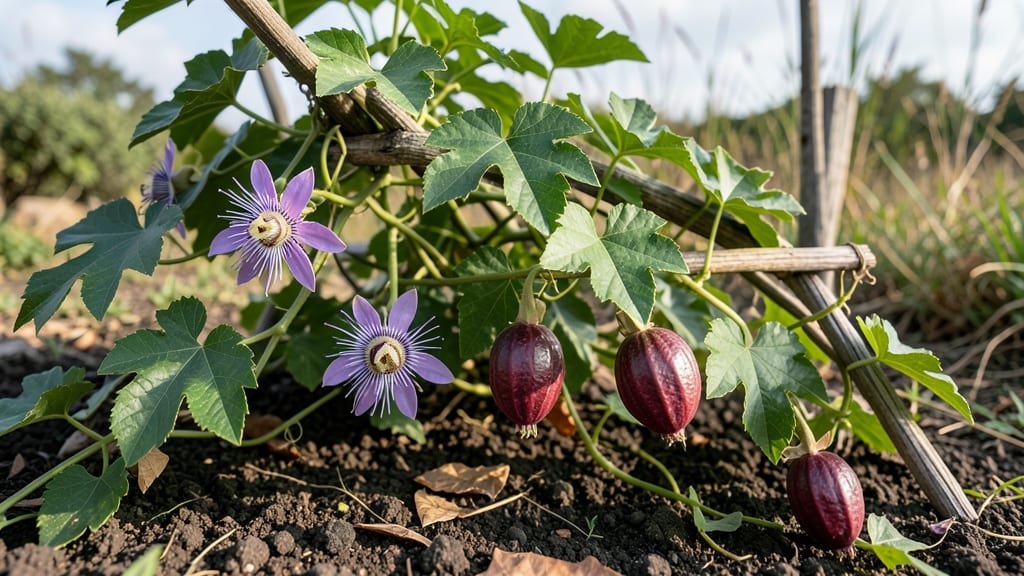
Growing purple passionfruit vines transforms your garden into a fragrant, tropical paradise with edible blooms and sweet fruit. 🌿 I’ve grown mine for years, and the key is mimicking their natural habitat—warmth, humidity, and a sturdy trellis to climb.
The first year is all about establishing strong roots; by year two, you’ll be harvesting fruit year-round if you live in a frost-free zone.
The vine thrives in well-draining soil with a slight acidity, and it needs at least 6 hours of sunlight daily—more if possible. Water consistently but avoid soggy roots, and feed with a balanced fertilizer every 4-6 weeks during growing season.
A trellis or fence gives the vine something to grip, encouraging faster growth and better fruit production.
Pruning is simple: trim back leggy growth in early spring to encourage bushier vines, and remove dead or diseased leaves as needed. The real magic happens in summer when fragrant purple flowers bloom, followed by sweet, tangy fruit that’s ready to pick in 8-12 weeks.
The vines are surprisingly hardy once established—just watch for mealybugs or aphids, which are easy to swat off with soapy water.
Perfect for warm climates (zones 9-11) but can be grown in containers and overwintered indoors in cooler areas. Start with one vine, and you’ll be hooked—this isn’t just a plant, it’s a year-round edible garden showpiece. Ready to get growing?
📚 In This Guide
- What you need
- Instructions
- Tips and common mistakes
- Wrapping up and next steps
What you need
- ● Purple passionfruit seeds or young plants: 1-2 (ensure they’re disease-free and well-sourced).
- ● Well-draining potting mix: 5-10 gallons (blend organic matter like compost with perlite or sand for aeration).
- ● Large containers or garden space: Minimum 10-gallon pots (or 10+ feet of trellis space if planting in-ground).
- ● Trellis or sturdy support: 6-8 feet tall (metal or wooden arches work great!).
- ● Slow-release fertilizer: Balanced 10-10-10 or organic options like worm castings.
- ○ Mulch (optional but helpful): Straw or wood chips to retain moisture.
- ● Pruning shears: Sharp, sterilized pair for trimming.
- ● Garden gloves: Heavy-duty to protect from thorns.
- ● Watering can or hose with gentle spray: Passionfruit vines love consistent moisture.
- ○ pH test kit (optional): Aim for soil pH 6.0–7.0 for optimal growth.
- ● Warm climate: Purple passionfruit thrives in USDA Zones 9–11 (or grow in containers and bring indoors in cooler months).
- ● Full sun exposure: At least 6–8 hours of direct sunlight daily.
- ● Patience: Vines take 1–2 years to bear fruit, but the fragrant blooms arrive sooner!
Step-by-Step instructions for cultivating a purple passionfruit vine
Here's how I grow this tropical beauty—fragrant blooms, sweet fruit, and a vine that thrives with minimal fuss.
🌱 Step 1: Select and Prepare Your Planting Site
Purple passionfruit vines need full sun—at least 6-8 hours daily—and a sturdy support structure like a trellis or fence. I choose a south-facing wall or fence because it captures afternoon warmth. The vine's tendrils grow aggressively, so install a 6-foot-tall trellis at planting to avoid later scrambling.
Test your soil's drainage—passionfruit hates soggy roots. Amend heavy clay with 3-4 inches of compost mixed into the top 12 inches of soil. The vine tolerates slightly acidic to neutral soil (pH 6.0-7.5), but I always add a handful of bone meal at planting to boost phosphorus for flowering.
🌿 Step 2: Plant Your Vine at the Right Time
In warm climates (zones 9-11), plant in early spring after the last frost. In cooler zones (7-8), wait until late spring when nighttime temperatures stay above 55°F. Dig a hole twice as wide as the root ball but only as deep—planting too deep suffocates the roots.
Position the vine so the graft union (visible bump near the base) sits 1 inch above soil level. This prevents rot and encourages strong growth. Backfill with native soil, tamp gently, and water deeply to settle the roots. Mulch with 2-3 inches of wood chips, keeping it 6 inches away from the stem to prevent rot.
☀️ Step 3: Train and Prune for Maximum Fruit
As new growth appears, guide the main stem along the trellis, tying it with soft plant ties every 12 inches. Let only the strongest, healthiest shoot continue upward—this prevents overcrowding and ensures larger fruit. Once the vine reaches the top of the trellis, pinch back the tip to encourage lateral branches.
Prune aggressively in late winter (before new growth starts) by cutting back ⅓ of the oldest wood. This rejuvenates the plant and redirects energy to new, fruiting branches. Remove any dead or diseased growth immediately—passionfruit vines are susceptible to fungal issues in humid climates.
💧 Step 4: Water and Fertilize for Continuous Blooms
Water deeply 2-3 times per week during the first growing season, aiming for 1-2 inches of moisture per week. Let the top 2 inches of soil dry between waterings—overwatering causes root rot. Once established, the vine tolerates drought better but still needs consistent moisture for fruit development.
Feed with a balanced fertilizer (10-10-10) every 4-6 weeks during the growing season. For heavier fruiting, switch to a low-nitrogen, high-phosphorus formula (5-10-10) when flowers appear. I also sprinkle Epsom salt (1 tablespoon per gallon of water) monthly to boost magnesium for vibrant blooms.
⏰ Step 5: Harvest and Extend the Season
Purple passionfruit ripens 90-120 days after flowering, but timing varies by climate. Gently twist the fruit from the vine when it turns deep purple and feels slightly soft. Harvest in the morning for peak sweetness—fruit left on the vine too long becomes seedy and mealy.
To extend the harvest, prune lightly after the first flush of fruit to encourage a second bloom. In cooler climates, bring potted vines indoors before 32°F temperatures and place near a sunny window. The vine slows growth but can produce fruit year-round with proper light and care.
Tips & tricks for cultivating a purple passionfruit vine
Here's what I've learned after years of growing these tropical beauties—details that make all the difference between a struggling vine and one bursting with fragrant blooms.
Sunlight Strategy: While 6-8 hours of sun is ideal, I've found that positioning your trellis to capture morning sun (when it's cooler) and afternoon sun (when it's warmer) gives the vine the perfect balance. In hotter climates, provide afternoon shade during peak summer months to prevent leaf scorch—this doesn't reduce sunlight hours but protects the plant from heat stress.
Soil Science: The bone meal addition in Step 1 is non-negotiable for flowering, but here's the secret: mix it directly into the bottom third of your planting hole rather than just the top layer. This creates a phosphorus-rich zone where roots will naturally seek out nutrients as they grow downward, giving your vine a growth boost from the start.
Pruning Precision: When cutting back ⅓ of the oldest wood in Step 3, always make your pruning cuts just above a leaf node or bud. This ensures new growth will emerge from exactly where you want it. I use clean, sharp pruners and sterilize them with rubbing alcohol between cuts to prevent spreading fungal spores that passionfruit vines are particularly susceptible to.
Watering Wisdom: The 2-3 times per week guideline works for most climates, but I've adapted this by checking soil moisture with my finger: if the top 2 inches feel completely dry, it's time to water. In containers, you'll need to water more frequently—sometimes daily—because potted soil dries out much faster. Always water at the base rather than overhead to prevent fungal diseases that thrive in damp foliage.
Pro Tips for Purple Passionfruit Vine
- Here's what I've learned after years of growing these tropical beauties—details that make all the difference between a struggling vine and one bursting with fragrant blooms.
- Sunlight Strategy: While 6-8 hours of sun is ideal, I've found that positioning your trellis to capture morning sun (when it's cooler) and afternoon sun (when it's warmer) gives the vine the perfect balance.
- Soil Science: The bone meal addition in Step 1 is non-negotiable for flowering, but here's the secret: mix it directly into the bottom third of your planting hole rather than just the top layer.
Frequently asked questions
How fast does a purple passionfruit vine grow?
A healthy purple passionfruit vine can grow rapidly—up to 10 feet per year in ideal conditions! With proper support (like a trellis or fence) and regular pruning, you’ll see vigorous growth, especially during spring and summer. Expect blooms within 12–18 months if started from seed, or sooner with grafted plants.
Can purple passionfruit vines survive winter?
These tropical beauties are not frost-hardy—they’ll die back in temps below 25°F (-4°C). In colder climates, grow them in containers and move them indoors or to a greenhouse during winter. Alternatively, plant them near a sunny wall to absorb residual heat. Mulching heavily can offer some protection in mild winters.
What can I do if my vine isn’t flowering or fruiting?
Lack of flowers/fruit often means insufficient sunlight, nutrients, or pollinators. Try these fixes:
- Move to full sun (6+ hours/day).
- Fertilize with citrus/passionfruit-specific food (high in phosphorus/potassium).
- Hand-pollinate with a soft brush if bees are scarce.
- Prune aggressively to encourage new growth (but avoid over-pruning).
Do purple passionfruit vines need bees to pollinate?
While bees are the best pollinators, purple passionfruit vines can self-pollinate to some extent. For better yields, attract pollinators with native flowers nearby or gently brush flowers with a paintbrush. Morning pollination works best—try it on dry, sunny days when flowers are open.
Can I grow purple passionfruit indoors?
Yes! With bright, indirect light (a south-facing window or grow lights) and high humidity, you can keep a potted vine indoors. Use a well-draining mix (like cactus soil + perlite) and fertilize monthly. Expect smaller fruit than outdoor vines, but the fragrant blooms are worth it! Just watch for pests like spider mites in dry air.
Wrapping up and next steps
The purple passionfruit vine isn’t just a stunning addition to your garden—it’s a rewarding one, offering fragrant blooms, vibrant fruit, and year-round beauty. With the right care, you’ll enjoy a thriving vine that keeps giving, whether you’re savoring its sweet fruit or admiring its exotic flowers. 🌸
Ready to transform your space? Start by gathering your supplies, choosing the perfect spot, and following the steps we’ve shared. Before you know it, you’ll be harvesting your own purple passionfruit—what’s next? Maybe sharing your bounty with friends or even expanding your garden with more tropical treasures!