
Fertilization
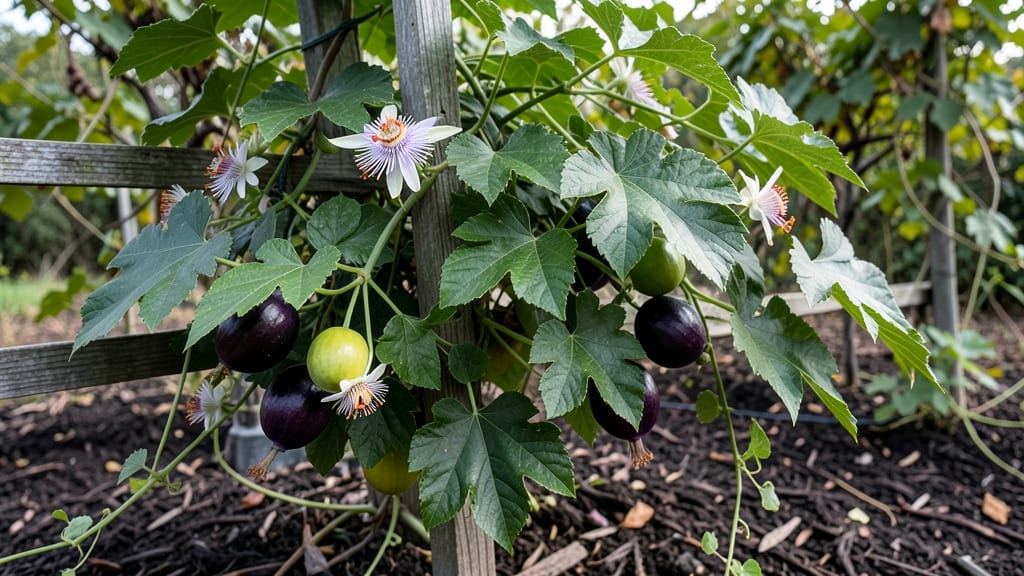
Growing Passion Fruit Violet means purple-gold fruits dripping from your trellis by summer. 🌿 I’ve wrestled with this tropical beauty for years, and the key to success starts with matching your climate—these vines thrive where temps stay above 30°F, but even in cooler zones, you can coax them along with the right tricks.
The real magic happens in well-draining soil mixed with compost, paired with 6+ hours of sunlight daily. Water deeply but let the topsoil dry slightly between sessions—overwatering is the #1 killer of these thirsty but not soggy plants.
A sturdy trellis isn’t just for looks; it keeps vines from sprawling into a jungle and makes harvesting those 3-inch fruits a breeze.
By late summer, you’ll be harvesting fruits that burst with tangy-sweet flavor, and the vines will reward you with year-round blooms if you prune aggressively after harvest. The first crop might be small, but each season gets better—once established, these plants produce 50+ fruits per vine with minimal fuss.
Troubleshooting? Frost is the enemy, but a row cover or greenhouse extension keeps them safe. Pests like passionvine hoppers are annoying but beatable with neem oil. The payoff? A vine that feeds you for decades with almost no effort after the initial setup.
📚 In This Guide
- What you need
- Instructions
- Tips and common mistakes
- Wrapping up and next steps
What you need
- ● Passion Fruit Violet Seeds or Cuttings: 5–10 seeds (if starting from scratch)
- ● OR 2–3 healthy cuttings (12–18 inches long, from established vines)
- ● Well-Draining Potting Mix: 50% high-quality potting soil
- ● 30% coconut coir or peat moss (for moisture retention)
- ● 20% perlite or coarse sand (for aeration)
- ● Containers or Garden Space: Containers: 5-gallon pots or larger (minimum 12-inch diameter per plant)
- ● Garden Beds: Full sun (6+ hours/day) with well-draining soil (pH 6.0–7.5)
- ● Fertilizer: Balanced organic fertilizer (10-10-10 or 5-5-5 NPK ratio)
- ● Slow-release granules (for container plants: 1–2 tbsp per pot every 4–6 weeks)
- ● Compost or worm castings (for organic enrichment)
- ● Support Structures: Trellis, arbor, or sturdy stakes (6–10 feet tall for vigorous growth)
- ● Soft ties (jute or plastic-coated wire) to secure vines
- ● Basic Gardening Tools: Pruning shears (sterilized with rubbing alcohol)
- ● Trowel or small shovel (for transplanting)
- ● Gloves (to protect from thorns)
- ● Watering Supplies: Watering can or hose with a gentle spray nozzle
- ○ Drip irrigation kit (optional, for automated care)
- ● Climate Considerations: Warm Climates (Zones 9–11): No frost protection needed
- ● Cooler Climates (Zones 7–8): Greenhouse or cold frame for winter
- ● Temperate Zones (Zones 5–6): Container gardening with winter indoor care
- ● Mulch (straw or wood chips) to retain moisture and regulate soil temperature
- ● Epsom salt (1 tbsp per gallon of water monthly for magnesium boost)
- ● Neem oil or insecticidal soap (for pest control)
- ● pH testing kit (to monitor soil acidity)
- ● Grow lights (for indoor or early-season seedlings)
Step-by-Step instructions for growing passion fruit violet
Here's my battle-tested method for thriving passion fruit vines—adapted for both warm climates and cooler zones.
🌱 Step 1: Select the Right Variety and Planting Time
Passion fruit vines thrive in USDA zones 8-11, but with protection, you can grow them in cooler zones too. Choose a purple passion fruit (Passiflora edulis) for sweet, aromatic fruit. In warm climates, plant in early spring after last frost; in cooler zones, start seeds indoors 8-10 weeks before last frost for transplanting.
I always test soil pH first—passion fruit prefers 6.0-7.0. If your soil is too acidic, mix in 1 pound of dolomitic lime per 100 square feet and retest in 2-3 months. The vines are frost-sensitive, so plan your garden where they’ll get full sun (6+ hours daily) and shelter from cold winds.
☀️ Step 2: Prepare the Soil and Plant
Passion fruit vines need well-draining, fertile soil—mix 3 cubic yards of topsoil, 2 cubic yards of compost, and 1 cubic yard of perlite for every 100 square feet of planting area. This ensures roots won’t suffocate in heavy clay or dry out in sandy soil. Dig a hole twice as wide as the root ball and as deep to encourage root spread.
Place the vine in the hole, backfill with the amended soil, and water deeply to settle it. I stake young vines immediately with 5-foot bamboo stakes tied loosely to support their rapid growth. Mulch around the base with 3 inches of wood chips to retain moisture and suppress weeds—just keep mulch 6 inches away from the stem to prevent rot.
💧 Step 3: Water and Fertilize for Optimal Growth
Water deeply 2-3 times per week during the first year, soaking the soil to 12 inches deep. You’ll know you’ve watered enough when excess runs out the drainage holes. Passion fruit vines are drought-tolerant once established, but consistent moisture is critical during flowering and fruiting. Reduce watering slightly in fall to harden off the vines for winter.
Fertilize every 4-6 weeks with a balanced 10-10-10 fertilizer during growing season. Switch to a low-nitrogen, high-phosphorus (5-10-10) fertilizer when buds form to encourage flowering. I avoid high-nitrogen feeds—too much leaf growth means fewer fruits. Always water after fertilizing to prevent root burn.
✂️ Step 4: Prune and Train for Maximum Yield
Prune new growth back by 1/3 in early spring to encourage bushier, stronger vines. Remove dead, diseased, or crossing branches regularly to improve airflow and sunlight penetration. Passion fruit vines grow aggressively—train them along a trellis or fence to save space and make harvesting easier.
Here’s the thing—prune lightly in fall to prepare for winter. Cut back non-hardy varieties to 12 inches tall and mulch heavily. In warmer zones, prune lightly to remove only dead wood. The goal is to keep the plant healthy enough to rebound quickly in spring. Harvest fruits when they’re fully colored and slightly soft to touch—usually 90-120 days after flowering.
⏰ Step 5: Overwinter and Protect from Cold
If you’re in a cooler zone, dig up container-grown vines before the first frost and store them in a cool (40-50°F), dark place like a garage. Cut back foliage but leave 3-4 inches of stem to regrow in spring. For in-ground vines, mulch heavily (6+ inches) and wrap the base in burlap to insulate roots.
In frost-free zones, prune lightly and fertilize lightly in late winter to stimulate early growth. Passion fruit vines are perennial in warm climates but often treated as annuals in colder areas. With proper winter care, you’ll get year-round harvests—just reset your pruning and fertilizing schedule to match the season.
Tips & tricks for thriving passion fruit vines
Here’s what I’ve learned after growing these vines through multiple seasons—and how to avoid the mistakes I made early on.
Soil Prep Secret: The 3:2:1 ratio of topsoil, compost, and perlite in Step 2 is non-negotiable for drainage, but I’ve found adding ½ cup of Epsom salt per 100 square feet boosts magnesium levels, which passion fruit vines crave. This helps prevent yellowing leaves, especially in sandy soils. The perlite isn’t just for drainage—it also aerates roots, which is crucial since passion fruit roots are shallow but vigorous.
Climate Adaptation: In cooler zones, don’t rush planting after last frost. Wait until soil temperatures reach 65°F at 4 inches deep—cold soil stunts root growth. I use a soil thermometer for this, and it’s made all the difference in establishing healthy vines. For container growers, black plastic pots absorb heat better than standard containers, giving roots a warmer environment.
Fertilizer Timing: The switch to 5-10-10 fertilizer when buds form (Step 3) is critical, but here’s the thing: apply it in the morning so the phosphorus has time to work before nightfall. I also recommend splitting the fertilizer dose into two applications—half in early morning and half in late afternoon—rather than one big dose. This mimics natural nutrient cycles and prevents root burn from salt buildup.
Winter Protection Hack: For in-ground vines in cooler zones, I’ve found that wrapping the base with burlap AND covering with a clear plastic dome (like a large bell jar) creates a microclimate that protects against light frosts (28°F). The plastic traps heat while allowing light penetration—just remove it during the day if temperatures rise above 50°F to prevent overheating.
Pro Tips for Passion Fruit Violet
- Here’s what I’ve learned after growing these vines through multiple seasons—and how to avoid the mistakes I made early on.
- This helps prevent yellowing leaves, especially in sandy soils.
- Climate Adaptation: In cooler zones, don’t rush planting after last frost.
Frequently asked questions
Got questions about growing Passiflora edulis 'Violet' passion fruit?
You’re not alone! Here are answers to the most common queries to help you cultivate this vibrant, high-yielding variety with confidence.
What’s the best climate for growing passion fruit violet?
Passion fruit violet thrives in USDA Zones 7-11, but it’s most productive in tropical or subtropical climates (like Florida, Hawaii, or California). In cooler zones (6 or below), grow it in containers and bring it indoors during winter. It needs warmth, humidity, and full sun (6+ hours/day)—think Miami or Southern California conditions!
How long does it take for passion fruit violet to bear fruit?
With ideal care, expect first fruits in 12-18 months from planting. Young vines focus on leafy growth before flowering, so patience is key! Prune aggressively in early spring to encourage fruiting. Pro tip: Use a balanced fertilizer (10-10-10) every 4-6 weeks to speed up maturation.
Why aren’t my passion fruit violet vines flowering or fruiting?
Common culprits include:
- Insufficient sunlight (move to a sunnier spot or supplement with grow lights).
- Over-fertilizing with nitrogen (shift to a phosphorus-heavy fertilizer like 5-10-10 to boost blooms).
- Temperature stress (vines need consistent warmth above 60°F; frost kills them).
- Lack of pruning (trim leggy growth to redirect energy to flowers).
If the issue persists, check for pests (like spider mites) or disease (fungal spots).
Can I grow passion fruit violet in containers, and what’s the ideal pot size?
Containers are perfect for cooler climates or small spaces. Use a 5-gallon pot minimum (bigger is better for mature vines). Ensure pots have:
- Drainage holes (root rot is a silent killer!).
- Well-draining soil (mix potting soil with perlite or coconut coir).
- Support trellis (vines can grow 20+ feet—train them upward!).
Pro tip: Move containers to bright, indirect light in winter to maintain growth.
Are there any alternatives to passion fruit violet for cooler climates?
If your zone is too chilly for violets, try these hardier cousins:
- Passiflora caerulea (Blue Passionflower) – Cold-hardy to Zone 5, fragrant flowers, but edible (though tart) fruits.
- Passiflora edulis f. flavicarpa (Yellow Passion Fruit) – Slightly more frost-tolerant than violets; thrives in Zones 7-11.
- Passiflora incarnata (Maypop) – Native to the U.S., Zone 6+, and attracts pollinators!
For indoor growing, violets can work with grow lights, but expect smaller yields.
Wrapping up and next steps
Growing passion fruit violet is a rewarding journey that brings vibrant flavors and lush foliage to your garden—no matter your climate zone! 🌱 With the right fertilization, soil prep, and care, you’ll enjoy year-round harvests of sweet, tangy fruit.
Remember, consistency is key, whether you’re in a tropical paradise or a cooler microclimate.
Ready to dive in? Start by assessing your space, sourcing healthy plants, and experimenting with organic fertilizers. Take that first step today—your future harvests are waiting! 🌿