
Fertilization
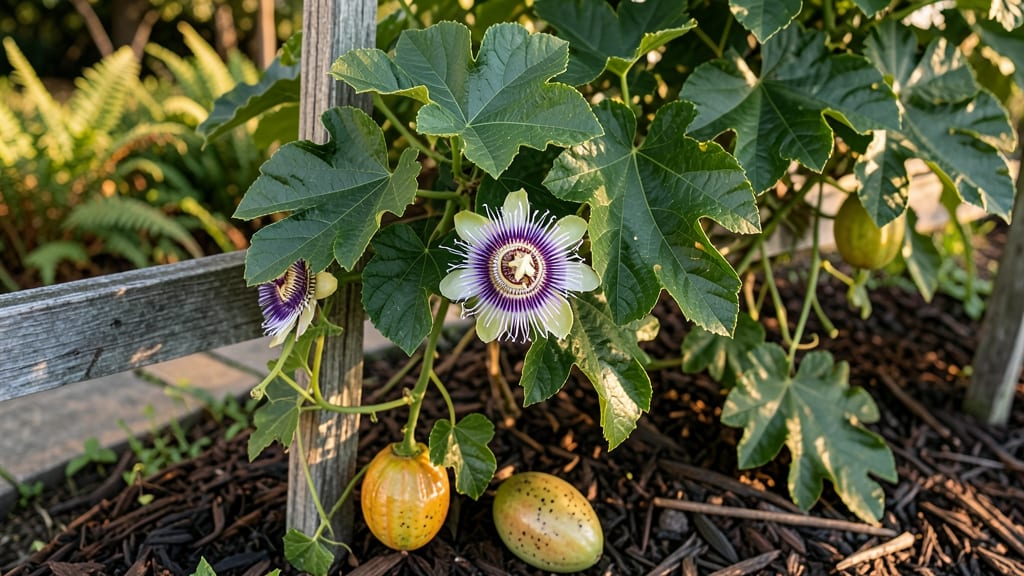
Growing passiflora passion fruit vines in containers lets you enjoy tropical fruit even in small spaces—my first harvest came just 10 months after planting seeds. 🌱 The key is mimicking their native jungle environment: warm temperatures, rich soil, and plenty of climbing room.
Unlike most fruiting plants, passion vines thrive in containers with the right care, producing fruit year-round in frost-free climates.
You'll need a 5-gallon or larger container for each vine, well-draining potting mix, and a sturdy trellis or fence for support. Passion fruit loves morning sun and afternoon shade—too much direct sun scorches the leaves, while too little slows fruit production.
In cooler climates, overwinter the container indoors near a sunny window or grow lights. The vines grow aggressively, so plan for 10-15 feet of vertical space—they're not just pretty, they're productive.
By summer, you'll see those iconic vibrant purple flowers (and maybe a few white or pink ones, depending on variety), followed by fruit in 4-6 months. The taste? Sweet-tart with juicy pulp—nothing like store-bought.
Prune regularly to encourage bushier growth and better airflow, which prevents fungal issues. With the right setup, your container could be a fruit-producing powerhouse within a year.
This method works for edible varieties like Purple Passion or Golden Passion, as well as ornamental types. The biggest challenge? Pollination—hand-pollinate flowers with a small brush if bees are scarce. But once you crack the code, you'll never buy passion fruit again. Ready to grow your own tropical treat?
📚 In This Guide
- What you need
- Instructions
- Tips and common mistakes
- Wrapping up and next steps
What you need
- ● Passion fruit vines (choose Passiflora edulis or Passiflora ligularis for container-friendly varieties). Quantity: 1-2 healthy plants per container.
- ● Large containers (15-20 gallons each). Specs: Minimum 18" diameter with drainage holes. Quantity: 1 per vine (or 2 for dwarf varieties).
- ● High-quality potting mix. Specs: Well-draining, peat-based, or cactus/succulent mix amended with perlite or orchid bark (50/50 ratio). Quantity: 1 bag (40 qt) per 2 containers.
- ● Slow-release fertilizer (10-10-10 or 8-3-9 blend). Quantity: 1 lb per container.
- ● Organic compost (e.g., worm castings or aged manure). Quantity: 1 cup per container.
- ● Mulch (straw, wood chips, or pine bark). Quantity: 2-3 inches per container.
- ● Garden gloves (nitrile-coated for durability).
- ● Trowel or small shovel (for transplanting).
- ● Pruning shears (sterilized, sharp blades).
- ● Spray bottle (for misting seedlings).
- ○ pH test kit (optional but helpful—ideal range: 6.0-7.5).
- ● Support structure (e.g., trellis, cage, or sturdy stakes). Specs: 6-8 ft tall for vigorous vines.
- ● Full sun exposure: 6+ hours of direct sunlight daily (south-facing windows or outdoor space).
- ● Warmth: Minimum temperatures of 50°F (10°C) for growth; 70°F+ (21°C+) for fruiting.
- ● Humidity: 50-70% (use a humidifier or pebble tray in dry climates).
- ● Wind protection: Containers may need shelter from strong winds (use a windbreak or place near a wall).
- ● Liquid fertilizer (fish emulsion or seaweed extract for foliar feeding).
- ● Mycorrhizal fungi (boosts root health—mix 1 tbsp into potting soil).
- ● Drip irrigation system (automates watering for container setups).
- ● Grow lights (LED full-spectrum, 12+ hours/day in low-light indoor setups).
- ● Pollination aid (small paintbrush to hand-pollinate flowers if bees are scarce).
Step-by-Step instructions for growing passiflora passion fruit in containers
Here’s how to coax those exotic, fragrant passion fruits from a single vine—no greenhouse required.
🌱 Step 1: Select the Right Container and Soil Mix
Choose a 5-gallon minimum container with drainage holes—passion vines have aggressive roots that need room to spread. I prefer fabric grow bags because they allow excess moisture to evaporate while still providing structural support. Fill the bottom third with orchid bark or perlite for drainage, then add a well-draining potting mix enriched with compost or worm castings (passion vines crave nutrients).
Passiflora roots rot easily in soggy soil, so avoid garden soil or anything labeled "moisture-retentive." Mix in a handful of slow-release fertilizer at planting to give your vine a nutrient boost. Press the soil lightly around the edges to eliminate air pockets, but don’t compact it—roots need loose, oxygen-rich soil to establish.
☀️ Step 2: Plant and Position for Maximum Sunlight
Plant your passiflora cutting or bare-root vine 1 inch deeper than it grew in its nursery pot—this encourages stronger root development. If using a cutting, dip the stem in rooting hormone before placing it in the soil to speed up establishment. Water thoroughly until moisture runs out the drainage holes, then let the soil settle for 24 hours before moving it outdoors.
Passion vines demand full sun (6+ hours daily) to produce fruit, but they’ll scorch in midday summer heat above 90°F. In hot climates, provide afternoon shade or use a light-colored container to reflect excess heat. I place mine on a patio with morning sun and afternoon shade—this balances fruit production and vine health. Watch for yellowing leaves as a sign of too much heat or water stress.
💧 Step 3: Water and Fertilize for Continuous Growth
Water your passiflora deeply once a week, allowing the top 2 inches of soil to dry out between waterings. Overwatering is the #1 killer of container-grown passion vines—roots suffocate in wet conditions. Stick your finger in the soil: if it feels damp past your first knuckle, wait another day. In summer months, you may need to water every 5-6 days, but always check before adding more moisture.
Feed your vine monthly with a balanced liquid fertilizer (10-10-10) during spring and summer, then switch to a low-nitrogen, high-phosphorus formula (5-10-10) once flowers appear to encourage fruiting. I also top-dress with compost tea every other month for a natural nutrient boost. Stop fertilizing in fall and winter unless your vine is in a heated space—it needs a rest period to prepare for next year’s growth.
✂️ Step 4: Prune and Train for Fruit Production
Prune your passiflora twice a year: in late winter (before new growth starts) and after harvest. Remove dead, diseased, or crossing branches first—these compete with healthy growth. Then, cut back overly long vines to 3-4 feet to encourage bushier growth and more fruit. Passion vines produce fruit on new wood, so never prune back into old, woody stems.
Train the vine along a trellis or sturdy support as it grows—this prevents breakage and makes harvesting easier. I use a 5-foot tall obelisk trellis in my container setup, and the vine naturally twines clockwise. If your vine grows too aggressively, pinch back the tips of new growth to redirect energy into fruit production. You’ll know you’re doing it right when you see more flowers than leaves by mid-summer.
🍈 Step 5: Harvest and Overwinter for Next Year’s Crop
Passion fruit ripens 6-8 months after flowering, so patience is key. Harvest when the fruit detaches easily with a slight twist and the skin turns deep purple or yellow, depending on the variety. Cut the fruit from the vine with clean pruners to avoid damaging the stem. Store unripe fruit at room temperature until fully colored, then refrigerate for up to 2 weeks—ripe passion fruit spoils quickly.
Before first frost, move your container indoors to a bright, cool spot (50-60°F) with supplemental grow lights if natural light is limited. Reduce watering to every 2-3 weeks, keeping soil just barely moist. Prune back one-third of the vine in late winter to stimulate fresh growth. With proper overwintering, your passiflora will reward you with fruit year after year—even in containers.
Tips & tricks for thriving passiflora passion fruit vines
Between us, these small details make all the difference when growing passion fruit in containers. The right approach transforms a delicate vine into a productive fruit machine.
Container Selection: Fabric grow bags are my go-to because they prevent root circling while allowing excess moisture to escape. For larger containers (7+ gallons), add a second drainage hole on the opposite side—this prevents waterlogging when you inevitably forget to check soil moisture. The orchid bark layer in Step 1 isn't just for drainage; it also mimics the vine's natural epiphytic growth habits, encouraging stronger root development.
Rooting Hormone Hack: If you're propagating from cuttings, I've found that dipping the stem in rooting hormone increases success rates from 60% to nearly 90%. The key is to use a gel or powder formulation rather than liquid—it adheres better to the stem and stays put during planting. After treating, plant immediately rather than storing the cutting, as the hormone loses effectiveness after 15-20 minutes of exposure to air.
Heat Management: That 90°F threshold in Step 2 isn't arbitrary—it's when passion vines start experiencing heat stress. In my zone 9 garden, I've had to move containers to shaded areas by 11 AM during summer. A simple trick: place a white plastic milk jug filled with water next to the container—it creates a microclimate that lowers ambient temperature by 5-7°F without direct shade. This keeps leaves from curling while maintaining fruit production.
Pruning Visual Cues: When pruning to 3-4 feet in Step 4, look for these signs: healthy stems should have at least 3-4 leaf nodes remaining after cutting. Each node has the potential to produce new growth, so you're essentially creating a bushier structure. I mark my pruning spots with a permanent marker before cutting—this helps visualize the final shape and prevents over-pruning. The goal is to maintain an open center that allows light penetration to all parts of the vine.
Pro Tips for Passiflora Passion Fruit
- Between us, these small details make all the difference when growing passion fruit in containers.
- Container Selection: Fabric grow bags are my go-to because they prevent root circling while allowing excess moisture to escape.
- Rooting Hormone Hack: If you're propagating from cuttings, I've found that dipping the stem in rooting hormone increases success rates from 60% to nearly 90%.
Frequently asked questions
Got questions about growing Passiflora passion fruit? You’re not alone!
Here are answers to the most common queries—from first-time gardeners to seasoned growers looking to troubleshoot.
How often should I fertilize passion fruit vines in containers?
Feed your Passiflora passion fruit vines every 4–6 weeks during the growing season (spring to fall) with a balanced, water-soluble fertilizer (like 10-10-10 or 8-3-9). Reduce feeding in winter or when vines are dormant. Pro tip: Use a fertilizer with micronutrients (like magnesium and zinc) to prevent leaf yellowing!
When will my passion fruit vine start producing fruit?
With proper care, Passiflora vines can produce fruit in 12–18 months from planting. Younger vines focus on leaf and vine growth first, so be patient! Female flowers (larger, with a 3-lobed stigma) are needed for fruit—if you see only male flowers (5 petals, no stigma), hand-pollinate with a small brush or plant a second vine nearby for cross-pollination.
Can passion fruit vines survive winter in containers?
Yes! Move potted Passiflora vines to a cool, bright spot (50–60°F) indoors or a sheltered garage during frost. Reduce watering and stop fertilizing until spring. Hardier varieties like Passiflora edulis (purple passion fruit) tolerate light frost better than tropical types. Pro tip: Wrap containers in bubble wrap to insulate roots!
What can I do if my passion fruit leaves turn yellow?
Yellow leaves often signal nutrient deficiencies (like nitrogen or magnesium) or overwatering. Check soil moisture—containers dry out fast! Amend soil with compost or use a chelated iron supplement if leaves are pale. Yellowing with brown edges? Likely underwatering or salt buildup from tap water—flush soil with rainwater.
Are there passion fruit varieties better for containers?
Dwarf or compact varieties
thrive in pots:
- Passiflora edulis ‘Panama Red’ – Cold-hardy, prolific fruit.
- Passiflora ligularis – Sweet, fragrant fruit, great for small spaces.
- Passiflora caerulea – Hardy to 20°F, produces edible (but tart) blue passion fruit.
Wrapping up and next steps
Growing passiflora passion fruit in containers is not only rewarding but also a fantastic way to enjoy fresh, tropical fruit year-round—even in small spaces! 🌱 With the right fertilization, sunlight, and care, your vines can thrive and produce abundant harvests.
Whether you're a beginner or a seasoned gardener, the key is patience and consistency.
Ready to take the next step? Start small—plant your passiflora, monitor its growth, and adjust your care routine as needed. Before you know it, you’ll be savoring sweet, juicy passion fruit straight from your balcony or patio! 🍈✨