
Trees
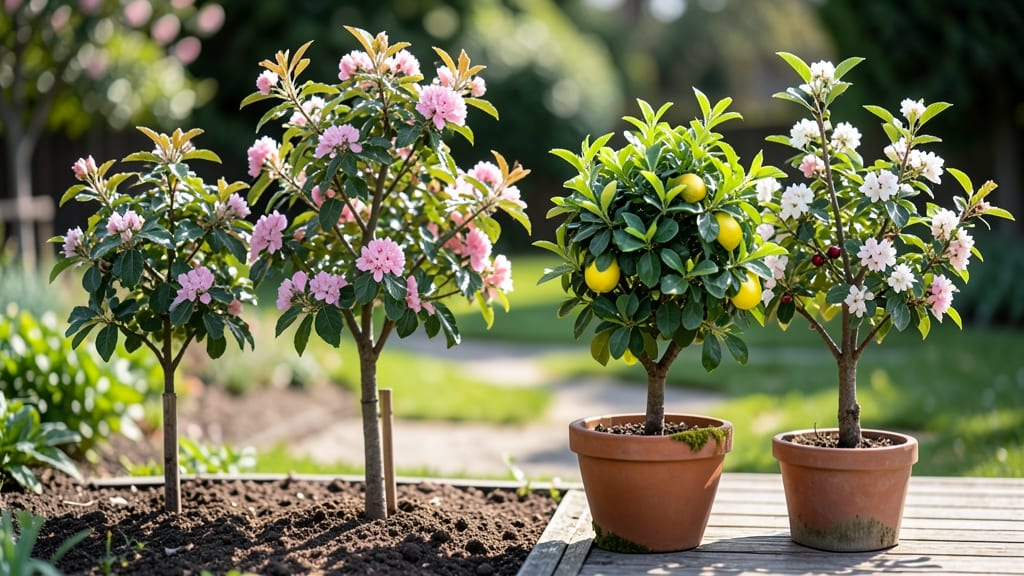
Miniature fruit trees let you grow apples, peaches, and citrus in pots—no yard required. 🌱 I’ve grown these space-saving varieties on my balcony for years, and they produce fruit just like their full-sized cousins, only smaller. The secret is choosing the right dwarf rootstock and variety for your climate, then giving them the same care as in-ground trees but scaled down.
You’ll need containers with drainage, well-draining soil, and a sunny spot—at least 6 hours of sunlight daily. Dwarf varieties like ‘Columnar Apple’, ‘Bonanza Peach’, or ‘Calamondin Orange’ thrive in 5-15 gallon pots, depending on the tree.
Prune regularly to encourage branching and keep them compact, and fertilize lightly during growing season to avoid overfeeding.
By summer, you’ll be harvesting sweet, homegrown fruit—peaches in July, apples in September, or citrus year-round—without the space or maintenance of a full-sized tree. The best part? These trees live for decades, so your investment keeps paying off. Perfect for small spaces, urban gardens, or even sunny patios.
Common challenges like pests and winter care have simple solutions—just adjust watering in winter and watch for aphids. With the right setup, these trees are foolproof for beginners and rewarding for experienced growers alike. Let’s get you growing!
📚 In This Guide
- What you need
- Instructions
- Tips and common mistakes
- Wrapping up and next steps
What you need
- ● Dwarf Fruit Tree: Choose a self-pollinating or pollination-friendly variety (e.g., Columnar Apple, Patio Pear, or Dwarf Citrus). 1-2 trees per container.
- ● Container: A 5-gallon pot or larger (minimum 18" diameter) with drainage holes. Fabric grow bags or self-watering pots are great options.
- ● High-Quality Potting Mix: 10-20 lbs of a well-draining mix (e.g., 50% potting soil + 50% perlite/compost). Avoid garden soil!
- ● Slow-Release Fertilizer: 1-2 lbs of balanced, organic fertilizer (10-10-10 or citrus-specific for tropical trees).
- ● Mulch: 1-2 inches of wood chips or straw to retain moisture.
- ● Pruning Shears: 1 pair of sterilized, sharp shears (for shaping and harvesting).
- ● Watering Can or Hose: With a gentle spray nozzle to avoid disturbing soil.
- ● Tree Support: A small stake or cage (for windy areas).
- ● Pollination Aid: A soft paintbrush (to hand-pollinate if needed).
- ● Drip Irrigation Kit: For automated watering in hot climates.
- ● Epsom Salt: 1 tbsp/month (for magnesium boost in citrus trees).
- ● Pest Control: Neem oil or insecticidal soap (preventative measure).
Step-by-Step instructions for growing miniature fruit trees in containers
Here’s how to cultivate four thriving dwarf fruit trees on your balcony—no yard required.
🪴 Step 1: Select the Right Dwarf Varieties and Containers
Choose self-pollinating dwarf varieties like ‘Columnar Apple,’ ‘Patio Pear,’ or ‘Columnar Cherry’—these stay compact and produce fruit. Each tree needs a 5-gallon container minimum, but 7- to 10-gallon pots work best for long-term health. Use fabric grow bags or unglazed clay pots to prevent root circling, and ensure at least four drainage holes per container.
Fill the bottom third with gravellike drainage material (like pebbles or expanded clay pellets) to prevent soggy roots. Dwarf trees have shallow root systems, so 12- to 18-inch-deep pots give them room to establish without becoming root-bound. I always label my pots with the variety and planting date—after a few seasons, identical trees can look identical!
🌱 Step 2: Plant with Proper Soil and Support
Use a well-draining potting mix blended with 20% perlite or pumice to mimic loose orchard soil. Avoid garden soil—it compacts and suffocates roots. Plant your dwarf tree at the same depth it was in its nursery pot, as burying the graft union risks disease. Gently firm the soil around the base to eliminate air pockets, but don’t pack it down.
Install a 3- to 4-foot bamboo stake or metal tree guard immediately after planting. Tie the trunk loosely with soft tree ties (not wire) to prevent girdling as the tree grows. Dwarf trees need support even in containers—their small root systems can’t anchor them in wind. Water deeply right after planting to settle the soil and encourage root spread.
☀️ Step 3: Position for Sunlight and Monitor Watering
Miniature fruit trees need full sun—6 to 8 hours daily—so place them where they’ll get morning sun and afternoon light. South- or west-facing balconies work best. If your space gets only partial sun, opt for sun-tolerant varieties like dwarf peaches or figs, which handle 4-6 hours of sun better than apples or pears.
Water deeply every 2-3 days until the top 2 inches of soil feel dry. Overwatering is the #1 killer of container trees—check with your finger instead of a schedule. In summer, you may need daily watering, but never let water pool in saucers. I use a moisture meter to track soil conditions, especially in hot weather when evaporation speeds up.
✂️ Step 4: Prune for Shape and Fruit Production
Prune twice a year: in late winter (before buds swell) to remove dead or crossing branches, and in summer after harvest to thin out crowded growth. Use clean, sharp bypass pruners and make cuts just above a leaf bud or outward-facing branch. Dwarf trees fruit on both old and new wood, so avoid heavy pruning—you’ll sacrifice next year’s crop.
Shape your tree into an open-center form (like a vase) to maximize airflow and sunlight penetration. Remove suckers (shoots growing below the graft union) immediately—they drain energy from the main tree. After pruning, apply a balanced fruit-tree fertilizer (10-10-10) to replenish nutrients lost during growth.
🍎 Step 5: Protect and Harvest for Long-Term Success
Watch for aphids, mites, or scale—common pests on container trees. Spray with neem oil or insecticidal soap at the first sign of infestation. Birds and squirrels love ripe fruit, so cover trees with netting once flowers appear. I use fine mesh netting secured with clips—it’s unsightly but saves your harvest.
Harvest when fruit reaches full color and yields slightly to gentle pressure. Dwarf trees produce smaller fruit, but the flavor is often more concentrated. After harvest, reduce watering slightly and apply a slow-release fertilizer to prepare for dormancy. In winter, move pots to a garage or sheltered porch if temperatures drop below 20°F—most dwarf varieties tolerate brief cold snaps but not prolonged freezing.
Tips & tricks for perfect miniature fruit trees
These game-changing insights will help you avoid common pitfalls and get the most from your compact orchard.
Container Depth Matters: The 12- to 18-inch depth recommendation in Step 1 isn't just about root space—it's about creating a stable base. Shallow pots topple easily in wind, and deeper pots prevent root circling that stunts growth. I've found that adding a small weight (like a brick) to the base of larger pots adds stability without restricting drainage. This is especially important for south-facing balconies where afternoon breezes can catch trees unexpectedly.
Soil Science for Success: That 20% perlite or pumice in Step 2 isn't arbitrary—it's about mimicking orchard soil's natural aeration. Mix the perlite thoroughly rather than just sprinkling it on top. I've seen containers where the perlite settled to the bottom, creating a compacted layer that suffocates roots. For even better results, consider adding a handful of worm castings to the mix—they introduce beneficial microbes that help roots absorb nutrients more efficiently.
Sunlight Strategy: The 6 to 8 hours of full sun in Step 3 is non-negotiable for most varieties, but here's the secret: morning sun is more important than afternoon. Position your trees to catch east-facing sunlight first—it's gentler on leaves and helps prevent sunburn on fruit. If you're working with partial sun varieties (4-6 hours), rotate your containers weekly to ensure even exposure all around the tree. This prevents one-sided growth that can make trees look lopsided.
Watering Wisdom: The 2-3 day watering schedule in Step 3 works for moderate climates, but summer heat changes everything. When temperatures exceed 85°F, I switch to the "finger test" every morning: if the top 2 inches feel dry by 10 AM, it's time to water. For extra insurance, bury a moisture sensor probe in the soil—it gives you precise data rather than guessing. And remember, saucers are silent killers: always empty them after watering to prevent root rot.
Pro Tips for Miniture Fruit Trees
- These game-changing insights will help you avoid common pitfalls and get the most from your compact orchard.
- Container Depth Matters: The 12- to 18-inch depth recommendation in Step 1 isn't just about root space—it's about creating a stable base.
- Soil Science for Success: That 20% perlite or pumice in Step 2 isn't arbitrary—it's about mimicking orchard soil's natural aeration.
Frequently asked questions
Got questions about growing miniture fruit trees? You’re not alone!
Here are answers to the most common queries to help you get started with confidence.
How long does it take for a miniture fruit tree to bear fruit?
Most dwarf varieties start producing fruit within 2–5 years, depending on the species and care. Citrus and figs may fruit sooner (1–2 years), while apples or pears can take longer. Patience pays off—healthy trees reward you with harvests for decades!
Can miniture fruit trees grow in containers year-round?
Yes, but they need proper winter care in cold climates. Move potted trees indoors (garages, sunrooms) or use frost blankets. Citrus and Mediterranean varieties thrive year-round in containers, while apples or cherries may need dormancy. Always use well-draining soil and larger pots as they grow!
What’s the best fertilizer for miniture fruit trees?
Use a balanced, slow-release fertilizer (like 10-10-10) in early spring. For citrus, opt for a citrus-specific formula with micronutrients. Avoid over-fertilizing—stick to the label’s instructions and flush soil occasionally to prevent salt buildup. Organic options like compost or worm castings work too!
Do miniture fruit trees need pollination?
Most dwarf trees self-pollinate, but planting two varieties nearby (even in containers) boosts fruit set. For example, pair a ‘Patio’ pear with a ‘Centennial’ pear. Bees love them—place trees where pollinators can visit easily. Hand-pollinating with a small brush works in a pinch!
How do I protect miniture fruit trees from pests or frost?
Use frost cloths or row covers for light freezes. For pests, spray neem oil or insecticidal soap early. Prune damaged leaves promptly. Citrus trees hate cold—bring them indoors below 40°F (4°C). Regularly inspect leaves for mites or aphids and keep trees well-watered to deter stress-related pests.
Wrapping up and next steps
Miniature fruit trees are a fantastic way to bring fresh, homegrown fruit to even the smallest spaces—whether it’s a cozy balcony, a sunny windowsill, or a charming patio.
With the right dwarf variety, care tips, and a little patience, you’ll enjoy harvests that taste even better knowing they grew in your own hands. 🍎✨
Ready to take the next step? Start by choosing your favorite fruit—apples, peaches, or citrus—and pick out a healthy sapling from a trusted nursery. Then, roll up your sleeves, get growing, and soon you’ll be savoring the sweet rewards of your green thumb! 🌱💚