
Size
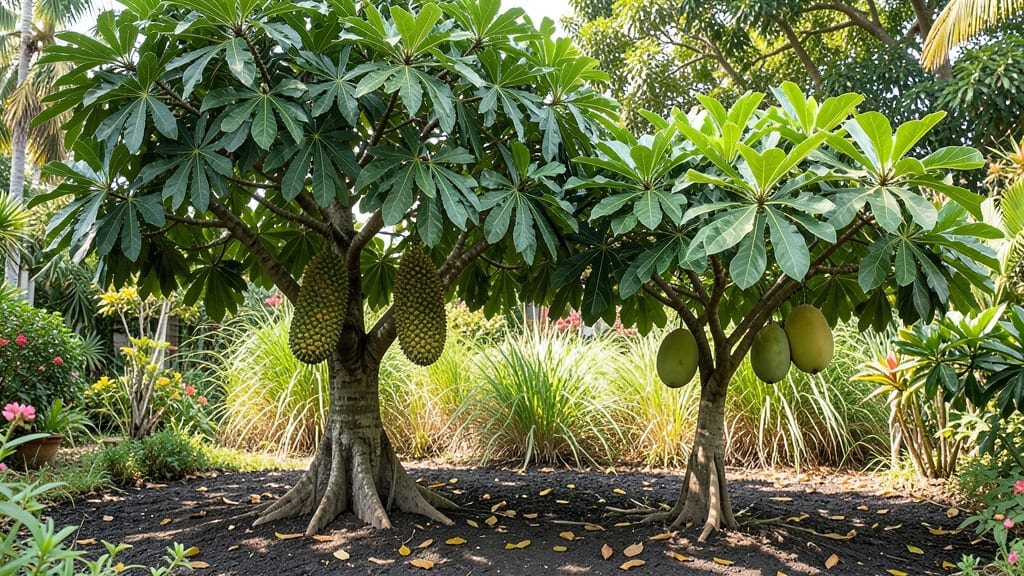
Growing jackfruit and breadfruit means harvesting tropical giants that feed families for decades. 🌿 These two powerhouse trees thrive in warm climates, turning your land into a self-sustaining fruit factory—but they demand space, patience, and the right soil mix to reward you with hundreds of pounds of fruit each season.
Both trees share similar needs: rich, well-draining soil with plenty of organic matter, protection from cold snaps, and consistent moisture during their first few years. The key difference?
Jackfruit grows faster but needs more room (up to 60 feet tall), while breadfruit matures slower but produces earlier and handles partial shade better. Neither tolerates frost—plant only where winters stay above 40°F.
Once established, you'll harvest jackfruit's spiky green pods (yes, they're edible inside!) and breadfruit's starchy, potato-like fruits year-round in tropical zones. The real magic happens when you prune strategically—opening the canopy for better air flow and fruit production.
Both trees reward careful care with decades of harvests, making them the ultimate long-term investment for warm-climate gardeners.
Whether you're eyeing a backyard orchard or farm-scale production, these trees deliver—just be ready to clear space for their impressive growth. The payoff? Fresh fruit that tastes nothing like store-bought, and the satisfaction of growing something truly monumental.
The first product explained
Meet your tropical superstar: Artocarpus heterophyllus—the mighty jackfruit! 🌴🌟 This fast-growing, low-maintenance perennial is a powerhouse for warm climates, offering huge yields of sweet, versatile fruit (yes, even vegan "pulled pork"!) and lush, shade-providing leaves. Whether you're a homesteader, urban gardener, or just a fruit enthusiast, jackfruit delivers big rewards with minimal fuss.
📏 Specs & Features
- Size: Mature trees reach 60–100 feet tall (though dwarf varieties stay compact at 15–25 ft).
- Growth Rate: Rapid! Can produce fruit as early as 3–5 years (some even sooner in ideal conditions).
- Climate Needs: Thrives in USDA Zones 10–12 (or container-grown in cooler zones). Loves full sun (6+ hours/day) and well-draining, slightly acidic soil (pH 5.5–6.5).
- Yield: A single tree can produce 50–100+ fruits per year (each weighing 10–80 lbs!).
- Fruit Ripening: 6–8 months from flower to harvest (varies by variety).
- Pollination: Self-pollinating (though cross-pollination boosts yields).
🎯 Target Users
Jackfruit is a game-changer for:
- Homesteaders & Farmers: High-calorie, drought-tolerant crop with year-round harvests in tropical zones.
- Urban Gardeners: Dwarf varieties fit containers or small yards—perfect for balconies or patios!
- Vegans & Health Enthusiasts: A meat substitute (high in protein, fiber, and potassium) with zero cholesterol.
- Eco-Conscious Growers: Improves soil health, attracts pollinators, and provides year-round shade.
- Foodies & Chefs: Versatile fruit for curries, desserts, smoothies, or even "pulled jackfruit" tacos!
💰 Price Point & Value
Investing in a jackfruit tree is a long-term win:
- Seedlings: $20–$50 (mail-order or local nurseries). Dwarf varieties may cost $50–$100.
- Established Trees: $100–$300+ (depending on size and fruit quality).
- ROI: One tree can pay for itself in 2–3 years through fruit sales or personal harvests! 💸🌱
- Bonus: Jackfruit trees live 50+ years, making them a perennial powerhouse.
Pro Tip: 💡 Start with a grafted dwarf variety (like 'Jumbo' or 'Golden') if space is limited—you’ll still get big fruit on a small tree!
The second product explained
Meet the breadfruit—your tropical garden’s next superstar! 🌴🍍 While jackfruit steals the spotlight for its massive, edible pods, breadfruit is the unsung hero of sustainable, high-yield fruit trees. This versatile, starchy fruit thrives in warm climates and offers a bounty of benefits for home growers, chefs, and eco-conscious families.
🌱 Key Specs & Features
Breadfruit (Artocarpus altilis) is a fast-growing, perennial tree that can reach heights of 60–100 feet (though dwarf varieties stay compact at 15–25 feet). Here’s what makes it a must-have:
- Growth Speed: Mature trees produce fruit in 3–5 years (vs. jackfruit’s 5–7 years).
- Yield: A single tree can produce 100–200 fruits per year, each weighing 1–10 lbs!
- Climate Fit: Thrives in USDA Zones 10–12 (or container-grown in cooler zones with winter care).
- Soil Needs: Prefers well-draining, slightly acidic soil (pH 5.5–6.5) and tolerates poor soils better than jackfruit.
- Pollination: Self-pollinating (no need for a second tree!).
- Lifespan: Can live for 50+ years with proper care.
🎯 Who’s It For?
Breadfruit is a game-changer for:
- Home gardeners in tropical/subtropical regions looking for a low-maintenance, high-reward crop.
- Chefs & foodies—its starchy, potato-like texture works in savory dishes (like fries, mashed "potatoes," or even pizza crust!).
- Sustainability seekers—breadfruit is gluten-free, hypoallergenic, and carbon-negative (it absorbs more CO₂ than it emits!).
- Families & communities—its abundant yield makes it perfect for feeding crowds or selling at farmers' markets.
💰 Price Point & Value
Breadfruit trees are far more affordable than jackfruit saplings, with prices ranging from:
- $20–$50 for young grafted trees (1–2 years old, ready for planting).
- $50–$100 for dwarf or rare varieties (e.g., Ma’afala or Ulua).
- $100+ for heirloom or disease-resistant hybrids.
Pro Tip: 💡 Buy from reputable tropical nurseries (like Tropical Fruit Nursery or Mokulele Nursery) to ensure healthy, grafted trees. Avoid wild seeds—they may take 10+ years to fruit!
🍽️ Why Choose Breadfruit Over Jackfruit?
| Feature | Breadfruit | Jackfruit |
|---|---|---|
| Maturity Time | 3–5 years | 5–7 years |
| Yield per Tree | 100–200 fruits/year | 50–100 fruits/year |
| Versatility | Starchy (like potato), gluten-free, long shelf life | Sweet (like meat), perishable, seasonal |
| Ease of Growing | Hardier, tolerates poor soil, self-pollinating | Needs rich soil, may need cross-pollination |
| Price | $20–$100 | $50–$200+ |
While jackfruit wins for culinary drama, breadfruit is the practical powerhouse—ideal for daily meals, sustainability, and year-round harvests.
Head-to-head comparison
Ready to dive into the tropical showdown? Whether you're a backyard gardener or a homestead dreamer, understanding the key differences between jackfruit and breadfruit will help you decide which (or both!) to plant in your warm-climate paradise.
Below, we break down their strengths, quirks, and everything in between—so you can grow like a pro! 🌴🍍
🌱 Growth & Size
If space is your biggest consideration, these two tropical giants couldn’t be more different!
| Metric | Jackfruit | Breadfruit |
|---|---|---|
| Mature Tree Height | 60–100 ft (18–30 m) | 30–60 ft (9–18 m) |
| Canopy Spread | 40–60 ft (12–18 m) | 20–40 ft (6–12 m) |
| Growth Rate | Moderate (5–10 years to bear fruit) | Fast (3–6 years to bear fruit) |
| Root System | Deep, invasive (can damage nearby structures) | Shallow, less aggressive |
💡 Pro Tip: If you’re short on space, breadfruit is the winner—it’s easier to contain and produces fruit faster. But if you’ve got acres (or a jungle vibe), jackfruit will thrive like a king! 👑
🍽️ Fruit Characteristics
Now, let’s talk harvest—because these fruits aren’t just pretty faces!
| Trait | Jackfruit | Breadfruit |
|---|---|---|
| Size (Per Fruit) | Up to 80 lbs (36 kg)! | 1–5 lbs (0.5–2.3 kg) |
| Shape | Spiky, bulbous (like a giant pineapple) | Round, smooth (like a potato or artichoke) |
| Texture (When Ripe) | Soft, custard-like (sweet, tropical flavor) | Starchy, potato-like (mild, nutty flavor) |
| Unripe Uses | Meaty, fibrous (great for vegan "pulled pork") | Starchy, firm (used like a vegetable) |
| Seed Edibility | Inedible (large, hard seeds) | Edible when cooked (small, soft seeds) |
🔥 Fun Fact: Jackfruit’s unripe flesh is so versatile it’s the secret star of vegan BBQ—just shred it and season it like pulled pork! Breadfruit, on the other hand, is a blank canvas for savory dishes (think mashed breadfruit or fried chips). 🍖🍟
🌡️ Climate & Hardiness
Both love the heat, but they’ve got different comfort zones.
| Factor | Jackfruit | Breadfruit |
|---|---|---|
| Ideal Temperature | 75–90°F (24–32°C) | 70–85°F (21–29°C) |
| Cold Tolerance | Dies below 30°F (-1°C) | Survives brief dips to 28°F (-2°C) |
| Humidity Needs | High (thrives in tropical rainforests) | Moderate to high (adapts to drier climates) |
| Wind Resistance | Weak (large canopy can snap in storms) | Moderate (more resilient) |
✨ Grower’s Hack: If you’re in a cooler tropical zone (e.g., Hawaii’s uplands or Florida’s inland areas), breadfruit is your best bet. For steamy, lowland jungles, jackfruit will outperform—just stake it young to prevent wind damage! 🌪️🌳
💰 Cost & Accessibility
Let’s talk ROI—because who doesn’t love free food?
| Metric | Jackfruit | Breadfruit |
|---|---|---|
| Seed Cost (Online) | $10–$30 per seed | $5–$20 per seed |
| Grafted Tree Cost | $50–$150+ | $30–$100 |
| Yield Per Tree (Annual) | 50–200 fruits (but huge size = fewer servings) | 100–300 fruits (smaller but prolific) |
| Market Value (Fresh) | High ($3–$10 per lb in specialty stores) | Moderate ($1–$3 per lb, often local) |
🎯 Budget Tip: Breadfruit is the smart money’s choice—cheaper to start, faster to yield, and easier to sell or share. Jackfruit, however, is a luxury crop with higher market value (if you can find buyers!). For homesteaders, growing both maximizes your tropical pantry! 💸🍌
🛡️ Pests & Diseases
No garden is pest-free, but these two handle pressure differently.
| Threat | Jackfruit | Breadfruit |
|---|---|---|