
Pruning
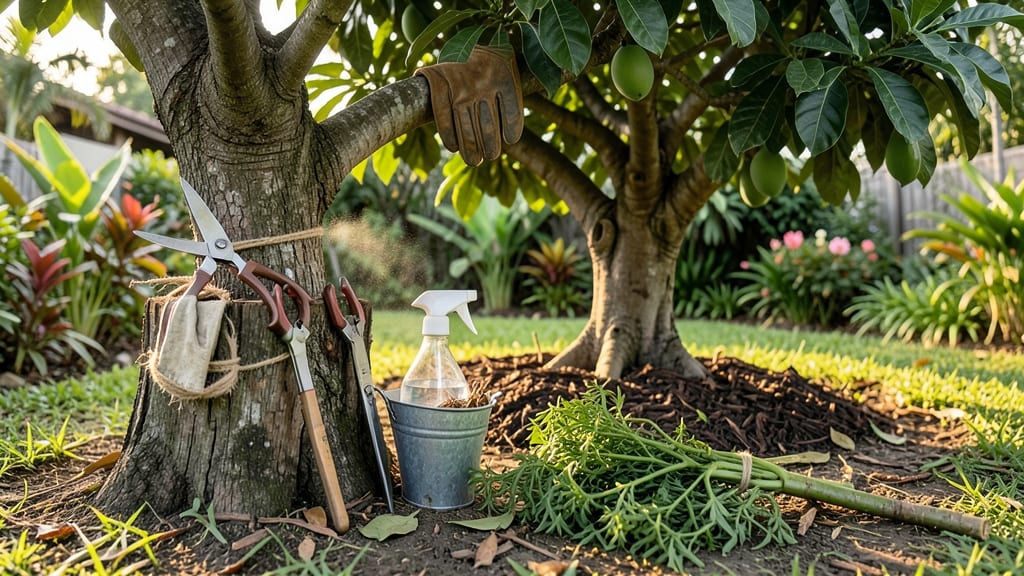
Pruning a mango tree for fruit isn’t just about trimming—it’s about unlocking a year-round harvest 🌱 by shaping how energy flows. I’ve watched my own tree go from sparse, bitter fruit to heavy, sweet clusters after learning these key techniques, and the difference is dramatic.
The best time to prune depends on your climate: in tropical zones, late winter to early spring (just before new growth) works best, while subtropical gardeners should prune after the last frost.
You’ll need sharp pruning shears, a sterilizing solution (like rubbing alcohol), and a clear day to see the tree’s structure. The goal is to open the canopy for sunlight and air, which directly boosts fruit production.
You’ll focus on three main cuts: removing dead or crossing branches first, then thinning out crowded growth to let light reach the center, and finally shaping the outer limbs to encourage upward growth.
After pruning, give your tree a balanced fertilizer and watch for new shoots—those are your future fruit-bearing branches. Small trees need gentle shaping, while mature trees benefit from more aggressive thinning.
The key is patience: a well-pruned mango tree rewards you with heavier harvests for years, not just one season. Ready to transform your tree’s potential?
📚 In This Guide
- What you need
- Instructions
- Tips and common mistakes
- Wrapping up and next steps
What you need
- ● Pruning shears (bypass or anvil type) – Choose sharp, high-quality shears (8-10 inches long) for clean cuts. Bypass shears are ideal for live branches, while anvil shears work for thicker, dead wood.
- ● Loppers – For branches ½ to 2 inches in diameter. Opt for bypass loppers for precision.
- ● Pruning saw – For branches 2+ inches thick. A curved-tooth saw prevents tearing.
- ● Gloves (heavy-duty, cut-resistant) – Protect your hands from thorns and rough bark.
- ● Disinfectant (70% isopropyl alcohol or bleach solution) – Clean tools between cuts to prevent disease spread.
- ● Rubbing alcohol or hand sanitizer – For quick tool disinfection in the field.
- ● Twine or zip ties – To secure branches if needed during pruning.
- ● Ladder (or sturdy step stool) – For reaching higher branches safely. Ensure it’s stable and rated for your weight.
- ○ Sharpie or permanent marker – To mark branches for removal (optional but helpful for planning).
- ● Tree wound dressing (pruning paste) – Controversial but some gardeners use it to seal larger cuts (½ inch or wider). Skip if your tree is young or healthy!
- ● Work gloves with grip – For extra comfort if your tree has lots of thorns.
- ● Pruning sealant (for large cuts) – Only use if your tree is prone to fungal infections.
- ● Notebook & pen – To jot down pruning notes or track growth patterns.
- ● Water spray bottle – To mist tools and hands if working in hot weather.
- ● Know your tree’s age and stage – Young trees (1-3 years) need light pruning, while mature trees (5+ years) can handle heavier trimming.
- ● Check the weather – Prune on a dry, cloudy day to reduce stress on the tree. Avoid pruning during peak heat or rain.
- ● Identify dead/diseased branches – These should be removed first to prevent further spread.
- ● Plan your cuts – Sketch a rough outline of what you’ll remove to avoid over-pruning.
- ● Safety first! – Wear closed-toe shoes and avoid working alone if the tree is large.
Step-by-Step guide to pruning a mango tree for maximum fruit
Here's how I shape my mango tree each season to guarantee heavy harvests—no fancy tools, just smart cuts.
✂️ Step 1: Identify and Remove Dead or Diseased Branches
Start by scanning the tree for any branches that look brown, brittle, or hollow. These are deadwood and will only drain energy from your fruit production. Grab your pruning shears and cut these branches back to the main trunk or a healthy outward-facing branch. You'll know you're on the right track when you see fresh green tissue inside the cut.
Don't skip this step—dead branches can harbor pests and diseases that will spread to healthy wood. I always work from the bottom up, removing the lowest dead branches first. This keeps me from accidentally cutting healthy branches that might be hidden behind the deadwood.
✂️ Step 2: Thin Out Overcrowded Branches
Look for branches growing directly toward the center of the tree or those rubbing against each other. These need to go—they create weak spots and block sunlight from reaching the interior fruit. Aim to create an open canopy with good air circulation. You'll want to maintain a structure where sunlight can reach all parts of the tree.
For each branch you remove, cut it back to a strong outward-growing branch or bud. This encourages the tree to grow stronger, more productive branches in their place. I like to leave about 6-8 main scaffold branches on a mature tree—this gives the tree plenty of space to produce fruit without overcrowding.
☀️ Step 3: Prune for Better Light Penetration
Now focus on the interior of the tree. Mango trees need plenty of sunlight to set fruit, so any branches shading the center should be thinned out. Look for branches growing straight up—these are called "water sprouts" and should be removed entirely. They compete with the main structure for energy and rarely produce fruit.
Make your cuts just above an outward-facing leaf or bud. This encourages new growth in the right direction. You'll see a noticeable difference in light reaching the center of the tree after this step. A well-pruned mango tree should have sunlight reaching all the way to the trunk by mid-morning.
⏰ Step 4: Shape the Tree for Optimal Fruit Production
Mango trees produce fruit on new growth, so you want to encourage strong, healthy branches. Cut back any overly long branches by about one-third to promote bushier growth. Focus on the outer branches first—they'll get the most sunlight and produce the best fruit.
For young trees, I like to maintain a more open, vase-like shape. This allows sunlight to reach all parts of the tree and makes harvesting easier. Avoid heavy pruning in the first few years—you want the tree to establish a strong framework before focusing on fruit production.
🌱 Step 5: Clean Up and Monitor Growth
After pruning, remove all cut branches and debris from the area. This helps prevent disease and pests from taking hold. I always sterilize my pruning tools with rubbing alcohol between cuts to keep everything clean. Once you're done, give the tree a good watering to help it recover from the stress of pruning.
Watch the tree closely over the next few weeks. You should see new growth emerging from the cuts you made. This is a good sign that the tree is responding well. If you notice any signs of stress—like yellowing leaves or wilting—give the tree a little extra care with water and fertilizer until it recovers.
Tips & tricks for pruning a mango tree for fruit
Want to transform your mango tree into a fruit-producing powerhouse? These practical tips will help you avoid common mistakes and maximize your harvest.
Timing is Everything: The best time to prune your mango tree is during the dry season, just before the rainy season begins. This timing allows the tree to heal quickly and puts it in position to grow new fruit-bearing branches. I've found that pruning in late winter or early spring—when the tree is still dormant but about to wake up—gives the best results. This aligns perfectly with Step 1 of the instructions, where you remove dead branches.
Cutting Technique Matters: When you're making your cuts in Step 2 or Step 4, always use sharp, clean pruning shears to make smooth cuts just above an outward-facing leaf or bud. This encourages new growth in the right direction. I learned this the hard way—using dull shears can crush the branch and create entry points for disease. Make sure your cuts are at a 45-degree angle about 1/4 inch above the bud or branch collar, which is the swollen area at the base of the branch.
Visual Cues for Success: After pruning, you should see sunlight reaching all the way to the trunk by mid-morning, as mentioned in Step 3. To check your progress, stand in the center of the tree and look up—you should see an open canopy with light filtering through. If you notice dark, shaded areas, you might need to remove more branches blocking light. This visual check helps ensure you're creating the optimal structure for fruit production.
Monitoring Recovery: In Step 5, the instructions mention watching for new growth over the next few weeks. This is crucial! Healthy new growth should appear within 2-4 weeks after pruning. If you don't see new growth within this timeframe, it might indicate stress or improper pruning. Give your tree some extra care with water and fertilizer until you see signs of recovery, like fresh green leaves emerging from the cuts.
Pro Tips for Prune A Mango Tree For Fruit
- Want to transform your mango tree into a fruit-producing powerhouse?
- Timing is Everything: The best time to prune your mango tree is during the dry season, just before the rainy season begins.
- Cutting Technique Matters: When you're making your cuts in Step 2 or Step 4, always use sharp, clean pruning shears to make smooth cuts just above an outward-facing leaf or bud.
Frequently asked questions
Got questions about pruning your mango tree for maximum fruit production?
Here are answers to the most common concerns—so you can confidently shape your tree like a pro!
When is the best time to prune a mango tree for fruit?
The ideal time is late winter or early spring (before new growth starts), but you can also do light pruning after harvest to remove dead wood. Avoid heavy pruning during flowering or fruiting—this can stress the tree and reduce yield. For tropical climates, prune when the tree is not in active growth (usually dry season).
How much can I prune my mango tree without harming it?
Never remove more than 25-30% of the tree’s foliage in one session—this ensures it retains enough energy for fruit production. Focus on thinning out dense branches (especially those rubbing together) and opening the canopy for sunlight. Over-pruning can lead to weak growth or even tree decline. Start conservatively if your tree is young!
Will pruning increase my mango harvest?
Strategic pruning boosts fruit quality and quantity by improving airflow, sunlight penetration, and nutrient distribution. Removing suckers, water sprouts, and crossing branches redirects energy to existing fruit-bearing limbs. However, avoid excessive pruning—balance is key! A well-pruned tree can yield 20-50% more fruit over time.
What should I do if my mango tree isn’t fruiting after pruning?
If your tree skips fruiting, check these fixes:
- Age: Young trees (under 5 years) may need 1-2 more years to mature.
- Nutrients: Apply potassium-rich fertilizer (like banana peel tea) to support flowering.
- Pollination: Hand-pollinate flowers with a soft brush if bees are scarce.
- Pruning timing: Ensure you pruned before the flowering season (not during).
Can I prune a mango tree with dull or dirty tools?
No!
Always use sharp, sterilized pruners to prevent disease spread and jagged cuts that heal poorly. Clean tools with rubbing alcohol or bleach between cuts, and oil blades after use. Dull tools crush branches, inviting pests—like mango seed weevils—to move in. Pro tip: Sharpen blades with a file or whetstone for clean cuts.
Wrapping up and next steps
Pruning your mango tree isn’t just about trimming—it’s about unlocking its full potential for sweet, abundant harvests year after year. By mastering the right techniques, timing, and tools, you’ll encourage healthier growth, better airflow, and those coveted juicy mangoes. 🌿✨
Now that you’re armed with the know-how, roll up your sleeves and get pruning! Start small, observe your tree’s response, and adjust as needed. Before you know it, your backyard could be bursting with sunshine-yellow mangoes—just reward yourself for a job well done.
Next step: Mark your calendar for the next pruning season and keep an eye on your tree’s progress. Happy growing! 🌱🍈