
Pruning
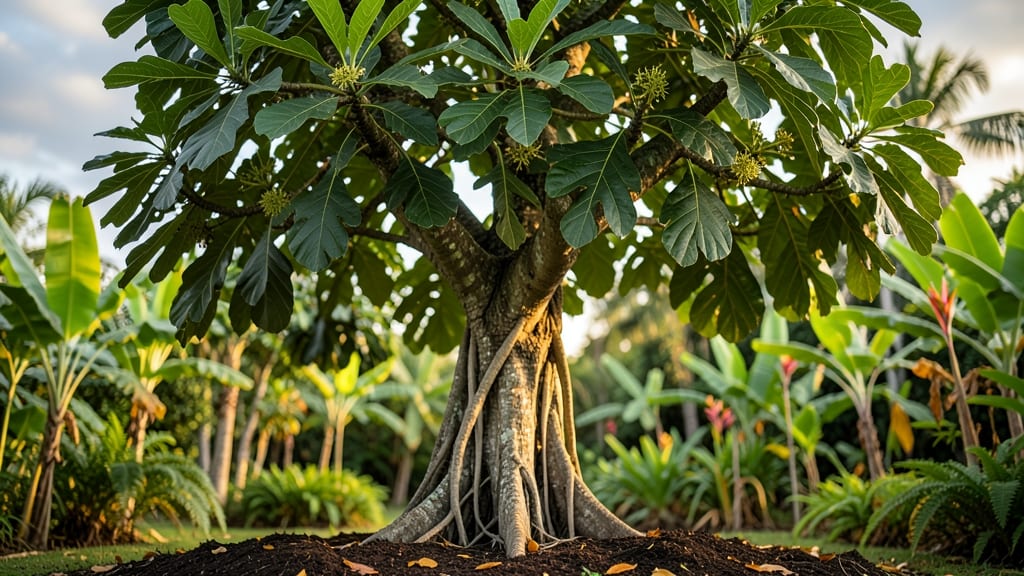
A healthy jackfruit tree care routine starts with pruning like a pro—here’s how to keep yours thriving and productive year-round. 🌿 I’ve learned that regular trimming isn’t just about shaping; it’s about airflow, sunlight, and even fruit size.
My first jackfruit tree nearly choked itself with tangled branches until I discovered the right cuts. The key is timing: prune lightly after harvest, then again in late winter before new growth. You’ll want to remove dead wood first, then thin out crowded branches to let sunlight reach the center.
I aim for a 30% reduction in foliage each year—never more—to avoid stressing the tree. What you’ll get is a tree that bears larger, sweeter fruit and resists pests better. The canopy stays open, so harvesting becomes a breeze.
Plus, the wood makes great firewood once it’s properly dried. Works for both young trees and mature giants—just adjust the intensity. Let’s get those branches in check!
📚 In This Guide
- What you need
- Instructions
- Tips and common mistakes
- Wrapping up and next steps
What you need
- ● Pruning shears – Bypass pruners (sharp, 7-9" blade) for clean cuts on small branches.
- ● Loppers – 18-24" bypass or anvil loppers for thicker branches (up to 2" diameter).
- ● Pruning saw – Curved-tooth or folding saw for branches over 2" thick.
- ● Disinfectant – 70% isopropyl alcohol or diluted bleach solution (1 part bleach to 9 parts water) to sterilize tools between cuts.
- ○ Pruning sealant – Optional but helpful for large cuts (e.g., Tanglefoot Tree Wound Pruning Seal).
- ● Gloves – Heavy-duty, cut-resistant gloves (jackfruit thorns are no joke!).
- ● Safety glasses – Protect your eyes from debris, especially when sawing.
- ● Ladder or step stool – Sturdy, 6-12 ft tall (jackfruit trees can grow 60-100 ft!).
- ● Heavy-duty trash bags – For collecting pruned branches (jackfruit wood is heavy!).
- ● Knowledge of jackfruit growth stages – Familiarize yourself with primary vs. secondary branches and flowering nodes (prune at the right time!).
- ● Weather check – Prune on a dry, overcast day to reduce stress on the tree.
- ○ Compost bin – Optional for repurposing small pruned branches as mulch.
- ○ Tree support straps – Optional for stabilizing young trees during heavy pruning.
- ● First-aid kit – Just in case (thorns + saws = potential ouchies!).
Instructions for year-round jackfruit tree pruning
Here's my go-to approach for keeping your jackfruit tree thriving through every season.
✂️ Step 1: Assess Growth and Identify Pruning Zones
Start by examining your tree in early spring, just as new growth begins. Look for dead, diseased, or crossing branches—these are your first targets. Jackfruit trees produce fruit on new wood, so focus on removing only what's necessary to maintain an open canopy. I like to use a sharp pruning saw for thicker branches and hand pruners for smaller stems.
Mark branches that grow inward or rub against each other—they'll compete for sunlight and eventually damage each other. You'll also spot water sprouts, those fast-growing vertical shoots that steal energy from fruit production. These can go entirely. Work in dry weather to prevent disease spread, and always sterilize your tools with rubbing alcohol between cuts.
✂️ Step 2: Make Clean Cuts at the Right Angles
When pruning, cut just outside the branch collar—the swollen area where the branch meets the trunk. This ensures the tree can seal the wound properly and prevents decay. For branches thicker than 2 inches, make a 30-degree angle downward from the branch collar to prevent water from pooling. Smaller branches can be cut straight across.
Never leave stubs—this invites pests and disease. If you're removing a large branch, make a undercut first to control the branch's fall, then a top cut about 6-12 inches out from the trunk. The undercut should be parallel to the ground, while the top cut follows the branch's natural angle. This two-step method prevents tearing bark.
☀️ Step 3: Encourage Airflow and Sunlight Penetration
Jackfruit trees need good airflow to prevent fungal diseases like anthracnose. After removing deadwood and crossing branches, step back and visualize sunlight reaching the inner canopy. Your goal is to create a balanced, open structure that lets light filter through to the lower branches. This encourages fruit production on the entire tree, not just the outer edges.
If your tree has become too dense, thin out branches in stages—never remove more than 25% of the canopy at once. You'll see new shoots emerging from the sides within 4-6 weeks, signaling the tree is responding well. Avoid heavy pruning in late summer or fall, as this stimulates new growth that won't harden off before winter.
⏰ Step 4: Schedule Seasonal Maintenance Checks
Light pruning can happen year-round, but focus on major structural work in late winter before new growth starts. In summer, remove only damaged or diseased branches—this keeps the tree's energy focused on fruit development. After harvest, do a light cleanup prune to remove spent flower clusters and any branches that didn't produce well.
Watch for suckers at the base—these compete with the main tree for nutrients. Remove them immediately with clean cuts. If you notice yellowing leaves or stunted growth, it might signal over-pruning or nutrient deficiency. In this case, hold off on pruning and focus on soil health instead. A jackfruit tree in balance will show dark green, glossy leaves and steady new growth.
🌿 Step 5: Post-Pruning Care for Rapid Recovery
After pruning, give your tree a balanced fertilizer**> with equal parts nitrogen, phosphorus, and potassium to support new growth. Water deeply at the base—1-2 gallons per inch of trunk diameter—to help the tree recover. Avoid overhead watering for 3-5 days to let wounds dry and seal properly.
Monitor the tree for 3-4 weeks after pruning. New shoots should appear within this time, and existing leaves should remain vibrant. If you see wilting or browning at the pruning sites, the cuts may have been too severe. In this case, apply a wound dressing (like tree sealant) to protect the exposed areas until the tree can heal.
Tips & tricks for perfect jackfruit tree pruning
Real talk: Pruning jackfruit trees can feel overwhelming, but these practical tips will help you avoid common mistakes and keep your tree thriving.
Tool Prep Matters: Sterilizing your tools between cuts is non-negotiable—dip pruners and saws in rubbing alcohol after each use, especially when dealing with diseased branches. I learned this the hard way after accidentally spreading anthracnose to healthy branches. For large cuts, use a sharp pruning saw to prevent tearing bark, which creates entry points for pests.
Branch Collar Respect: When making cuts, always target just outside the branch collar—the swollen area where the branch meets the trunk. This is the tree's natural healing point, and cutting too close can damage the tree's ability to seal the wound. For branches thicker than 2 inches, the 30-degree angle downward from the collar prevents water pooling, which could lead to rot.
Seasonal Timing Secret: Late winter is your prime time for major structural work because the tree is dormant and won't be stressed by new growth. In summer, limit yourself to removing only damaged branches—this keeps the tree's energy focused on fruit production. After harvest, a light cleanup prune removes spent flower clusters without disrupting the tree's recovery.
Recovery Monitoring: After pruning, watch your tree closely for 3-4 weeks. New shoots should emerge within this window, and existing leaves should stay vibrant. If you notice wilting or browning at pruning sites, the cuts may have been too severe—apply a tree sealant to protect the exposed areas until the tree can heal naturally.
Pro Tips for Jackfruit Tree Care
- Real talk: Pruning jackfruit trees can feel overwhelming, but these practical tips will help you avoid common mistakes and keep your tree thriving.
- Tool Prep Matters: Sterilizing your tools between cuts is non-negotiable—dip pruners and saws in rubbing alcohol after each use, especially when dealing with diseased branches.
- Branch Collar Respect: When making cuts, always target just outside the branch collar—the swollen area where the branch meets the trunk.
Frequently asked questions
Got questions about keeping your jackfruit tree thriving? Here are some of the most common concerns—plus quick answers to help you prune like a pro!
How often should I prune my jackfruit tree?
Prune your jackfruit tree twice a year: once in late winter/early spring (before new growth) to shape the tree, and again in summer (after fruiting) to remove dead or overcrowded branches. Young trees may need lighter pruning, while mature trees benefit from more aggressive shaping to improve airflow and fruit production.
When is the best time to prune for fruit production?
For maximum fruit yield, prune after harvest (summer) to encourage new growth and next year’s flowers. Avoid heavy pruning during flowering or fruiting seasons—this can stress the tree and reduce crop size. Light maintenance pruning (removing dead wood) is fine year-round, but save major cuts for off-seasons.
What if my jackfruit tree isn’t flowering or fruiting?
Lack of flowers/fruit often stems from over-pruning, poor nutrition, or improper timing. Check these fixes:
- Fertilize with potassium-rich fertilizer (like banana peel tea) to boost flowering.
- Avoid pruning during flowering—wait until after fruit drop.
- Ensure full sun (6+ hours daily) and well-draining soil.
- Check for pests like aphids or mites, which can stress the tree.
Can I prune too much? What are the signs?
Yes! Over-pruning shows up as stunted growth, yellowing leaves, or no flowers/fruit. Stick to removing no more than 25% of the canopy in one session. If you’ve already pruned too aggressively, stop cutting and focus on feeding the tree with compost or balanced fertilizer to recover.
Are there alternatives to traditional pruning for jackfruit trees?
While traditional pruning is best, you can try selective thinning—removing only the innermost, shaded branches to improve sunlight penetration without drastic reshaping. For large trees, drop crotching (cutting branches at the trunk) can encourage stronger regrowth. However, these methods require patience and may not yield fruit as quickly as classic pruning.
Wrapping up and next steps
Caring for your jackfruit tree doesn’t have to be complicated—just consistent! With the right pruning techniques, proper tools, and a little patience, you’ll enjoy a thriving tree that rewards you with bountiful harvests for years.
Remember, healthy growth starts with smart pruning, so don’t hesitate to roll up your sleeves and give your tree the attention it deserves.
Ready to take the next step? Start small—pick one pruning session this season and observe how your tree responds. Over time, you’ll become a jackfruit pruning pro! 🌿✨