
Pruning
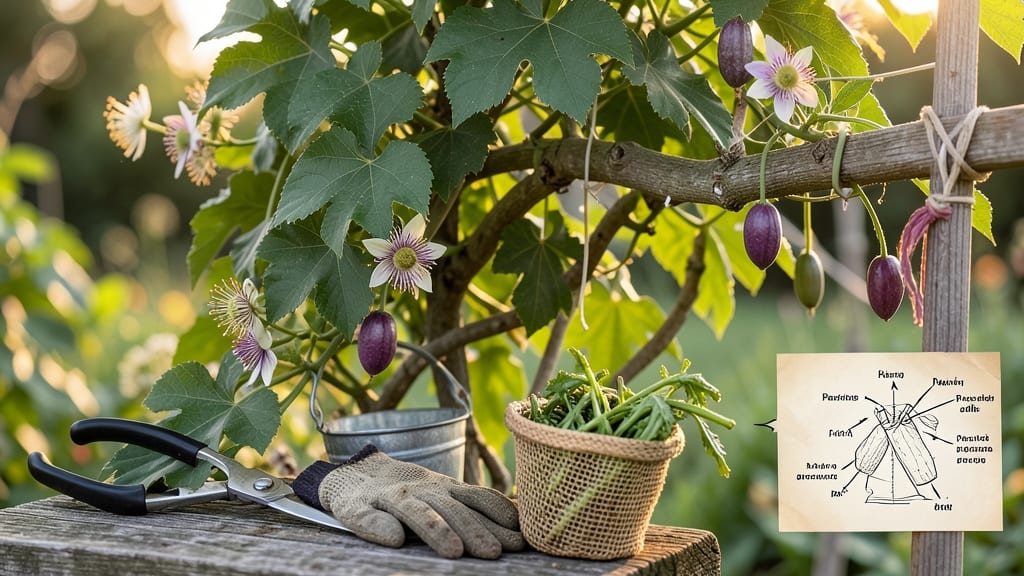
Pruning a passion fruit vine transforms a tangled mess into a high-yielding fruit factory. 🌱 I’ve watched my vines go from chaotic to producing pounds of fruit in a single season—all because of strategic cuts at the right time. The key?
Timing, tools, and knowing which growth to keep (and which to sacrifice). You’ll need sharp pruners, gloves, and a clear day to assess the vine.
Prune during the dormant season (late winter to early spring) when new growth slows, and always cut just above a leaf node to encourage branching. Dead or diseased wood gets the first snip—it’s the vine’s way of saying, “Thanks, but no thanks.”
After pruning, your vine will focus energy on fruit production instead of wild, unproductive growth. Expect healthier vines, more flowers, and a harvest that’ll make your neighbors jealous. Just don’t overdo it—too many cuts mean fewer fruits next season.
This method works for both passiflora edulis (purple passion fruit) and passiflora ligularis (granadilla). Ready to turn your vine into a fruiting powerhouse?
📚 In This Guide
- What you need
- Instructions
- Tips and common mistakes
- Wrapping up and next steps
What you need
- ● Pruning shears or secateurs: Sharp, clean, and disinfected (70% isopropyl alcohol works great). Choose a pair with bypass blades (not anvil-type) for clean cuts.
- ● Gloves: Heavy-duty gardening gloves (nitrile-coated for durability) to protect against thorns and sap.
- ● Disinfectant solution: A bottle of rubbing alcohol (70% or higher) or a commercial pruning spray to sterilize tools between cuts and prevent disease.
- ● Ladder or step stool: If your vine is tall (6+ feet), a sturdy aluminum ladder or a foldable step stool will help you reach safely.
- ● Rope or twine: 3/8-inch nylon rope or jute twine (50+ feet) to support and train new growth.
- ● Sharp knife or loppers: A pruning saw (for thicker branches) or a bypass lopper (for branches up to 2 inches thick).
- ● Trash bags or bucket: For collecting pruned branches and debris (5+ gallon capacity recommended).
- ● Hand pruners with a long reach: Extendable pruners (12+ inches) for hard-to-reach spots.
- ● Plant wound sealant: A natural sealant (like beeswax or tree seal) to coat large cuts and prevent rot.
- ● Garden hose or spray bottle: To rinse tools and cuts if sap is sticky.
- ● Notebook or app: To sketch your vine’s structure or track pruning progress (e.g., Gardenate or iNaturalist).
- ● Safety glasses: If your vine is dense with thorns, protect your eyes!
Step-by-Step instructions for pruning a passion fruit vine
Here's my battle-tested approach to pruning that turns your vine into a fruit-producing powerhouse.
✂️ Step 1: Identify and Remove Dead or Diseased Wood
Start by examining the vine for any branches that are brown, brittle, or showing signs of disease like black spots or mold. These are your first targets—dead wood won’t produce fruit and can spread problems to healthy growth. Use sharp, clean pruners to make a clean cut just outside the growth node where the branch meets the main stem.
I always work from the bottom up, removing the worst offenders first. This keeps the vine's energy focused on healthy growth rather than struggling to revive damaged sections. If you see any branches with holes or insect activity, bag them immediately and dispose of them away from your garden to prevent reinfestation.
✂️ Step 2: Prune for Structure and Airflow
Passion fruit vines thrive when they have good airflow to prevent fungal diseases. Focus on removing any crossing branches that rub against each other—these create wounds where pathogens can enter. Also, cut back any branches growing inward toward the center of the plant, leaving only the outward-facing growth.
For established vines, I aim to maintain a 4-6 inch spacing between branches. This ensures sunlight penetrates the plant evenly and reduces humidity buildup in dense foliage. If your vine has become overly tangled, don’t be afraid to make bold cuts—passion fruit vines are resilient and will bounce back with vigorous new growth.
✂️ Step 3: Encourage Fruit Production with Strategic Cuts
The key to maximizing fruit yield is directing the vine’s energy toward flowering and fruiting. Look for lateral branches (side shoots) that have already produced fruit in previous seasons. These are your priority—cut them back by one-third to stimulate new growth and flower production.
I also remove any suckers (small shoots growing at the base of the vine) unless you’re propagating new plants. These divert energy away from the main structure. For young vines, focus on pruning to encourage a strong framework of 4-6 main stems—this creates a balanced structure for future fruit-bearing branches.
✂️ Step 4: Time Your Pruning for Optimal Growth
The best time to prune passion fruit vines is late winter or early spring, just as new growth begins to emerge. This timing ensures the vine has plenty of time to recover and produce fruit before the next harvest season. Avoid heavy pruning during the fruiting season, as this can stress the plant and reduce yield.
If you must prune during the growing season, do it gradually over 2-3 weeks to minimize shock. I like to make smaller cuts every few days rather than one aggressive session. Watch for new growth—when you see 1-2 inches of fresh green shoots, you’re on the right track. This indicates the vine is actively responding to the pruning.
✂️ Step 5: Clean Up and Maintain Post-Pruning
After pruning, remove all debris from the area around the vine. This reduces the risk of pests and diseases taking hold in discarded plant material. I also apply a balanced fertilizer (10-10-10 ratio) around the base of the vine to support new growth. Water deeply but avoid soaking the foliage, as this can encourage fungal issues.
Keep an eye on the vine in the weeks following pruning. If you notice any yellowing leaves or stunted growth, it may indicate over-pruning or nutrient deficiency. Adjust your approach for next time—passion fruit vines are forgiving, but they do best with a gentle hand and consistent care. With the right pruning, you’ll see a 20-30% increase in fruit production within a season.
Tips & tricks for pruning passion fruit vines
These game-changing insights will help you transform your pruning from basic maintenance to a strategic approach that boosts fruit production.
Tool Preparation: Always sterilize your pruners with rubbing alcohol between cuts to prevent spreading disease. I learned this the hard way after losing a section of my vine to bacterial infection—now I keep a small bottle of alcohol in my gardening toolkit. Sharp, clean tools also make cuts heal faster and reduce stress on the plant. For stubborn branches, I use a small saw for clean cuts without tearing the bark.
Visual Growth Cues: In Step 3, when cutting back lateral branches by one-third, look for the first set of leaves that show signs of aging—these are your visual cues for where to make the cut. Healthy growth should emerge just above where you prune. If you see only new growth at the tips of branches, you haven't cut back enough to stimulate flowering. This visual check ensures you're directing energy toward fruit production rather than just leafy growth.
Seasonal Timing Strategy: The late winter/early spring timing in Step 4 isn't just about avoiding frost—it's about catching the vine's natural growth surge. I've found that pruning when you first see 1-2 inches of fresh green shoots (not buds) gives the plant about 8-10 weeks of warm weather to recover before flowering. This timing aligns with the vine's biological clock for maximum fruit set. If you're in a warmer climate, aim for late winter when nights are still cool but days are warming.
Post-Pruning Recovery: After completing Step 5, I always do a "health check" by gently tugging on a few leaves. If they resist slightly, the vine is healthy. If they pull away easily, it's a sign of stress from over-pruning. This simple test helps me adjust my approach for next time. For established vines, I also apply a thin layer of compost around the base after fertilizing to retain moisture and provide slow-release nutrients during the critical recovery period.
Pro Tips for Prune A Passion Fruit Vine
- These game-changing insights will help you transform your pruning from basic maintenance to a strategic approach that boosts fruit production.
- Tool Preparation: Always sterilize your pruners with rubbing alcohol between cuts to prevent spreading disease.
- Visual Growth Cues: In Step 3, when cutting back lateral branches by one-third, look for the first set of leaves that show signs of aging—these are your visual cues for where to make the cut.
Frequently asked questions
Got questions about pruning your passion fruit vine? You’re not alone! Here are some of the most common concerns—plus quick, actionable answers to keep your vine thriving and fruiting like a pro.
When is the best time to prune a passion fruit vine?
Prune your passion fruit vine twice a year: once in late winter or early spring (before new growth starts) to shape the plant, and again in early summer (after the first harvest) to encourage more fruiting. Avoid pruning during frost or extreme heat—wait for mild weather to minimize stress on the vine.
How much should I cut back my passion fruit vine?
For young vines, prune back by one-third to encourage bushier growth. Mature vines can handle a 25-30% reduction of old or overcrowded branches. Focus on removing dead, diseased, or crossing branches first—never cut more than 30% in a single session to avoid shocking the plant.
Will pruning reduce my passion fruit harvest?
Not if done right! Pruning actually boosts fruit production by redirecting energy to healthier branches. However, if you prune too late in the season (after flowers form), you might see fewer fruits that year. Time it right, and you’ll get bigger, tastier fruit with fewer pests or diseases.
What if my passion fruit vine doesn’t fruit after pruning?
Lack of fruit could mean over-pruning, nutrient deficiency, or poor pollination. Try these fixes:
- Check for yellowing leaves (sign of nitrogen deficiency—fertilize with compost or a balanced 10-10-10 mix).
- Hand-pollinate flowers with a soft brush if bees are scarce.
- Wait until next season—some vines need 2-3 years to mature fully after heavy pruning.
Can I prune a passion fruit vine in cold climates?
Yes, but timing is critical! In colder regions, prune only in early spring after the last frost risk has passed. Passion fruit vines are tender perennials—if temps drop below 20°F (-7°C), the plant may die back entirely. Use mulch to protect roots and consider growing in containers for easier winter moves.
Wrapping up and next steps
Pruning your passion fruit vine is a rewarding task that boosts fruit production, improves plant health, and keeps your garden tidy! 🌱 By following these steps—timing, tools, and techniques—you’ll encourage lush growth and a bountiful harvest.
Remember, patience and consistency are key, so don’t hesitate to roll up your sleeves and give it a try.
Now that you’re armed with the know-how, head out and give your vine the care it deserves. Monitor its progress, adjust as needed, and soon you’ll be enjoying sweet, juicy passion fruits straight from your garden. Happy pruning! 🍈✨