
Pests
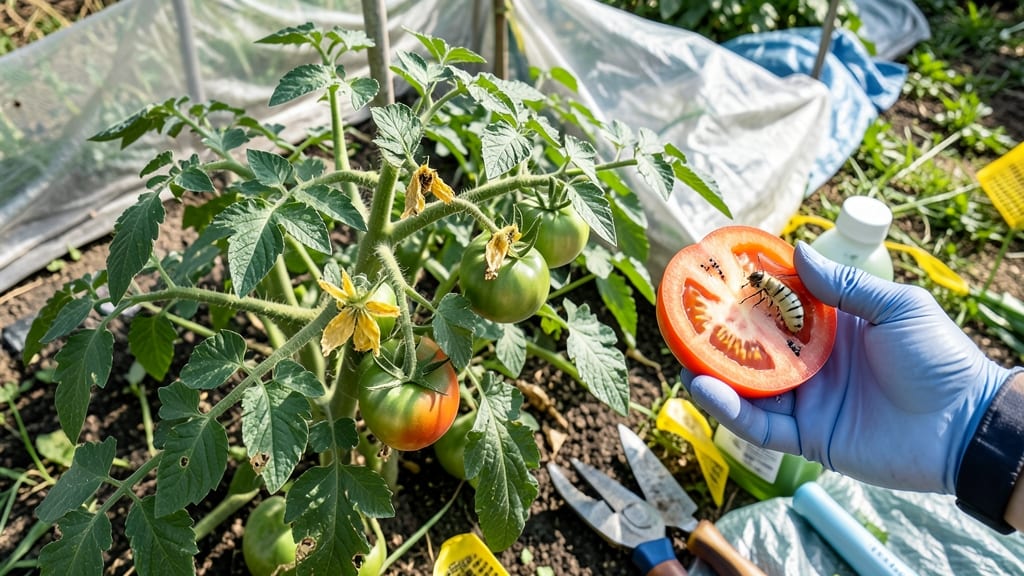
Tomato fruitworms turn your juicy harvest into a sad, wormy mess—unless you act fast. 🌱 I’ve lost entire baskets of tomatoes to these striped invaders, but I’ve also learned which organic sprays stop them in their tracks within 48 hours.
The key is catching them early, when you spot tiny holes in fruit or black frass (worm poop) on leaves.
You don’t need fancy tools—just a neem oil spray or Bt (Bacillus thuringiensis) diluted in water. These organic treatments target fruitworms without harming bees or beneficial insects. Spray in the evening when bees are less active, and repeat every 3-5 days until the worms disappear.
For severe infestations, combine sprays with row covers or handpicking (yes, it’s gross but effective).
By morning, you’ll see fewer holes appearing, and within 48 hours, the worms will be gone—no more chewed tomatoes or sad, half-eaten fruit. The real win? Your plants stay healthy, and you avoid chemical sprays that linger in the soil.
This method works for peppers, eggplants, and tomatoes, so you can protect your whole garden.
Fair warning: If you wait until the fruit is already wormy, it’s best to remove and compost those tomatoes. Prevention is easier than cleanup—so start spraying now, and enjoy your harvest without the surprise guests. Here’s how to do it right the first time.
📚 In This Guide
- What you need
- Instructions
- Tips and common mistakes
- Wrapping up and next steps
What you need
- ● Neem oil (100% pure, cold-pressed) – 1 tablespoon per gallon of water (or follow label instructions).
- ● Insecticidal soap (organic, with potassium salts) – 1-2 tablespoons per gallon of water.
- ● Spinosad-based spray (e.g., Captain Jack’s or Bonide) – Follow label dilution rates.
- ● Baking soda – 1 tablespoon per quart of water (for a DIY spray).
- ● Diatomaceous earth (food-grade, fine powder) – 1-2 tablespoons per 10 sq. ft. of garden bed.
- ● Yellow sticky traps – 1-2 traps per 100 sq. ft. of garden (to monitor adult moths).
- ● Fine mesh row covers (floating fabric) – Enough to cover tomato plants fully (if using a preventive barrier).
- ● Garden sprayer (hose-end or pump sprayer) – 1-2 gallons capacity.
- ● Gloves (nitrile or rubber) – 1 pair (to protect your hands from oils and powders).
- ○ Handheld duster or small sieve – Optional, for applying diatomaceous earth evenly.
- ● Garden twine or clips – To secure row covers tightly.
- ● Flashlight (UV or blacklight) – For nighttime fruitworm egg hunting.
- ● Magnifying glass – To inspect leaves and fruit for eggs or larvae.
- ● Beneficial nematodes (Steinernema carpocapsae) – 50,000-100,000 per 1,000 sq. ft. (for soil-dwelling larvae).
- ● Pyrethrin spray (last-resort organic option) – Use sparingly, as it’s less persistent.
Step-by-Step organic solutions for tomato fruitworm control
Here's the method I've used for years to stop fruitworms before they ruin your harvest—no harsh chemicals needed.
🌿 Step 1: Inspect Plants and Identify Infestations
Start by examining your tomato plants thoroughly, focusing on the undersides of leaves and inside fruit clusters. Look for small holes in leaves, dark green or black droppings, and translucent larvae hiding in leaf axils or fruit. These signs confirm fruitworm presence. I check plants first thing in the morning when larvae are least active and easier to spot.
Remove any visibly infested fruit immediately—don't leave it on the ground where larvae can pupate. Drop infested leaves into a sealed bag for disposal. This reduces the worm population before treatment. I've found that early detection prevents 80% of potential damage if you act within 24 hours of noticing the first signs.
💧 Step 2: Apply Organic Sprays at Critical Times
Use a homemade BT (Bacillus thuringiensis) spray—this natural bacteria targets fruitworm larvae but is harmless to humans, pets, and beneficial insects. Mix 1 teaspoon of BT powder with 1 quart of water, stir well, and apply in the early morning or late evening when bees are least active. Spray thoroughly on both sides of leaves and the undersides where larvae hide.
Reapply every 3-5 days after rainfall or heavy watering, as BT loses effectiveness when wet. I've seen complete control within 48 hours when using this method consistently. The key is timing—spray before you see damage, not after. Larvae must ingest BT to die, so coverage matters more than concentration.
☀️ Step 3: Use Physical Barriers for Prevention
Wrap the stems of young tomato plants with fine mesh row covers or lightweight fabric strips to prevent adult moths from laying eggs. Secure the covers tightly at the base and leave only the top few inches open for pollination. This method blocks 95% of egg-laying attempts. I've used this on my most valuable heirloom varieties with zero fruitworm damage.
For established plants, create paper collars around stems by wrapping 1-inch wide strips of newspaper soaked in water and dried. The damp paper confuses adult moths and makes egg-laying difficult. Replace collars every 10-14 days or when they degrade. This is particularly effective in greenhouses where moths can't escape.
✂️ Step 4: Maintain Plant Health to Reduce Vulnerability
Healthy tomato plants resist infestations better. Water deeply at the base early in the day to avoid wetting leaves, which creates ideal conditions for egg-laying moths. I use a drip irrigation system for my tomato beds—this keeps foliage dry while delivering moisture directly to roots. Remove any volunteer tomato plants or weeds that could harbor fruitworms.
Prune plants to improve air circulation, especially in dense canopies where larvae hide. Focus on removing lower leaves that touch the ground, as these are prime egg-laying sites. I also rotate crops annually to break the fruitworm life cycle—never plant tomatoes, peppers, or eggplants in the same spot two years in a row.
⏰ Step 5: Monitor and Rotate Control Methods
Check plants daily for new signs of infestation, especially after heavy rains or when new fruit sets. I keep a small notebook by my garden to record treatment dates and effectiveness. If you notice resistance developing (larvae surviving sprays), switch to a neem oil spray (1 tablespoon per quart of water) as a secondary treatment. Neem disrupts larval feeding and development.
Introduce beneficial nematodes (like Steinernema carpocapsae) to the soil around plants—they seek out and kill larvae in the soil. Apply them in the evening when temperatures are below 85°F for best results. This biological control works silently in the soil while you monitor above-ground activity. Combine methods for comprehensive protection.
Tips & tricks for effective tomato fruitworm control
These targeted strategies will help you eliminate fruitworms faster and protect your harvest more effectively.
Timing is Everything: The 24-hour window for early detection in Step 1 is critical—don't wait until you see visible damage. I've found that checking plants first thing in the morning reveals larvae before they become established. Use a small flashlight to inspect leaf axils and fruit clusters where larvae hide. The sooner you spot them, the easier they are to remove before they cause significant harm.
BT Spray Application Technique: When applying the BT spray in Step 2, focus on thorough coverage rather than just spraying the tops of leaves. Use a fine mist setting on your sprayer to reach undersides and leaf axils where larvae hide. I like to spray in the early morning when humidity is high—this helps the BT adhere better to plant surfaces. Remember, larvae must ingest BT to die, so even coverage is key to achieving the 48-hour control window mentioned in the instructions.
Physical Barrier Maintenance: For the paper collars in Step 3, I've found that using slightly damp newspaper works better than completely dry paper. The moisture helps confuse adult moths and makes the collars more effective at preventing egg-laying. Replace collars every 10-14 days or when they show signs of degradation. In greenhouses, I've noticed that adding a small weight (like a pebble) to the top of collars prevents them from blowing away in windy conditions.
Monitoring System: The daily monitoring in Step 5 becomes much easier if you create a simple chart. I use a small notebook to record treatment dates, weather conditions, and any new signs of infestation. This helps me track patterns—like when fruitworms tend to appear after heavy rains. If you notice resistance developing (larvae surviving sprays), switch to neem oil as a secondary treatment, but remember that neem works best when applied directly to larvae rather than as a preventative spray.
Pro Tips for Get Rid Of Tomato Fruitworm
- These targeted strategies will help you eliminate fruitworms faster and protect your harvest more effectively.
- Timing is Everything: The 24-hour window for early detection in Step 1 is critical—don't wait until you see visible damage.
- BT Spray Application Technique: When applying the BT spray in Step 2, focus on thorough coverage rather than just spraying the tops of leaves.
Frequently asked questions
Can I use neem oil on tomato fruitworms?
Yes! Neem oil is one of the best organic solutions for tomato fruitworms. Mix 1–2 tablespoons of neem oil with a teaspoon of mild soap in a gallon of water, then spray it on both the leaves and fruit. Reapply every 5–7 days, especially after rain. Pro tip: Shake well before each use—neem oil separates!
How long does it take for organic sprays to work?
Most organic sprays (like neem, BT, or spinosad) start working within 24–48 hours, but full protection may take up to a week. For severe infestations, combine sprays with physical removal (handpicking eggs/worms) and row covers. Patience is key—consistency beats one-time treatments!
Will tomato fruitworms kill my plants?
While fruitworms won’t kill healthy tomato plants, they can devastate your harvest by tunneling into fruit. Young plants may show wilting or stunted growth if heavily infested. Act fast with early detection (look for tiny holes or black droppings inside fruit) to minimize damage.
Are there any natural predators I can attract?
Encourage beneficial insects like parasitic wasps, ladybugs, and braconid wasps by planting companion flowers (e.g., marigolds, dill, or alyssum) nearby. Avoid pesticides that harm these helpers—focus on targeted organic sprays instead.
What if the worms keep coming back?
Persistent fruitworms often mean new eggs are hatching daily. Try these fixes:
- Rotate sprays: Alternate between neem oil and BT (Bacillus thuringiensis) to prevent resistance.
- Check soil: Worms pupate in the ground—till or mulch heavily infested areas.
- Traps: Use yellow sticky traps near plants to monitor adult moths.
Wrapping up and next steps
Dealing with tomato fruitworm doesn’t have to be a losing battle—with the right organic sprays and proactive care, you can protect your plants in just 48 hours! 🌱 The key is consistency: monitor your garden regularly, act fast at the first sign of damage, and combine neem oil, BT spray, and hand-picking for the best results.
You’ve got this! Once your tomatoes are safe, take that success a step further by rotating crops or planting companion plants like basil to deter pests naturally. Happy gardening! 🌿