
How To
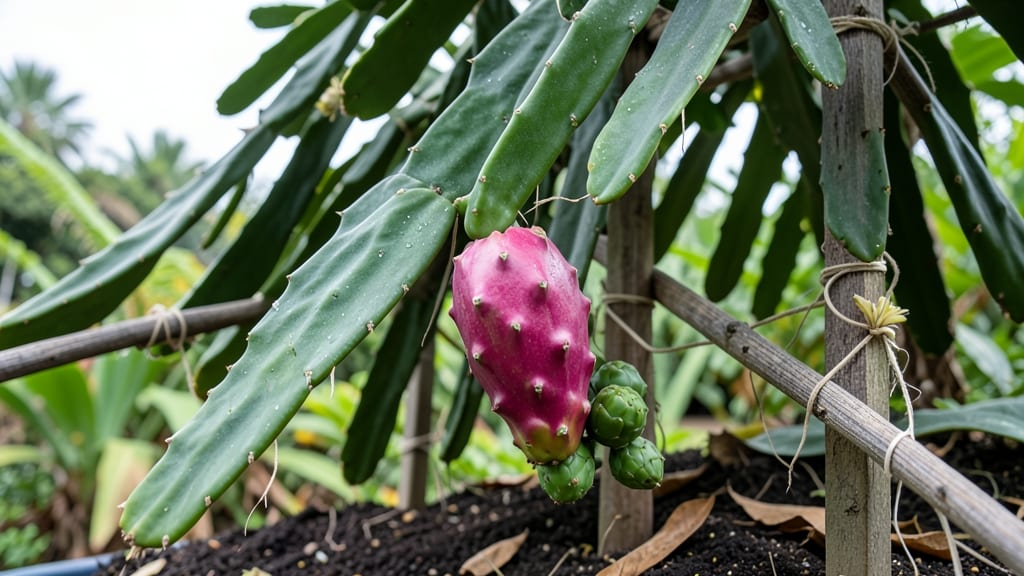
Dragon fruit plants can grow up to 20 feet tall with the right support, but their height depends entirely on your climate and care routine.
If you're dreaming of growing dragon fruit in your backyard but wondering how much vertical space it’ll need, the answer depends entirely on your climate—and it might surprise you.
In tropical zones, these 🐉 vines can reach 15–20 feet, while in cooler USDA Zone 6a areas, they’ll max out around 10 feet without winter protection. That’s a big difference for planning!
Most gardeners assume dragon fruit needs a jungle-like setup, but with smart pruning and trellis support, you can manage its growth—and even choose dwarf varieties like 'Petite' that stay under 6 feet. The key is understanding how sunlight, humidity, and pruning habits influence its height over time.
Below, I’ll break down climate-specific height ranges, how to control growth with simple techniques, and the most common mistakes that stunt these vines. By the end, you’ll know exactly how to optimize your dragon fruit’s size for your space.


Dragon fruit height by climate: tropical vs. temperate growth ranges explained
If you're dreaming of growing dragon fruit in your backyard, you might be surprised to learn that its height varies dramatically based on your climate. In tropical zones, these vining cacti can soar to 15-20 feet, while in temperate regions, they typically stay between 5-10 feet.
The difference comes down to temperature, humidity, and growing season length—factors that directly impact how aggressively your dragon fruit will climb.
Understanding these ranges helps you plan for vertical space and support structures like trellises or arbors. Without proper support, dragon fruit vines can sprawl uncontrollably, while the right setup encourages healthier growth and higher yields.
Let’s break down how climate shapes your dragon fruit’s height—and what you can do to optimize its growth in your specific zone.
🌱 Key Insight: Dragon fruit is a climbing cactus, meaning its height depends on what it’s trained to climb. In the wild, it can reach 30+ feet, but garden varieties are typically managed for home use.
Dragon Fruit Height by Climate Comparison
| Climate Zone | Mature Height Range | Growth Rate (Per Year) | Key Growth Factors | Ideal Support Structure |
|---|---|---|---|---|
| Tropical (Zones 10-12) | 10-20 ft | 3-6 ft/year | High humidity, year-round warmth, long growing season | Strong trellis (15+ ft), arbor, or fence |
| Subtropical (Zones 8-9) | 8-15 ft | 2-5 ft/year | Moderate humidity, mild winters, 8+ month growing season | Trellis (12+ ft), permanent structure |
| Temperate (Zones 6-7) | 5-10 ft | 1-3 ft/year | Cooler summers, short growing season, frost risk | Trellis (8-10 ft), container with support |
💡 Note: Heights assume proper pruning and support. Without training, vines can sprawl twice as wide as their height.
In tropical climates, dragon fruit grows rapidly thanks to consistent warmth and humidity. Plants in Hawaii or Florida can reach 20 feet in 3-4 years with minimal pruning.
The longer growing season allows vines to put energy into both vertical growth and fruit production, often yielding larger, sweeter fruit.
Conversely, temperate climates like those in Southern California or Zone 7 gardens see slower growth due to cooler summers and shorter frost-free periods.
Here, dragon fruit may only grow 1-2 feet per year, reaching maturity in 5-7 years. Winter dieback is common unless you provide protection or container growing.
Humidity plays a critical role in dragon fruit height. In dry climates, like Arizona or Nevada, vines may grow shorter but bushier unless you supplement with regular misting or drip irrigation.
Meanwhile, in high-humidity zones, such as Puerto Rico or Southeast Asia, the plants grow taller and faster, sometimes requiring additional support to prevent breakage.
Sunlight exposure directly impacts growth rate and height. Dragon fruit thrives on 6+ hours of direct sun daily, but in shadier climates, vines may grow taller but leggier, searching for light.
If you’re in a partial-shade area, consider using a south-facing trellis to maximize sunlight exposure and encourage compact, bushier growth.
Pruning is another game-changer for controlling height. In tropical zones, I recommend light pruning to encourage fruit-bearing branches, while in temperate zones, heavier pruning in late winter helps redirect energy to new growth when the season restarts.
Always prune after flowering to avoid reducing the next year’s fruit yield.
For gardeners in temperate zones, choosing dwarf varieties like 'Petite' or 'Baby Dragon' can help manage height while still producing fruit. These varieties typically stay between 6-10 feet and are ideal for containers or small backyards
How to control dragon fruit height: pruning, support, and variety choices
Dragon fruit plants can grow 15-20 feet tall with proper support, but their height is entirely manageable with the right techniques. Whether you're dealing with a wild vine or a dwarf variety, controlling growth ensures better fruit production and easier maintenance.
The key lies in three strategies: pruning, support systems, and selecting the right variety for your space.
Pruning isn't just about trimming back overgrowth—it's a way to redirect energy toward fruit production. By removing unproductive vines and encouraging lateral growth, you can keep your dragon fruit plant at your desired height while boosting yields.
Even in temperate climates, where growth is slower, strategic pruning can make a dramatic difference in plant height and fruit quality.
- 🪴 Dwarf Varieties: 'Petite' (6-10 ft) or 'Baby Dragon' (5-8 ft) – ideal for containers or small gardens
- ✂️ Pruning Tips: Trim 1/3 of new growth in spring to encourage bushier growth and more flowers
- 🪜 Trellis Support: Use 6-8 ft tall trellises to control vertical growth while maximizing sun exposure
- 🌡️ Climate Adjustments: In cooler zones, prune late summer to protect from early frost
- 🌿 Container Growing: Limit root space with 5-gallon pots to restrict height to 6-10 ft
For container growing, choose dwarf varieties like 'Petite' or 'Baby Dragon,' which naturally stay between 5-10 feet tall. These varieties are perfect for patios or balconies and still produce abundant fruit.
Pair them with a compact trellis system (4-6 feet tall) to guide their growth upward while keeping the plant's footprint small.
If you're growing dragon fruit in ground beds, install a strong trellis or fence at planting time. This gives the vines something to climb immediately, preventing sprawling growth.
I recommend using galvanized wire or wooden posts spaced 6-8 feet apart—this creates a natural framework that guides the plant's height while making harvesting easier.
Don't forget that pruning frequency changes with the seasons. In spring and summer, focus on removing weak or crossing vines to improve air circulation, while in fall, prune back any damaged growth before winter dormancy.
This seasonal approach keeps your plant healthy and prevents it from becoming unmanageably tall.
With these techniques, you can enjoy bountiful dragon fruit harvests without your plant becoming a 20-foot jungle. The secret is balancing pruning, support, and variety selection—each plays a crucial role in keeping your dragon fruit plant productive and within your desired height range. 🌿