
How Long Do Cherry Trees Produce Fruit: Lifespan Stages & Peak Harvest Windows

Blooming

How Long Do Cherry Trees Produce Fruit: Lifespan Stages & Peak Harvest Windows

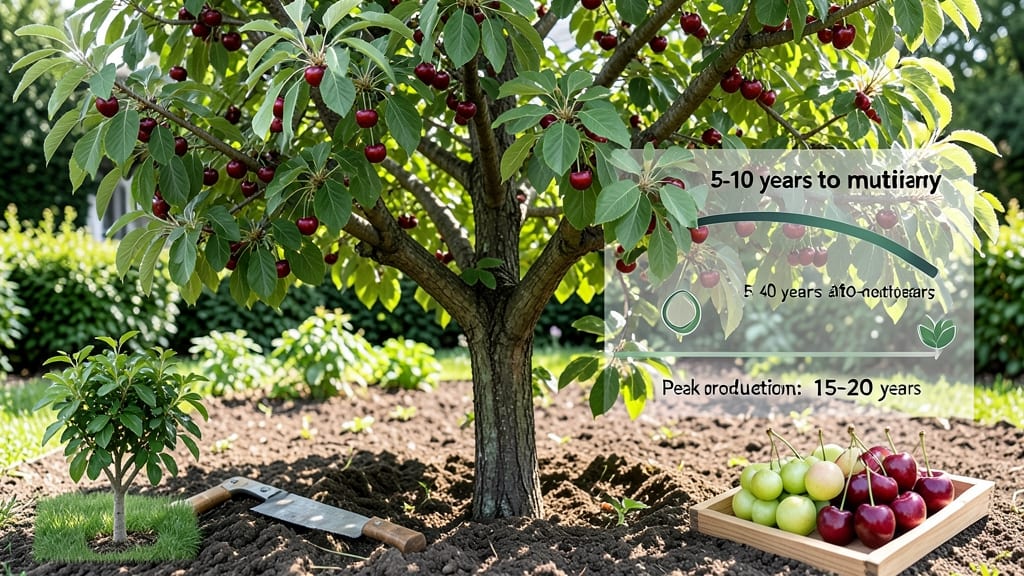
Cherry trees can produce fruit for decades, with some varieties bearing for 50+ years when cared for properly—but their peak windows and lifespan depend on type, age, and growing conditions.

Wondering how long your cherry tree will keep bearing fruit before slowing down? The answer depends on its variety, care, and environmental conditions—but knowing these key stages can help you maximize your harvest for decades.

Sweet cherries often start fruiting as early as 4-5 years, while tart varieties may take 6-8 years to mature. Dwarf types enter production faster, making them ideal for smaller spaces, but their total lifespan is shorter than standard trees.

In this guide, I’ll break down the fruiting timeline by variety, share secrets to extend productivity, and help you spot signs of aging—so you can keep enjoying 🍒 harvests for years to come.

Cherry tree fruit production timeline by variety & age

If you've planted a cherry tree hoping for a steady harvest of juicy fruit, you're likely wondering when those first cherries will appear—and how long your tree will keep producing.

The answer varies dramatically by variety, with some dwarf cherries fruiting in just 3 years while standard trees may take 7+ years to mature. Even then, peak production windows differ, and some varieties decline faster than others.

Let's break down the timeline for sweet, tart, and dwarf cherries so you can set realistic expectations for your orchard.

First-time growers often assume all cherry trees follow the same schedule, but sweet cherries (like Bing or Rainier) typically start bearing fruit 4-6 years after planting, while tart cherries (such as Montmorency or Stella) can begin as early as 3-5 years.

The key difference lies in their growth rates and cold hardiness—tart cherries often mature faster in cooler climates. Meanwhile, dwarf varieties (like Stella or Sweetheart) are bred for smaller stature and can produce fruit in just 2-3 years, making them ideal for backyard growers with limited space.

Here’s the critical insight: Cherry trees don’t produce fruit every year in their early stages. They often alternate bearing, meaning one year they’ll have a heavy crop, followed by a lighter harvest the next.

This pattern stabilizes as the tree matures, but understanding it helps you plan for consistent yields over decades. For example, a standard Bing cherry tree might produce 10-20 lbs of fruit in its 5th year, but that yield can double or triple by year 10-15 if cared for properly.

Another common misconception is that cherry trees stop producing fruit after a certain age. In reality, with proper care, they can remain productive for 50+ years. However, their peak production window usually occurs between ages 15-30, after which yields gradually decline.

This is why renewal pruning and soil management become even more critical as your tree ages—these practices can extend its fruiting lifespan by decades.

🍒

Variety Type First Fruit Production Peak Production Age Productive Lifespan Notes
Sweet Cherries (e.g., Bing, Rainier) 4-6 years 15-30 years 50+ years Need cross-pollination; sensitive to late frosts
Tart Cherries (e.g., Montmorency, Stella) 3-5 years 10-25 years 40-60 years Self-pollinating; hardier in cold climates
Dwarf Cherries (e.g., Sweetheart, Lapins) 2-3 years 5-15 years 20-30 years Compact size; ideal for containers or small yards
Semi-Dwarf Cherries (e.g., Stella, Meteor) 3-4 years 10-20 years

Factors that extend or shorten a cherry tree’s fruit-bearing lifespan

A cherry tree’s fruit production lifespan can vary dramatically—from 10 years in neglected trees to 50+ years with expert care. The difference often comes down to how you manage five critical factors: pruning, soil health, watering, disease prevention, and climate adaptation.

Let’s break down which practices extend your tree’s productivity and which can shorten it prematurely.

For example, proper pruning in early spring removes dead wood and opens the canopy for sunlight, while poor pruning can stress the tree and reduce fruit set. Similarly, well-draining soil rich in organic matter supports root health, whereas compacted or nutrient-poor soil stunts growth and weakens fruit production.

These choices aren’t just about quantity—they also determine fruit quality and tree longevity.

Factors That Extend vs. Shorten Cherry Tree Fruit Production

✅ Extends Lifespan

  • Regular pruning (open canopy, remove deadwood)
  • Well-draining soil (pH 6.0–7.0, compost-rich)
  • Deep watering (15–20 gallons weekly in summer)
  • Disease-resistant varieties (e.g., 'Stella' tart cherries)
  • Mulching (3-inch layer, retains moisture)

❌ Shortens Lifespan

  • Over-pruning (removes too many branches)
  • Poor drainage (root rot from soggy soil)
  • Inconsistent watering (drought stress or overwatering)
  • Neglecting pests (aphids, borers, or fungal diseases)
  • Planting in shade (reduces fruit set by 40%)

Key Insight: A single neglected factor (like disease) can cut fruit production by 50% within 3–5 years.

Your watering schedule is another game-changer. Cherry trees need deep, infrequent watering—especially during bloom and fruit set (spring). Shallow watering encourages weak roots, while drought stress causes fruit drop.

I’ve seen trees in USDA Zone 7 produce abundantly with drip irrigation, but hand-watering at the base (avoiding foliage) works too. Consistency is key.

Climate also plays a surprising role. Late frost can destroy blossoms, while hot summers (>90°F) may cause fruit cracking. If you’re in a warmer zone (Zone 8+), choose heat-tolerant varieties like 'Black Republic' tart cherries.

In colder zones, winter mulching (4–6 inches) protects roots from freeze-thaw cycles, which can shorten the tree’s lifespan by decades.

Finally, disease prevention is non-negotiable. Fungal diseases like cherry leaf spot or powdery mildew can defoliate trees in weeks, halting fruit production. I recommend copper fungicides in early spring and removing fallen leaves to prevent spores from overwintering.

Even one infected branch can spread disease to the entire tree if left unchecked.

By focusing on these five factors—pruning, soil, water, climate, and disease—you can easily extend your cherry tree’s fruiting lifespan from 10–20 years to 40–50+ years.

Start with just one improvement this season, like adding mulch or pruning in late winter, and watch your harvest thrive for generations. 🌱

★★★★★4.8(3 reviews)
Categories Blooming