
Size
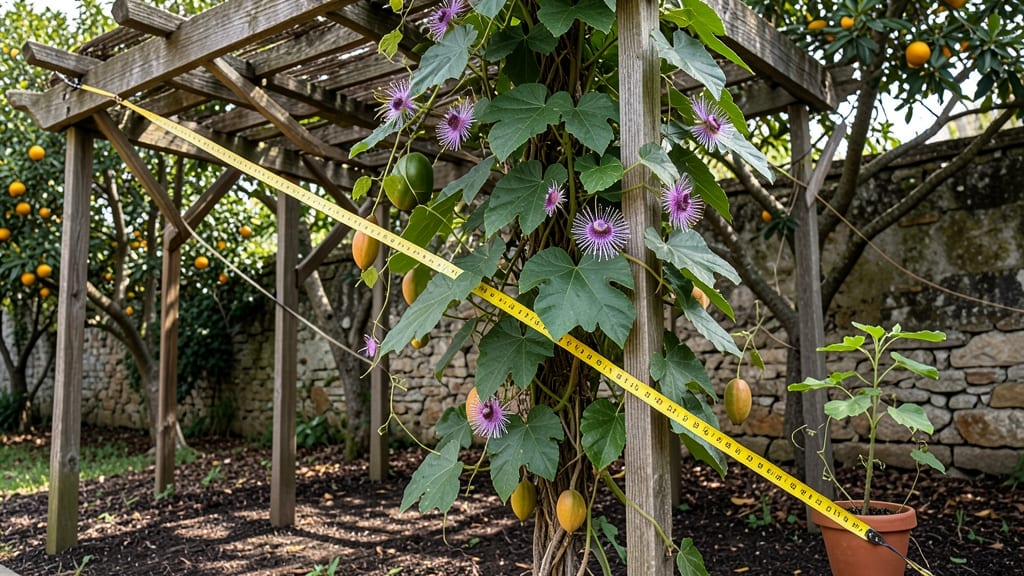
Passion fruit trees grow to 20–30 feet tall and spread just as wide if left unchecked, turning your backyard into a tropical jungle faster than you’d expect 🍈.
Picture this: you plant a single vine in spring, and by fall, it’s already climbing your fence like a jungle explorer. Without pruning or support, these vines can stretch 30 feet in a single season, smothering nearby plants and turning your garden into a tangled mess.
But here’s the good news—with the right techniques, you can keep them manageable and still enjoy a bountiful harvest.
Not all passion fruit varieties behave the same. Some, like the Purple Passionfruit, stay slightly more compact, while others, like the Granadilla, can become aggressive climbers.
Whether you’re working with a small balcony or a sprawling yard, knowing how to control their growth is the key to a thriving (and tidy) garden.
In this guide, I’ll break down the mature sizes of different varieties, share pruning tips to keep them in check, and show you how to create the perfect growing conditions—even in limited spaces. Ready to turn those sprawling vines into a well-managed, fruit-producing powerhouse?


Passion fruit tree mature size by variety: compact vs. sprawling types
Passion fruit vines (Passiflora spp.) are famous for their dramatic growth—some varieties can stretch 30 feet or more in a single season if left unchecked. But not all passion fruit plants behave the same.
The Purple Passionfruit (Passiflora edulis) might sprawl aggressively, while Granadilla (Passiflora ligularis) grows more compactly. Understanding these differences is key to planning your garden or container setup.
For gardeners with limited space, choosing the right variety can mean the difference between a lush, manageable vine and an unruly jungle. Banana Passionfruit (Passiflora tripartita), for example, often stays shorter but wider, making it ideal for trellises in small yards.
Meanwhile, Yellow Passionfruit (Passiflora edulis flavicarpa) can reach 20–30 feet in ideal conditions, requiring serious support or pruning.
Below, I’ve broken down the mature sizes of popular passion fruit varieties, including their vine length, canopy spread, and ideal growing conditions. This comparison will help you decide whether a variety fits your space—whether you’re growing in containers, ground beds, or along a fence.
🌱
If you’re growing passion fruit in containers, focus on varieties like Sweet Granadilla or Banana Passionfruit, which stay more manageable. A 15-gallon pot is the minimum for most varieties, but larger containers (25+ gallons) will support heavier fruit production and reduce the need for pruning.
For ground planting, even the most sprawling varieties like Yellow Passionfruit can be managed with proper trellising. Install a 10–12 foot trellis near a fence or wall to guide vertical growth, leaving 3–4 feet of clearance between the vine and any structures to prevent damage during pruning.
Remember, passion fruit vines are perennial in frost-free zones (USDA 9–11) but may die back in cooler climates. In USDA zones 8 or below, treat them as annuals or grow them in containers that can be moved indoors during winter.
Even in warm climates, pruning in late winter will encourage bushier growth and more fruit.
🪴
One common misconception is that passion fruit vines will stop growing once they reach a certain size. In reality, they continue growing indefinitely if given the right conditions. Without pruning, a single vine can easily cover 1,000 square feet in a few years.
To keep them in check, I recommend tip pruning (cutting back new growth) every 4–6 weeks during the growing season.
For small gardens, consider dwarfing techniques like regular defoliation (removing some leaves) to redirect energy toward fruiting instead of vine growth. This method works best with Sweet Granadilla and Banana Passionfruit, which are naturally more compact.
✂
How to control passion fruit vine size: pruning tips for small gardens
Passion fruit vines are natural climbers that can quickly reach 20–30 feet if left unchecked, making them challenging for small gardens. The good news? With strategic pruning and trellising, you can keep them contained while maximizing fruit production.
Start by understanding that passion fruit vines grow aggressively—they’ll need guidance to stay within your space limits.
Pruning isn’t just about size control; it’s also about air circulation and fruit quality. Overgrown vines produce fewer, smaller fruits, while pruned vines yield more abundant harvests. The key is to prune at the right times of year and use the correct techniques to encourage bushier, more productive growth.
⚠️ Visual Element: Step-by-Step Pruning Guide
- 1 Early Season Tip Pruning (Spring): Pinch back new growth tips to encourage branching. Remove the top 2–3 inches of each vine to stimulate lateral shoots, which will support more fruit clusters.
- 2 Summer Lateral Pruning: Trim side branches to 6–12 inches long, leaving 2–3 leaves per shoot. Focus on removing weak or crossing vines to improve airflow and reduce disease risk.
- 3 Post-Harvest Maintenance (Fall): After harvest, prune old wood (vines older than 2 years) to ground level. This rejuvenates the plant and prevents energy drain on unproductive growth.
- 4 Winter Dormancy Trim (Cooler Zones): Reduce vines by 50% before winter to protect them from frost damage. Focus on removing dead or diseased wood to prepare for spring regrowth.
- 5 Trellis Training: Use a strong trellis or arbor (at least 8–10 feet tall) to guide vines upward. Prune suckers growing below the trellis to direct energy upward and keep the plant contained.
For small gardens, consider using a container with a trellis. Choose a pot that’s at least 18–24 inches deep and wide enough to accommodate the vine’s root system. Prune container-grown vines more aggressively—trim back by 30–40% annually to prevent root-bound stress.
Always use clean, sharp pruners to make cuts just above a leaf node. Avoid leaving stubs, as they can attract pests. After pruning, apply a balanced fertilizer (e.g., 7-9-5 NPK) to support new growth and fruiting.
With consistent pruning, your passion fruit vine can stay within a manageable 6–10 feet range while still producing a bountiful harvest. Start small, observe how your vine responds, and adjust your pruning schedule as needed—your garden (and taste buds) will thank you! 🌱✂️🍈