
Fertilization
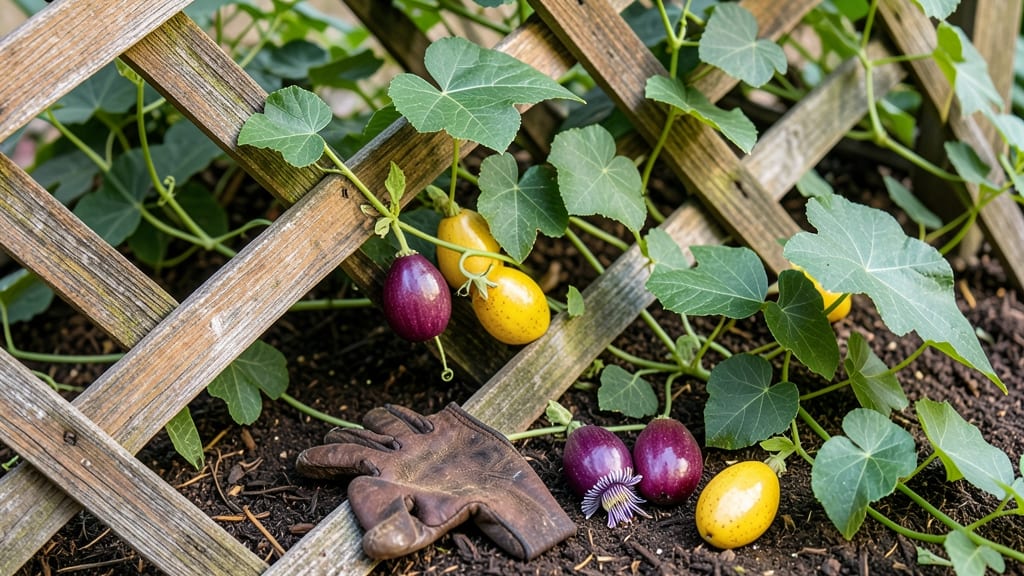
Fast-growing edible passion fruit species vines can turn your yard into a tropical fruit factory in just a few months. 🌱 I've grown purple, yellow, and granadilla varieties, and the difference in flavor and harvest speed is night-and-day—once you know which species thrives in your climate.
These vines aren't just about the fruit: some varieties produce edible flowers and leaves too, making them a multi-purpose garden asset.
Purple passion fruit (Passiflora edulis) is the most common, but yellow passion fruit (Passiflora flavicarpa) and granadilla (Passiflora ligularis) offer unique flavors and growing habits worth exploring.
With the right support system and consistent care, you'll harvest fruit within 6-12 months—imagine fresh, tangy passion fruit juice straight from your backyard. The vines are vigorous but manageable with proper pruning, and they reward patience with year-round production in warm climates.
Whether you're growing for juices, desserts, or just the thrill of tropical gardening, these vines deliver. Let's get you started with the right variety for your space and climate!
📚 In This Guide
- What you need
- Instructions
- Tips and common mistakes
- Wrapping up and next steps
What you need
- ● Passion fruit vines: Choose from Passiflora edulis (purple or yellow), Passiflora ligularis (granadilla), or Passiflora incarnata (maypop). Start with 3–5 healthy plants (potted or bare-root) for a balanced yield.
- ● Well-draining soil: Mix 2 parts garden soil with 1 part compost and 1 part perlite/sand to prevent root rot. Aim for a pH of 6.0–7.5.
- ● Fertilizer: Balanced fertilizer (10-10-10 or 20-20-20): Apply 1 tbsp per plant every 4–6 weeks during growing season.
- ● High-potassium fertilizer (e.g., 0-10-10): Use 1 tbsp per plant when flowers appear to boost fruit development.
- ● Support structure: Install a 6–10 ft tall trellis, arbor, or fence (passion vines can grow aggressively!). Use garden twine or soft ties to guide vines gently.
- ● Mulch: Spread 2–3 inches of organic mulch (straw, wood chips, or pine bark) around the base to retain moisture and suppress weeds.
- ● Hand trowel and pruning shears (sterilized with rubbing alcohol).
- ● Watering can or drip irrigation system (passion fruit thrives with 1–2 inches of water weekly; avoid overhead watering to prevent disease).
- ● Gloves (passion fruit vines have tiny hooks that can irritate skin!).
- ● pH test kit (to monitor soil acidity).
- ● Spray bottle (for misting young plants in dry climates).
- ● Pollination aid: If bees are scarce, use a soft paintbrush to transfer pollen between flowers.
- ● Shade cloth (30–50%) for seedlings or hot climates.
- ● Epsom salt (magnesium sulfate): Dissolve 1 tbsp in 1 gallon of water and apply monthly for greener leaves.
- ● Compost tea (for a natural nutrient boost).
- ● Harvest basket or scissors (to pick fruit without damaging vines).
Step-by-step guide to growing edible passion fruit vines
Here's how to cultivate these tropical vines efficiently for a fast, bountiful harvest.
🌱 Step 1: Select and Prepare the Right Variety
Choose between Passiflora edulis (purple passion fruit) or Passiflora ligularis (sweet granadilla) based on your climate. Purple passion fruit thrives in USDA zones 8-11 with 60-85°F temperatures, while granadilla tolerates slightly cooler nights down to 50°F. I always opt for grafted plants from reputable nurseries—they're disease-resistant and fruit faster than seeds.
Check for healthy, woody stems and new growth at the tips. Avoid plants with yellowing leaves or soft spots, as these signal fungal issues. If starting from seed, soak them in warm water for 24 hours before planting—this breaks dormancy and speeds germination to 2-4 weeks in 75-85°F soil.
☀️ Step 2: Plant in Well-Draining, Fertile Soil
Passion fruit vines demand rich, slightly acidic soil (pH 6.0-7.0) with excellent drainage. Amend heavy clay with 3-4 inches of compost and 1 inch of perlite per planting hole. I dig a hole twice as wide as the root ball but only as deep as the container it came in—burying too deep suffocates the graft union.
Space plants 8-10 feet apart for full-size vines or 6 feet apart if using dwarf varieties. Install a strong trellis or arbor immediately—these vines grow 10-20 feet annually and need support from day one. Water deeply after planting to settle soil around roots, but avoid soggy conditions that invite root rot.
💧 Step 3: Water and Fertilize for Rapid Growth
Keep soil consistently moist (not soggy) for the first 3 months—young vines establish roots quickly when watered 2-3 times weekly in hot weather. I use drip irrigation to avoid wetting leaves, which prevents fungal diseases like powdery mildew. Once established, reduce to weekly deep waterings—drought-stressed vines produce smaller fruit.
Feed monthly with a balanced 10-10-10 fertilizer during growing season, switching to low-nitrogen 5-10-10 when flowers appear. I also side-dress with composted manure in spring to boost organic matter. Watch for new leaves and rapid vine elongation—this confirms your plant is thriving.
✂️ Step 4: Prune and Train for Maximum Fruit Production
Prune aggressively in late winter to remove dead wood and weak stems, cutting back one-third of the vine to encourage new growth. I always keep 3-5 strong main stems—these produce the most flowers. Thin out crowded branches to improve airflow, which reduces disease risk. Use clean, sharp pruners to make cuts at 45-degree angles just above a leaf node.
Train vines along the trellis in a spiral pattern—this maximizes sunlight exposure and fruit development. Remove suckers (shoots growing below the graft) immediately, as they drain energy from fruit production. When flowers appear, hand-pollinate by gently shaking vines in the morning to distribute pollen. You'll know it's working when fruit swells within 2 weeks.
🍈 Step 5: Harvest and Maintain for Year-Round Production
Harvest when fruit detaches easily with slight pressure and skin color deepens (purple for passion fruit, yellow for granadilla). I twist gently at the stem—if it resists, wait 1-2 more days. Ripe fruit should have a slightly soft texture and intense fragrance near the stem. Store at room temperature for 3-5 days or refrigerate for up to 2 weeks.
After harvest, apply a light mulch of straw around the base to retain moisture and suppress weeds. In colder climates, protect vines with frost cloth during winter or grow in containers that can be moved indoors. With proper care, your vines will produce two harvests annually—spring and fall—with consistent maintenance.
Tips & tricks for fast-growing passion fruit vines
These insider tricks will help you accelerate your harvest without sacrificing quality—because nobody wants to wait years for those first juicy fruits.
Variety Selection Insight: If you're in USDA zones 8-11, Passiflora edulis is your best bet for speed—it matures faster than granadilla and produces fruit within 12-18 months from grafting. For cooler climates (down to 50°F nights), sweet granadilla's slightly slower growth is worth it for its sweeter, larger fruit. I always check the graft union when buying plants—it should be clearly visible and slightly swollen, indicating a strong rootstock.
Soil Preparation Secret: The 3-4 inches of compost and 1 inch of perlite aren't just for drainage—they create a microbial-rich environment that speeds root establishment. Mix in 1/4 cup of bone meal per planting hole (optional but game-changing) to give young vines a phosphorus boost for faster flowering. Test your soil pH before planting—passion fruit vines are particular about their 6.0-7.0 range, and adjusting it now prevents future growth issues.
Watering Strategy: Those 2-3 weekly waterings in the first 3 months are non-negotiable, but timing matters just as much. Water in the early morning so leaves dry quickly, preventing fungal spores from taking hold. I've seen powdery mildew appear within 48 hours when vines stay wet overnight—don't make my mistake! After establishment, deep waterings mean soaking the soil 12 inches down to encourage deep root growth.
Pruning Precision: When you cut back one-third of the vine in late winter, focus on removing the oldest wood first—these stems produce fewer flowers. The 45-degree angle cuts above leaf nodes aren't just aesthetic; they create larger wound surfaces that heal faster. After pruning, give your vines a light foliar spray of seaweed extract (optional) to reduce transplant shock and kickstart new growth within 2-3 weeks.
Pro Tips for Edible Passion Fruit Species
- These insider tricks will help you accelerate your harvest without sacrificing quality—because nobody wants to wait years for those first juicy fruits.
- Variety Selection Insight: If you're in USDA zones 8-11, Passiflora edulis is your best bet for speed—it matures faster than granadilla and produces fruit within 12-18 months from grafting.
- Soil Preparation Secret: The 3-4 inches of compost and 1 inch of perlite aren't just for drainage—they create a microbial-rich environment that speeds root establishment.
Frequently asked questions
Got questions about growing and harvesting edible passion fruit species? Here are some of the most common queries—and their answers—to help you get started on your tropical adventure!
How long does it take for passion fruit vines to bear fruit after planting?
Most edible passion fruit species, like Passiflora edulis (purple passion fruit) or Passiflora ligularis (sweet granadilla), take 12–18 months to produce fruit from seed. If you start with a young grafted plant, you might see fruit in 6–12 months. Patience is key—these vines reward you with years of harvests once established!
When is the best time to harvest passion fruit?
Passion fruit is ripe when it detaches easily from the vine and has a slightly wrinkled skin (not overly soft). For purple passion fruit, the rind should turn deep purple; for yellow varieties, it’ll shift to a golden hue. Harvest in the morning for the best flavor and texture—just like picking grapes!
Can I grow passion fruit in containers, and what size pot do I need?
Passion fruit thrives in containers if you provide at least a 15–20 gallon pot with drainage holes. Use a well-draining potting mix and place the container in full sun (6+ hours/day). Just be ready to fertilize regularly—container plants need extra nutrients to stay productive. Pro tip: Prune aggressively to keep the vine manageable!
Why aren’t my passion fruit vines producing fruit, even after a year?
Several factors could be at play: lack of pollinators (hand-pollinate with a brush if bees are scarce), inconsistent watering (keep soil evenly moist but not soggy), or nutrient deficiencies (test soil pH—aim for 6.0–7.5 and fertilize with citrus-specific blends). If vines are healthy but still bare, try stress-pruning to encourage flowering.
Are there any passion fruit varieties that are easier to grow for beginners?
Yes! Passiflora edulis (purple passion fruit) and Passiflora flavicarpa (yellow passion fruit) are the most beginner-friendly. They’re hardier, faster-growing, and more disease-resistant than exotic varieties. For a sweeter, seedless option, try Passiflora ligularis—though it needs a slightly warmer climate. Start with these, and you’ll be sipping homemade passion fruit juice in no time!
Wrapping up and next steps
Discovering the world of edible passion fruit species opens up a delicious and rewarding journey for any gardener or homesteader! 🌱 These fast-growing vines don’t just offer year-round tropical harvests—they also bring vibrant flavors, nutritional benefits, and a touch of exotic charm to your space.
Whether you’re a beginner or a seasoned green thumb, their versatility makes them a fantastic addition to any garden or farm.
Ready to dive in? Start small—plant a few vines, experiment with varieties, and let their lush growth inspire your next culinary or gardening adventure. Who knows? You might just become the neighborhood’s go-to source for homemade passion fruit treats! 🍈✨