
Pruning
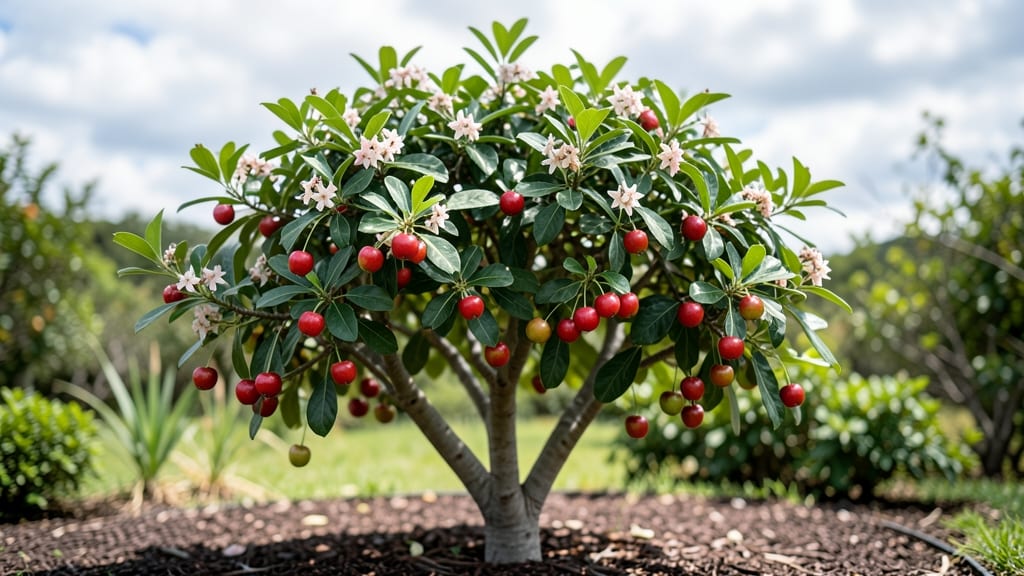
Pruning your Brazilian cherry fruit tree (Eugenia uniflora) unlocks a year-round harvest of those tiny, tart jewels—if you do it right. 🌿 I've learned the hard way that aggressive cuts backfire, but the right approach turns this tree into a fruiting machine, even in small yards.
The key is understanding when to prune (and when to leave it alone) to keep the balance between growth and fruit production.
You'll need basic tools—a sharp pair of pruners, rubbing alcohol for sterilizing cuts, and a ladder if your tree is taller than 6 feet. The best time to prune is late winter or early spring, right before new growth starts.
This gives the tree time to heal before summer's heat stress, and you'll avoid removing next year's fruit buds by accident. Think of it as a haircut that encourages the tree to focus on producing cherries, not just leaves.
What you'll end up with is a compact, well-shaped tree loaded with fruit from spring through fall (and sometimes winter in warm climates). The cherries stay on the tree longer than most fruits, so proper pruning means you can harvest fresh ones for months, not just a single flush.
Plus, the tree becomes easier to reach—no more wrestling with tangled branches to pick those high-up fruits.
Works for both container-grown trees and in-ground plantings, though dwarf varieties need less aggressive pruning. If you're in a colder zone (below 15°F), choose a cold-hardy variety like 'Florida' and prune even more conservatively to protect the bark. Here's how to get started without killing your tree's fruiting potential.
📚 In This Guide
- What you need
- Instructions
- Tips and common mistakes
- Wrapping up and next steps
What you need
- ● Pruning shears: Bypass pruners (sharp, clean, and sterilized with rubbing alcohol) for small branches.
- ● Loppers: 1 pair (8–12" blades) for thicker branches (½"–1.5" diameter).
- ● Pruning saw: 1 hand saw (for branches >1.5" diameter). Tip: A bow saw or folding pruning saw works great!
- ● Gloves: Heavy-duty, cut-resistant gloves (to protect against thorns and sap).
- ● Disinfectant: 70% isopropyl alcohol or a 10% bleach solution (to sterilize tools between cuts).
- ○ Sealing wax or pruning paint: 1 small bottle (optional but helpful for sealing large cuts).
- ● Ladder or step stool: Adjustable height (if your tree is >6 ft tall).
- ● Trash bags or bucket: 1–2 large bags (for collecting pruned branches).
- ● Weather check: Prune on a dry, calm day (avoid rain or wind).
- ● Safety glasses: 1 pair (to shield eyes from debris).
- ● Long sleeves/pants: Lightweight, breathable fabric (protection from thorns and sun).
- ● Tree age/health assessment: Know your tree’s age (young trees need light pruning; mature trees may need structural work).
- ● Map of the tree: Sketch or take photos of the tree’s structure before pruning (helps visualize cuts).
- ● 🔥 Sharp is key: Dull tools crush branches, inviting disease. Sharpen blades before starting!
- ● ✨ Work with the grain: Make cuts at a 45-degree angle (just outside the branch collar) for faster healing.
- ● 🌡️ Timing matters: Prune in late winter/early spring (dormant season) for best results.
How to prune a Brazilian cherry tree for maximum fruit production
This is the pruning system I use to keep my Brazilian cherry trees producing heavy fruit year after year. The key is timing and strategic cuts that open the canopy to sunlight.
✂️ Step 1: Prune in Late Winter Before New Growth Begins
Schedule your first pruning session in late winter—just as buds begin to swell but before any new growth appears. This timing ensures you remove dead wood while the tree is still dormant, reducing stress. I always wait until after the last frost in my zone (around mid-February), as cold snaps can damage fresh cuts.
Start by removing any dead, diseased, or crossing branches first. These are your priority—crossing branches rub together and create wounds that invite infection. Use clean, sharp pruners to make cuts at a 45-degree angle, about ¼ inch above an outward-facing bud. This encourages new growth to sprout in the right direction.
☀️ Step 2: Thin the Canopy to Improve Airflow and Sunlight
Brazilian cherry trees produce fruit on both old and new wood, so you’ll want to maintain a balanced shape while keeping the center open. Remove any branches growing straight inward—these block sunlight from reaching the inner canopy. Aim to create an open vase shape where light can penetrate to the center of the tree.
Look for branches that are too dense—these compete for resources and reduce fruit quality. Thin these out by one-third to allow better airflow. You’ll know you’ve done enough when you can see sunlight filtering through to the lower branches. This step is critical for preventing fungal diseases like powdery mildew, which thrives in shady, humid conditions.
🌿 Step 3: Encourage Fruit Production with Strategic Cuts
To maximize fruit production, focus on light pruning in early summer after the tree has finished flowering. Remove any suckers (shoots growing from the base or trunk) and water sprouts (fast-growing vertical shoots). These steal energy from fruit production. Cut them back to a bud or lateral branch to redirect the tree’s energy toward existing fruit clusters.
If your tree is overloaded with fruit, you can also thin out some clusters to improve size and quality. Leave one or two fruit clusters per branch—this ensures the remaining fruit gets enough nutrients. I like to do this in late spring when the fruit is still small and easy to handle.
⏰ Step 4: Light Maintenance Pruning Throughout the Growing Season
After the initial pruning, keep an eye on your tree for deadheading spent blooms (remove faded flowers to encourage more flowering) and trimming back any aggressive growth that’s crowding the center. A quick monthly check in the growing season helps prevent the tree from becoming too leggy or unbalanced.
In fall, do a light cleanup pruning to remove any diseased leaves, dead branches, or crossing growth. Avoid heavy pruning in fall, as it stimulates new growth that won’t harden off before winter. Instead, focus on sanitation—removing anything that could harbor pests or diseases over the cold months.
✂️ Step 5: Sterilize Tools and Monitor for Stress
After every pruning session, sterilize your tools with rubbing alcohol or a 10% bleach solution to prevent spreading disease. I keep a small spray bottle of 70% isopropyl alcohol handy for quick cleanups between cuts. This is especially important with Brazilian cherry trees, which can be susceptible to bacterial canker if tools aren’t clean.
Watch your tree for signs of stress in the weeks after pruning—yellowing leaves, wilting, or slow growth can mean you’ve pruned too aggressively. If you see this, reduce future cuts and focus on watering deeply (about 1-2 gallons per week, depending on soil dryness) and mulching to retain moisture. A 2-3 inch layer of mulch around the base helps regulate soil temperature and reduces water loss.
Tips & tricks for perfect Brazilian cherry tree pruning
Here's what nobody tells you—these are the details that make all the difference when pruning your Brazilian cherry tree.
Timing is Everything: The late winter timing in Step 1 is non-negotiable. I learned this the hard way after pruning too early and seeing new growth get frost-damaged. Mark your calendar for mid-February in your zone—this is when buds begin to swell but before any new growth appears. If you're unsure about your last frost date, check your local agricultural extension service for precise timing tailored to your microclimate.
The 45-Degree Angle Secret: When making cuts in Step 1, that 45-degree angle isn't just for looks—it's about directing water runoff away from the cut. I always visualize a small roof pointing away from the branch. This simple technique prevents water from pooling on the cut surface, which dramatically reduces the risk of bacterial infections. Use a reference tool if needed; your pruners can have a small angle guide etched on them for consistency.
Canopy Light Test: In Step 2, when you're thinning the canopy, there's a simple test I use: hold a flashlight at the center of the tree. If you can't see light reaching the lower branches, you need to remove more inward-growing branches. This visual check ensures you're creating that critical open vase shape. Remember, sunlight penetration is the key to preventing fungal diseases like powdery mildew that thrive in shady conditions.
Summer Pruning Strategy: The early summer pruning in Step 3 is where you'll see the most immediate results. I focus on removing those water sprouts—they're the fast-growing vertical shoots that steal energy from fruit production. Cut them back to a lateral branch or bud, not just to any random point. This redirection of energy is what gives you those larger, more abundant fruit clusters later in the season.
Pro Tips for Brazilian Cherry Fruit Tree
- Here's what nobody tells you—these are the details that make all the difference when pruning your Brazilian cherry tree.
- Timing is Everything: The late winter timing in Step 1 is non-negotiable.
- The 45-Degree Angle Secret: When making cuts in Step 1, that 45-degree angle isn't just for looks—it's about directing water runoff away from the cut.
Frequently asked questions
How often should I prune my Brazilian cherry tree for best fruit production?
Prune your Brazilian cherry tree twice a year: once in late winter or early spring (before buds swell) and again after harvest (summer/fall). Light trimming between harvests can encourage new growth. Avoid heavy pruning in fall—it stimulates tender growth vulnerable to frost. Pro tip: Young trees need more frequent shaping (every 6-12 months).
Can I prune my Brazilian cherry tree in winter? What about during frost?
Prune only in mild winter (temperatures above 40°F/4°C). Avoid pruning during frost or extreme cold—it stresses the tree and invites disease. If you must prune in winter, do so on dry, sunny days to prevent sap oozing. Warning: Brazilian cherries are semi-tropical; harsh winter pruning can delay spring blooms.
What if I accidentally prune too much? Can I fix an over-pruned Brazilian cherry tree?
Don’t panic! If you’ve over-pruned, stop cutting immediately and focus on recovery. Water deeply, fertilize lightly with balanced 10-10-10, and avoid stress (like heavy frost or drought). New growth should sprout within weeks. For severe cases, consult a local arborist—some trees may need structural support while they heal.
Will pruning my Brazilian cherry tree reduce fruit yield the first year?
Yes, but only temporarily! Pruning redirects energy to stronger branches and more flowers. In the first year, yield may drop by 20-30%, but subsequent years see bigger, healthier fruit and longer harvest seasons. Tip: Thin out excess fruit after pruning to prevent branch breakage.
Are there alternatives to pruning if I don’t have time or tools?
If pruning feels overwhelming, try these low-maintenance alternatives:
- Selective trimming: Remove only dead, crossing, or diseased branches with basic hand pruners.
- Natural shaping: Let the tree grow wild (though fruit may be smaller or less abundant).
- Hire a pro: Local arborists often offer seasonal pruning services for fruit trees.
Wrapping up and next steps
Growing a thriving Brazilian cherry fruit tree is entirely within reach with the right pruning techniques! By mastering when, how, and why to trim—whether for shape, health, or fruit production—you’ll unlock a year-round harvest of sweet, juicy cherries. 🌱✨
Now that you’re armed with expert tips, grab those pruners and get hands-on! Start small—even a single cut can make a difference—and watch your tree flourish. Happy pruning, and may your orchard be bountiful! 🍒🌿