
Trees
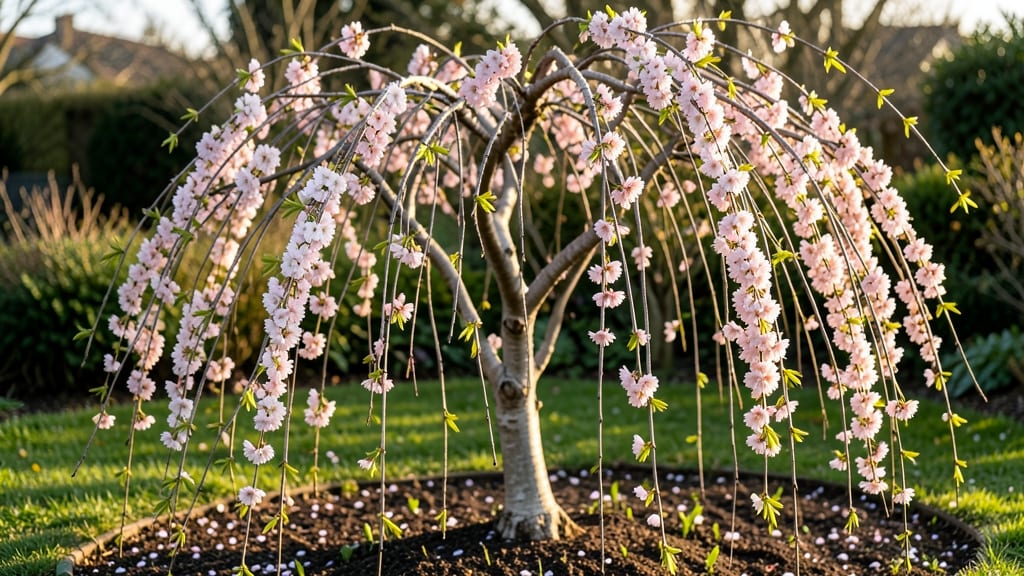
Weeping cherry trees rarely produce fruit because their cultivation prioritizes stunning visual traits like cascading branches and showy spring blooms. Only certain dwarf varieties might develop small, non-edible cherries, as fruit production requires different growing conditions and pollination strategies.
Most weeping cherry trees are bred specifically for their decorative appeal rather than fruit production. 🌸 Their energy goes into creating those iconic, drooping branches and abundant blossoms instead of developing fruit. Even when tiny cherries do appear, they're usually hard, bitter, and inedible.
The key difference lies in their rootstock and pruning—standard cherry trees need open canopies and pollination partners, while weeping varieties are pruned to maintain their graceful shape, which naturally inhibits fruit development.
If you're dreaming of fresh cherries from your yard, you'll need to choose different varieties like 'Stella' or 'Rainier' that are specifically bred for fruit production. These require proper spacing between trees and often need cross-pollination from other cherry varieties to set fruit.
The good news is that once established, these productive trees can yield delicious harvests while still providing beautiful spring blooms!
💡 In This Article
- Why Weeping Cherries Rarely Bear Fruit
- How to Grow Fruitful Cherry Trees Instead
Why weeping cherries rarely bear fruit
The primary reason weeping cherry trees don't produce fruit lies in their genetic breeding. Most ornamental varieties are grafted onto dwarfing rootstocks like 'Colt' or 'Gisela 5', which divert the tree's energy toward compact growth and abundant foliage rather than fruit production.
These rootstocks naturally suppress vertical growth, creating that signature weeping habit, but they also limit the tree's ability to support heavy fruit loads—cherry trees need strong structural support to bear fruit properly.
Pruning practices further explain this phenomenon. Weeping cherries undergo regular pruning to maintain their cascading shape, often removing potential fruit-bearing branches. 🌿 Standard cherry trees, in contrast, require open canopies to allow sunlight penetration—critical for fruit development.
The dense foliage of weeping varieties creates shade within the tree, which inhibits fruit set. Even when flowers appear (typically in spring), the tree's energy is already allocated to maintaining its ornamental form rather than developing fruit.
Pollination presents another critical barrier. Most weeping cherry varieties produce flowers, but without proper pollination partners nearby, fruit development fails. Standard cherry trees often require cross-pollination between different varieties (like 'Stella' and 'Rainier') to set fruit.
Weeping cherries, however, are rarely planted in orchard settings with compatible pollinators. Even if pollination occurs, the tiny cherries that form are often bitter and underdeveloped due to insufficient nutrients being directed toward fruit maturation.
Consider the energy allocation: a weeping cherry tree prioritizes three key traits—graceful branching, abundant blossoms, and dense foliage—over fruit production. This is evident in their growth patterns, where lateral branches grow longer and more densely than vertical leaders.
The tree's hormonal balance favors vegetative growth (leaf and branch development) over reproductive growth (fruit development), a common trait in ornamental cultivars.
For comparison, standard sweet cherry trees like 'Bing' or 'Lapins' allocate about 30-40% of their energy to fruit production during peak seasons, while weeping varieties typically allocate less than 10%.
This energy disparity explains why even when weeping cherries flower, they rarely develop beyond tiny, undeveloped fruit. The trade-off is intentional—breeders prioritize visual appeal over edible yield in ornamental varieties.
One exception exists with certain dwarf weeping cherry varieties like 'Kiku-shidare-zakura', which may produce small, decorative cherries. However, these are typically 1-2 centimeters in diameter, hard, and inedible. The fruit that does form is often deformed due to the tree's genetic focus on ornamental growth rather than proper fruit development.
This makes them more of a visual curiosity than a practical fruit source.