
Vegetables
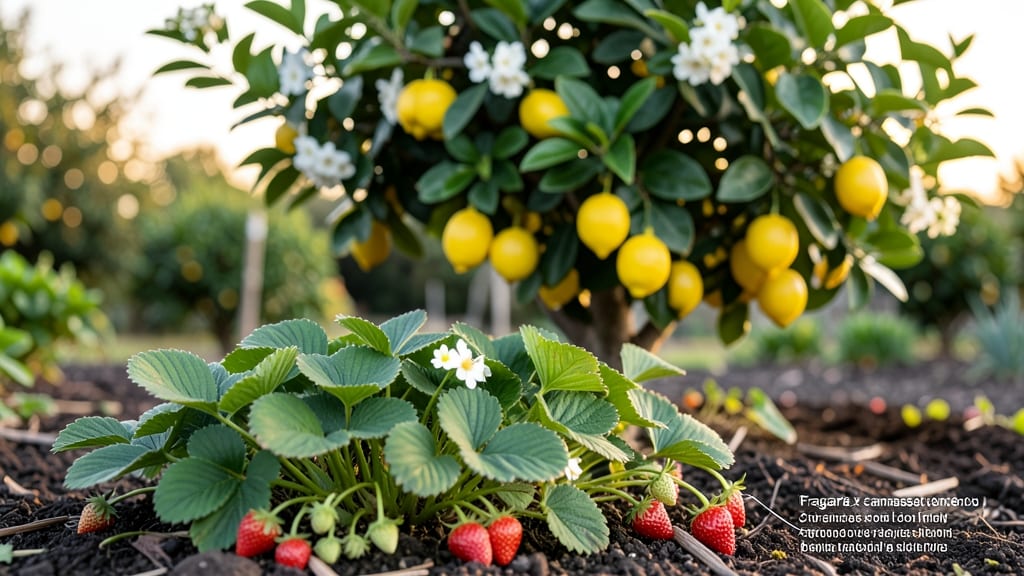
Strawberries are not considered citrus fruit—they belong to the rose family (Rosaceae) and grow on plants with white flowers, not the Rutaceae family where citrus fruits like oranges and lemons originate. Their sweet flavor and bright color are unrelated to their botanical classification.
Strawberries might look vibrant and tangy, but their botanical family tells a different story. 🌸 They're actually part of the Rosaceae family, which includes apples and peaches, while citrus fruits belong to the Rutaceae family. This distinction matters because it affects everything from their growth patterns to their nutritional profiles.
The confusion often comes from their bright red color and slightly tart flavor, but these traits are shared with many other fruits outside the citrus category.
What's fascinating is how their sweetness develops differently. Strawberries get their sugar content from natural glucose and fructose, while citrus fruits rely on citric acid for their signature tang. This chemical difference explains why strawberries taste so distinct from oranges or lemons, despite some superficial similarities in appearance.
💡 In This Article
- Botanical Classification: Strawberries vs Citrus Fruits
- Why Strawberries Taste Sweet Without Being Citrus
Botanical classification: strawberries vs citrus fruits
The key difference between strawberries and citrus fruits starts with their flower structure. Strawberries grow on plants with white, five-petaled flowers belonging to the Rosaceae family, while citrus fruits like oranges and lemons develop from complete flowers with both male and female parts in the Rutaceae family.
This fundamental botanical distinction affects every aspect of their growth and development.
Strawberries are classified as aggregate fruits because they form from multiple ovaries in a single flower, creating the characteristic seed-studded exterior. Citrus fruits, however, are hesperidiums - a specialized type of berry with a leathery rind and segmented interior.
The seeds in citrus are embedded in juicy pulp sacs, while strawberry seeds are on the outside surface. 🌱 This structural difference is visible even before tasting, with citrus fruits showing a continuous outer peel versus strawberries' granular texture.
The genetic divergence between these families is supported by DNA evidence. Studies show strawberries share more genetic markers with apples than with citrus fruits, despite their similar bright colors. For example, the Fragaria genus (strawberries) has 8 chromosomes while citrus fruits typically have 18-22, reflecting their evolutionary paths.
This chromosomal difference explains why strawberries can't cross-pollinate with citrus trees.
Another distinguishing factor is their growth patterns. Strawberry plants produce runners (horizontal stems) to spread, while citrus trees grow vertically with a single trunk. The leaves also differ - strawberry leaves are compound with three leaflets, while citrus leaves are simple and oval-shaped.
These visible differences reinforce their separate botanical classifications.
What might surprise many is that even the color development differs. Strawberries' red pigment comes from anthocyanins, while citrus gets its yellow-orange hues from carotenoids and flavonoids.
The chemical pathways for these pigments are entirely separate, proving their unrelated evolutionary histories. 🌿 This explains why strawberries can be red, white, or even gold varieties, while citrus colors remain within yellow-orange spectrums.
Understanding these botanical distinctions helps explain why strawberries behave differently in cooking. Their high pectin content makes them ideal for jams, while citrus fruits' acidity makes them better for preserving meats.
The structural differences also affect how they're harvested - strawberries are hand-picked for their delicate texture, while citrus can be mechanically harvested.