
Fertilization
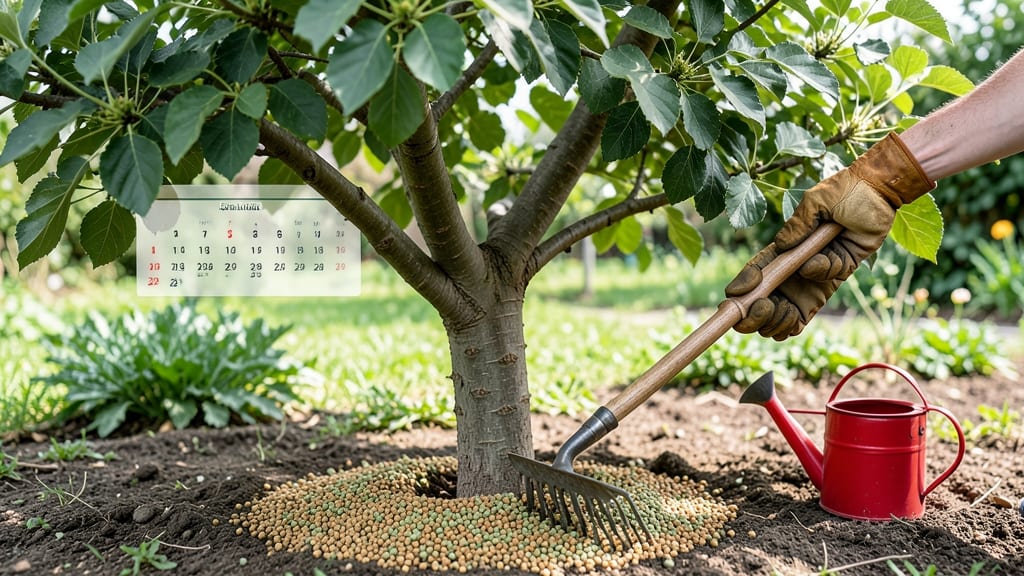
Fertilizing your fruit trees at the right times is the key to unlocking a harvest so abundant you’ll need baskets to carry it home—yet most gardeners miss the best windows entirely.
Picture this: You’ve spent months tending to your 🍎, only to watch it produce half the fruit you expected—or worse, none at all. The culprit? Fertilizing at the wrong time, whether too early (when roots are still dormant) or too late (when the tree is prepping for winter).
Timing matters more than you think. Fruit trees need nutrients during three critical seasons: early spring (when buds swell), late spring (as flowers set fruit), and post-harvest (to replenish depleted soil). Skip one, and your tree’s growth stalls—or worse, it wastes energy on leaves instead of fruit.
In this guide, I’ll break down the exact months to fertilize, how to read your tree’s hunger signals (yellow leaves aren’t always the problem!), and whether organic or synthetic feed works best for your climate. Ready to turn your orchard into a productivity powerhouse?
Best fertilization seasons for fruit trees: science-backed timing guide
Fruit trees thrive when fertilized at the right times—but many gardeners miss the three critical windows when nutrient uptake is most effective. Unlike annuals, fruit trees have distinct growth cycles tied to seasons, and fertilizing outside these periods can waste nutrients or even harm your tree.
Understanding these science-backed timing windows ensures your tree puts energy into roots, leaves, and fruit production rather than struggling to process excess nutrients.
I’ve learned through years of trial and error (and a few over-fertilized trees!) that timing matters more than the type of fertilizer. For example, applying nitrogen-rich fertilizer in late summer can trigger late-season growth that’s vulnerable to frost damage.
Let’s break down the three optimal fertilization seasons and how to adjust for your climate zone.
Early Spring (Bud Swell Stage)
When: As buds begin to swell (typically 4-6 weeks before first leaf emergence). In USDA Zones 5-7, this is usually late March to early April.
Why: Trees break dormancy and need phosphorus and potassium to support root growth and flower formation. Avoid high-nitrogen fertilizers here—too much can delay flowering.
Late Spring (Leaf Emergence)
When: After leaves fully emerge but before fruit set (typically 6-8 weeks after bud swell). For warm climates (Zones 8-10), this may shift to February-March.
Why: This is the peak growth phase. A balanced NPK fertilizer (10-10-10) encourages both foliage and fruit development. Young trees benefit from light applications every 4-6 weeks.
Post-Harvest (Late Summer)
When: 6-8 weeks after harvest (typically August-September in cooler climates; June-July in warm zones).
Why: Trees need nutrients to replenish energy stores for next year’s fruit. Use a low-nitrogen, high-potassium fertilizer to strengthen roots and prepare for dormancy.
In warm climates (Zones 9-10), fruit trees may have a second growth flush in fall, so adjust your post-harvest fertilization to late June or early July instead.
Conversely, in cold climates (Zones 3-5), focus on early spring fertilization and skip late-season feedings entirely to avoid frost damage to new growth.
Pro tip: Soil test before fertilizing—especially in new plantings or if your tree shows signs of nutrient deficiency (like yellowing leaves). Over-fertilizing can lead to salt buildup in the soil, which stresses roots. Always water deeply after applying fertilizer to help nutrients reach the root zone.
I once fertilized my peach tree in late summer with a nitrogen-heavy mix, only to watch new shoots emerge—just in time for a hard frost that killed them. Lesson learned: Follow the growth cycle, not the calendar! 🌱
For container-grown fruit trees, reduce fertilizer amounts by 50% since roots are confined and absorb nutrients faster. Always choose a slow-release fertilizer to avoid leaching in pots. And remember: Mature trees (over 5 years old) need 2-3 times more fertilizer than young saplings.
Timing your fertilizations to match your tree’s natural growth rhythms isn’t just about bigger fruit—it’s about healthier trees that produce for decades. Start with these three critical windows, adjust for your climate, and watch your harvests thrive! 🍎
Need help choosing the right fertilizer? Stay tuned for our next section on organic vs. synthetic options—and how to spot when your tree is over or under-fed.
How to tell if your fruit tree needs fertilizer: 5 key signs
Fruit trees often hide their nutrient needs until it's almost too late. Yellowing leaves, stunted growth, or poor flowering are classic red flags—but they can also signal other problems like pests or disease.
Before reaching for fertilizer, I check for these 5 key signs to avoid overfeeding, which can burn roots and reduce fruit quality.
First, examine the leaf color. Healthy leaves are vibrant green, while yellowing (especially between veins) often signals nitrogen deficiency. Purple or reddish leaves, however, may indicate phosphorus or potassium shortages.
I also look for leaf spots or curling, which could mean fungal issues rather than nutrient needs.
Next, assess growth patterns. If your tree's branches are thin and sparse with few leaves, it’s likely nutrient-starved. On the flip side, excessive new growth in late summer or fall suggests over-fertilization—this weak growth won’t survive winter.
I also check for small, sparse fruit, another sign the tree lacks nutrients.
Now, let’s talk about soil health. Dig a small hole near the tree’s drip line—if the soil is hard or compacted, roots struggle to access nutrients.
A simple soil test kit (available at garden centers) can reveal pH imbalances or deficiencies. My rule of thumb: pH between 6.0-7.0 is ideal for most fruit trees.
When Should I Fertilize My Fruit Trees?
✅ DO Fertilize When...
- Leaves are pale yellow (nitrogen deficiency)
- New growth is slow in spring
- Soil test confirms low nutrients
- Tree is 1-3 years old (active growth phase)
❌ DON'T Fertilize When...
- Leaves show spots or wilting (fungal/pest issue)
- New growth appears in late summer/fall (overfeeding risk)
- Soil is already nutrient-rich (test first!)
- Tree is dormant (winter) (roots won’t absorb nutrients)
Pro Tip: Mature trees (5+ years) often need less frequent feeding—focus on soil health with compost instead.
Don’t overlook flowering and fruiting patterns. If your tree blooms heavily but drops most flowers, it may lack phosphorus or boron. Small, misshapen fruit can also signal calcium deficiency.
I once had a peach tree with blossom end rot—turns out, it needed lime to raise soil pH.
Finally, skip fertilization if your tree shows signs of stress like wilting leaves or peeling bark. These could indicate root rot or disease, and fertilizer will only worsen the problem. Instead, focus on improving drainage or treating pests first.
Remember: Less is often more with fruit trees. Over-fertilizing leads to weak wood, fewer flowers, and poor fruit quality. When in doubt, test your soil and fertilize lightly in early spring—just as buds begin to swell.
Your tree will thank you with juicier harvests next season! 🍎🌱