
Trees
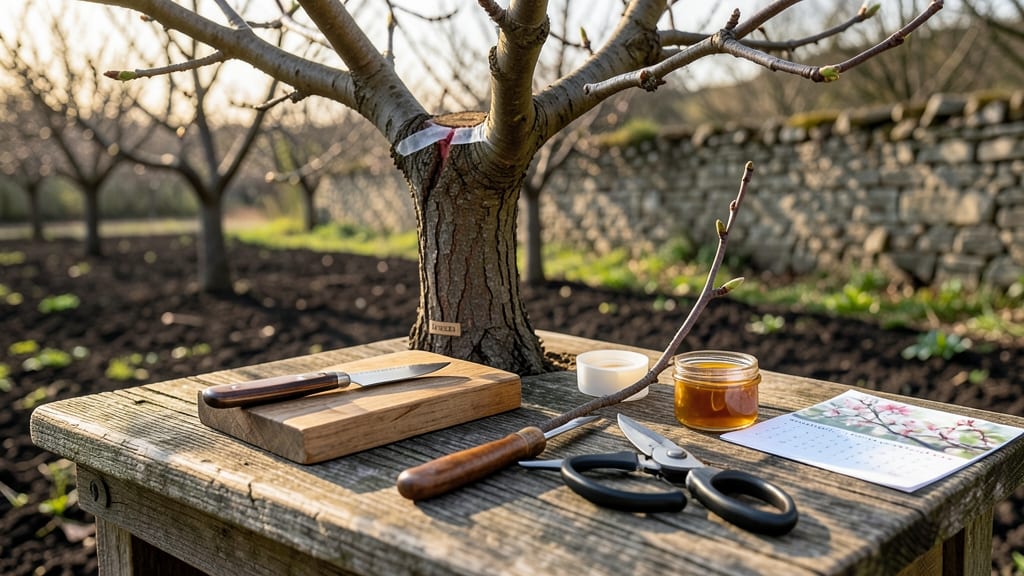
The best time to graft fruit trees is during late winter to early spring 🍎 when the tree is dormant but buds are just starting to swell.
Timing is everything in grafting fruit trees—do it too early or too late, and your scions may fail to take. But master the dormant season, and you’ll unlock the secret to stronger, healthier fruit trees that thrive for decades.
In USDA Zone 6, this window typically falls between February and March, right before the last frost. Grafting during this period minimizes stress on the tree, allowing the graft to heal properly before the growing season kicks in.
Below, I’ll break down the science behind dormant-season grafting, how to spot the perfect moment, and what to avoid to ensure your fruit trees take root and flourish.
Why dormant season is the best time to graft fruit trees
Grafting fruit trees during the dormant season isn’t just tradition—it’s rooted in tree biology. When temperatures drop and sap flow slows, your trees enter a natural state of rest, making them far more resilient to the stress of grafting.
This period, typically late winter to early spring, aligns perfectly with when trees are primed for healing and growth. Without this timing, you risk scion rejection or even tree death due to improper wound closure.
One of the biggest advantages of dormant-season grafting is reduced moisture loss. Active trees lose water rapidly through open wounds, but dormant trees conserve moisture efficiently. Additionally, cooler temperatures slow microbial activity, lowering the risk of infection at the graft union.
This combination of factors creates the ideal conditions for high success rates, often exceeding 80% when done correctly during dormancy.
The optimal grafting window occurs when daytime temperatures consistently stay above 40°F (4°C) but below 60°F (15°C). This range ensures the tree isn’t stressed by extreme cold or prematurely waking from dormancy.
In USDA Zones 5-9, this typically falls between mid-February and late March, but regional microclimates can shift this by weeks. For example, coastal areas may graft a month earlier than inland regions due to milder winters.
Here’s why this timing matters scientifically: During dormancy, trees produce callus tissue more efficiently to seal wounds. The cambium layer—critical for graft union formation—becomes more active as buds begin to swell.
Grafting too early risks freezing wounds shut, while grafting too late triggers rapid sap flow, overwhelming the tree’s ability to heal. Think of it like stitching a wound: you want the body to be ready to knit itself back together, not fighting off infection or bleeding out.
| Seasonal Stage | Temperature Range | Sap Flow Status | Grafting Success Rate | Key Visual Cues |
|---|---|---|---|---|
| Deep Dormancy | Below 40°F (4°C) | Minimal (frozen) | Low (30-40%) | Bare branches, no bud swell |
| Late Dormancy | 40-60°F (4-15°C) | Slow (thawing) | High (75-85%) | Bud swell visible, bark separates easily |
| Early Green-Up | Above 60°F (15°C) | Active (rapid) | Moderate (50-60%) | Leaves budding, sap bleeding |
| Full Green-Up | 65°F+ (18°C+) | Very Active | Low (20-30%) | Leaves fully open, flowers blooming |
Identifying the perfect moment within the dormant season requires observing three key signs: bud swelling, bark separation, and temperature stability. When buds begin to plump but haven’t yet burst, it’s your cue to graft.
The bark should also separate cleanly from the wood when you gently peel it—this indicates the cambium is active. If you see sap bleeding from cuts, you’ve waited too long. Pro tip: Test the soil temperature with a thermometer; aim for 45-55°F (7-13°C) at a 4-inch depth for ideal conditions.
Regional adjustments are crucial. In warmer climates (Zones 8-10), dormancy may be brief, so graft as soon as buds show color. In colder zones (3-5), extend your window by grafting later, even into April, to avoid late frosts.
For example, in Zone 4, I’ve successfully grafted apple trees in early April when daytime highs reached 50°F (10°C) consistently. Always monitor your local National Weather Service forecasts for frost warnings—nothing ruins a graft faster than a surprise freeze.
Another advantage of dormant-season grafting is reduced pest pressure. Many insects and diseases lie dormant during winter, so your freshly grafted trees face fewer threats. However, watch for scale insects or aphids, which may emerge early in mild winters.
A quick spray of neem oil before grafting can prevent early infestations. This is also the best time to prune rootstocks, as the tree’s energy is focused on healing rather than supporting foliage.
Let’s talk about scion selection, which ties into timing. Dormant-season scions should be harvested from healthy, disease-free trees and stored in a moist paper towel in the
Step-by-step grafting timeline for late winter vs. early spring
Grafting fruit trees during the dormant season is your best bet for success, but timing within that window matters just as much. Late winter and early spring offer the perfect balance of cold protection and bud swelling, but regional climates and moon phases can shift your schedule.
Let’s break down the exact steps and timing for USDA Zones 5-9, so you can graft with confidence.
Start by checking your last frost date—this is your anchor. In most temperate zones, grafting should begin 4-6 weeks before buds swell, typically February to early March.
However, warmer zones like Zone 9 may shift this to January-February, while colder Zone 5 areas might wait until March-April. Always adjust for moon phases, aiming for a waxing moon to boost energy flow.
⚠️ Visual Guide: Step-by-Step Grafting Timeline
- ✅ Prune rootstock to 1-2 ft tall, leaving 4-6 buds.
- ✅ Store scions in damp sand at 35-40°F.
- ✅ Check soil temps—ideal range: 40-50°F.
- ✅ Graft when buds swell but no green tips appear.
- ✅ Use whip-and-tongue or cleft grafts for best results.
- ✅ Seal cuts with grafting tape or wax.
- ✅ Wrap graft union with plastic wrap to retain moisture.
- ✅ Water lightly—keep soil moist but not soggy.
- ✅ Monitor for bud break in 6-8 weeks.
- ✅ Remove wraps once buds fully open.
- ✅ Fertilize lightly with 10-10-10 for new growth.
- ✅ Avoid heavy pruning until second year.
For Zone 5, delay grafting until late March to avoid late frosts, which can damage tender scions. In Zone 9, start as early as January to capitalize on milder winters. Always test bark flexibility—if it snaps like dry wood, wait; if it bends slightly, it’s ready.
A moon phase tracker can also guide you, as grafting during a waxing moon enhances root development.
Regional adjustments are key: In the Pacific Northwest, graft in February-March when rains ease, while the Southeast may see earlier activity in January-February.
If your area experiences unpredictable weather, have a backup date ready—grafting too early risks freeze damage, while waiting too long may cause premature bud break. Keep an eye on your trees, and don’t hesitate to adjust your timeline.
Remember, the goal is to align with nature. When you see buds swelling but no leaves, it’s time to act. With this timeline, your graft union will heal stronger, and your fruit trees will reward you with decades of abundant harvests. Happy grafting! 🌱