
Companion Plants
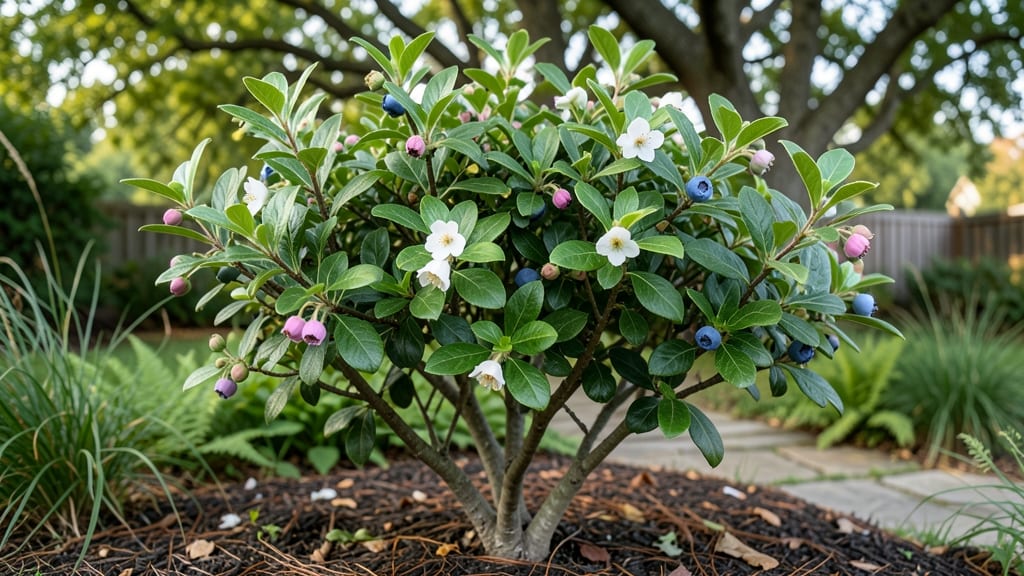
Blueberry plants produce fruit after 1-3 years of growth, depending on variety, chill hours, and planting conditions — a timeline many gardeners overlook when planning their harvest.
Wondering why your 🫐 blueberry bush isn’t bearing fruit yet? The answer lies in its hidden growth secrets—specifically, the magic of chill hours and precise planting timelines. Skip these critical factors, and you might wait years for that first sweet harvest.
In USDA Zones 4-8, most blueberries need 300-900 chill hours (prolonged cold periods) to trigger flowering, which explains why northern varieties fruit earlier than southern ones. Even with perfect conditions, container-grown bushes often take a full year longer than in-ground plants.
Below, I break down the exact timeline—from planting to your first mid-summer harvest—plus the 5 pro tips to speed up fruiting, avoid common mistakes, and maximize your yield every season.
How chill hours determine blueberry fruit production timelines
Blueberries are finicky about when they produce fruit, and the secret lies in something called chill hours. These are the number of hours below 45°F (7°C) that your blueberry bushes need during winter dormancy to trigger spring flowering.
Without enough chill hours, your plant might just sit there looking pretty without ever bearing fruit.
Most blueberry varieties require between 300 and 900 chill hours to set buds properly. This range explains why some varieties thrive in cold climates while others do well in warmer regions. Understanding your local chill hours—and matching them to the right variety—is the key to a bountiful harvest.
Chill hours work like a biological clock for blueberries. When temperatures drop below 45°F (7°C) for the required hours, the plant "wakes up" in spring and produces flowers. Skip this step, and you’ll end up with a bush full of leaves but no berries. It’s like trying to bake a cake without turning on the oven—you’re missing a critical step!
Here’s how different USDA climate zones affect blueberry fruiting:
Zones 3-5 (Cold Climates): These areas typically have 800-1,000+ chill hours, perfect for high-chill varieties like 'Bluecrop' or 'Jersey'. These bushes love the cold and will reliably produce fruit year after year.
Zones 6-8 (Moderate Climates): With 500-800 chill hours, you’ll want mid-chill varieties such as 'Duke' or 'Bluegold'. These do well in regions like the Pacific Northwest or parts of the Midwest.
Zones 9-11 (Warm Climates): Southern gardeners need low-chill varieties (300-500 hours), like 'Southern Highbush' or 'Misty'. Without these, your blueberries might never flower, leaving you with a beautiful shrub but no harvest.
| Variety Type | Chill Hours Needed | Best Climate Zones | First Fruit Age |
|---|---|---|---|
| Highbush (Northern) | 600-900 | 3-7 | 2-3 years |
| Highbush (Southern) | 300-500 | 7-9 | 1-2 years |
| Rabbiteye | 500-800 | 6-9 | 3-4 years |
| Low-Chill Dwarf | 200-400 | 8-11 | 1 year (container) |
If you’re in a transition zone (like Zone 8), you might need to use heat sums or chilling hour calculators to find the right variety. For example, 'O’Neal' is a popular choice for Zone 8 because it bridges the gap between low- and high-chill needs.
Even if you pick the right variety, microclimates can throw a wrench in the works. A sheltered spot near your house might get fewer chill hours than the rest of your yard.
That’s why it’s smart to monitor your local weather data or use a chill hour tracker to ensure your blueberries get the cold they crave.
Once your blueberries have their required chill hours, they’ll burst into bloom in early spring. Each flower cluster can turn into a handful of berries, but only if pollination happens correctly.
Bees love blueberry flowers, but if you’re in a remote area, you might need to hand-pollinate for the best results.
Timing is everything with blueberries. Planting in the wrong season or missing the chill hour window can delay fruiting by years. For example, a high-chill variety planted in Zone 9 might take 5+ years to produce fruit—or never fruit at all if the climate doesn’t cooperate.
Pro tip: If you’re in a warm climate, consider winter chilling techniques like using a refrigerator for container-grown blueberries or planting in a high-elevation area to mimic cooler conditions. A little creativity goes a long way when it comes to growing blueberries outside their natural range.
Step-by-step timeline: when to expect first fruit after planting
Blueberry bushes follow a predictable timeline from planting to fruiting, but patience is key—especially if you're dreaming of homegrown blueberries within the first year. Most blueberry varieties take 2-3 years to produce meaningful fruit, with dwarf varieties sometimes bearing fruit in as little as 1-2 years.
Understanding this timeline helps you set realistic expectations and troubleshoot delays caused by poor soil pH, insufficient sunlight, or inadequate chill hours.
Your blueberry bush’s journey begins with root establishment, a critical phase that sets the stage for future growth. During the first 6-12 months, your plant focuses on developing a robust root system and establishing itself in the soil.
This phase is invisible to the naked eye but foundational—skipping it by over-fertilizing or transplanting too early can delay fruiting by 1-2 years. Think of it as the plant’s "infrastructure project" before it can even think about flowering.
📋 Step-by-Step Timeline to First Blueberry Fruit
- 🌱 Months 1-3: Focus on watering deeply (1-2 gallons per plant) and mulching with pine needles to maintain acidic soil (pH 4.5-5.5).
- 🌿 Months 4-6: Expect 1-2 feet of growth if planted in full sun (6+ hours/day). Avoid heavy pruning—let the plant establish.
- ❄️ Months 7-12: Enter dormancy. Apply winter mulch (4-6 inches) to protect roots from freeze-thaw cycles.
- 🌸 Spring (Months 1-3): Look for flower buds forming. Prune dead or crossing branches to improve airflow and sunlight penetration.
- ☀️ Summer (Months 4-6): First flowers appear (white or pink). Some varieties may produce a few berries, but these are often small and underdeveloped.
- 🍇 Late Summer (Month 7): If conditions are ideal, you might see 50-100 berries, but don’t expect a full harvest. Focus on cross-pollination if growing multiple bushes.
- 🌿 Early Spring (Months 1-2): Prune last year’s fruit wood (branches that bore fruit) to encourage new growth. Apply balanced fertilizer (10-10-10) in early spring.
- 🌸 Late Spring (Month 3): Flowering peaks. Protect blooms from late frosts with frost cloth if needed.
- 🍇 Summer (Months 5-7): First full harvest! Expect 1-2 pints of berries per bush, depending on variety and care. Harvest when berries are deep blue and plump.
- No fruit after 3 years? Check soil pH (should be 4.5-5.5)—test with a kit and amend with sulfur if needed.
- Flowers but no berries? Ensure cross-pollination by planting at least two compatible varieties.
- Small or sparse fruit? Increase sunlight (6+ hours/day) or reduce nitrogen-heavy fertilizers.
Container-grown blueberries often fruit 6-12 months earlier than in-ground plants because their roots aren’t competing for nutrients in the same way. However, containers dry out faster, so daily watering in summer and winterizing pots (wrapping in burlap) are essential.
If you’re growing in a pot, choose dwarf varieties like 'Top Hat' or 'Peach Sorbet,' which are bred for smaller spaces and faster fruiting.
Climate plays a huge role in this timeline. In warmer zones (8-9), blueberries may fruit earlier but require low-chill varieties (e.g., 'Southern Highbush'). In colder zones (3-5)900+ chill hours to flower. If you’re in a transitional zone, opt for mid-chill varieties (400-600 hours) like 'Duke' or 'Jersey.'
Remember, patience and consistency are your best tools. A well-cared-for blueberry bush can produce fruit for 20-30 years, so the wait is worth it. Start tracking your plant’s growth now—mark the first buds, count the flowers, and celebrate that first harvest like a blueberry champion!
🫐