
Plants
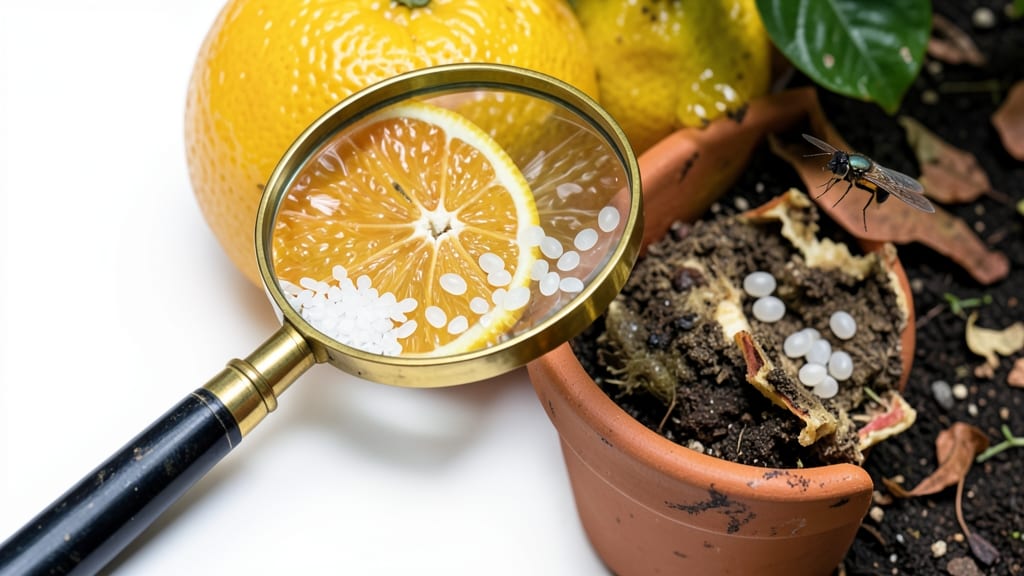
Fruit fly eggs look like tiny, white, oval-shaped specks about 0.5mm long, often found in clusters on damp organic matter such as rotting fruit or soil. Under a magnifying glass, their translucent surface reveals a delicate sheen similar to grains of rice.
Fruit fly eggs are so small that they're nearly invisible to the naked eye, but their distinctive appearance becomes clear when you know what to look for. 🔥 These microscopic clusters often hide along the edges of fruit rinds, in damp mulch, or even inside plant stems where moisture collects.
Unlike fungus gnat eggs—which tend to be more elongated—their oval shape and smooth texture help distinguish them from other pests. The key to spotting them lies in focusing on areas where fruit flies lay their eggs: warm, moist surfaces with organic decay.
When inspecting plants, flip over leaves or check the base of stems where sap pools. A simple magnifying glass (10x power) can reveal their clustered arrangement, which often looks like tiny white grains of salt.
The translucency becomes more apparent when wet, making them easier to spot against darker organic matter. If you're dealing with an infestation, these visual clues help you target treatment areas precisely.
💡 In This Article
- Microscopic Features of Fruit Fly Eggs
- Where to Find Fruit Fly Eggs in Gardens
Microscopic features of fruit fly eggs
Fruit fly eggs—scientifically known as Drosophila melanogaster eggs—measure a mere 0.5 millimeters in length, making them nearly impossible to see without magnification.
Their oval shape and smooth, slightly curved surface give them a distinct appearance under a 10x magnifying glass, where they resemble tiny grains of rice or sesame seeds.
The eggs' translucent sheen comes from a thin, flexible membrane that allows light to pass through, creating a subtle glow when viewed at an angle.
Under closer inspection, these eggs often appear clustered in groups of 10-15, laid in a curved pattern along moist surfaces. This clustering behavior helps distinguish them from fungus gnat eggs, which are more elongated and laid singly or in loose strands.
Fruit fly eggs also lack the fuzzy texture of some other insect eggs, giving them a sleek, almost polished look. Their white color can shift slightly to a pale yellowish hue as they age, a subtle clue that hatching is imminent.
The eggs' microscopic size and delicate structure make them highly vulnerable to environmental changes. For example, exposure to direct sunlight or drying air can cause them to shrivel within 24 hours, while high humidity (above 70%) extends their viability to 3-5 days.
This sensitivity explains why they're almost always found in protected, damp microclimates—like the underside of fruit rinds or buried in soil. 🔥
When comparing fruit fly eggs to other common garden pests, their key distinguishing features include their oval shape (unlike the cylindrical eggs of fungus gnats) and their tendency to cluster in neat rows.
Under a handheld magnifier, you might also notice tiny air bubbles trapped within the egg's membrane, which help regulate buoyancy in liquid environments. These bubbles are a telltale sign when examining eggs found in standing water or damp compost.
For those without magnification tools, fruit fly eggs often appear as faint white specks that disappear when touched—unlike mold spores, which typically leave a powdery residue. Their translucency also means they blend seamlessly into organic matter, making them nearly invisible against dark soil or rotting fruit.
This camouflage is a survival adaptation, protecting the eggs from predators and environmental stressors until they're ready to hatch.