
Trees
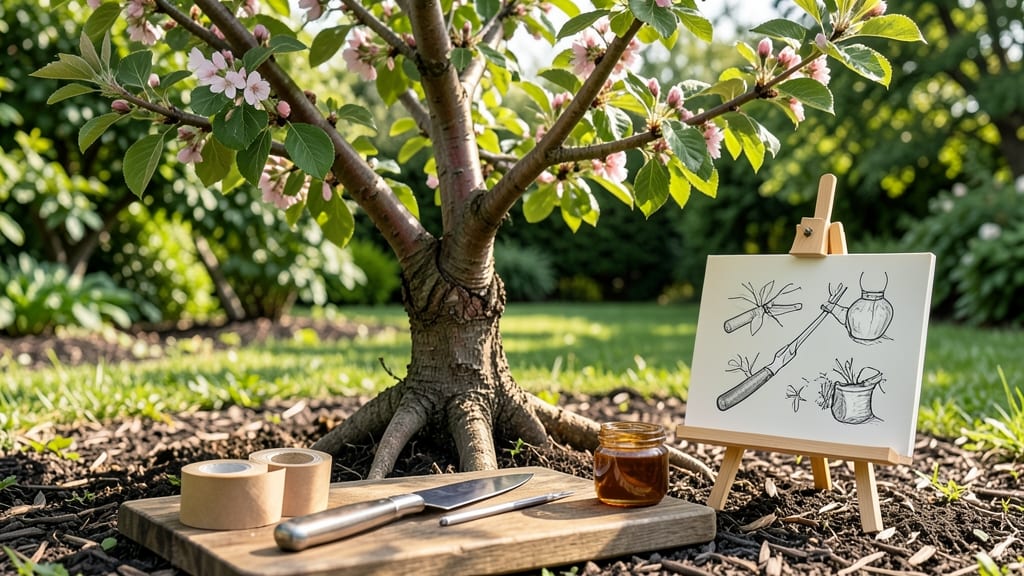
Spliced fruit trees are created through grafting, where a desired fruit variety (scion) is joined to a hardy rootstock to combine disease resistance, vigor, and flavor. This technique allows growers to produce high-quality fruit while improving tree health and adaptability to different climates.
Grafting is like a biological marriage between two plants: the scion (the fruiting branch you want) and the rootstock (the sturdy base that anchors the tree). 🌱 This fusion lets you grow trees that would otherwise struggle in your climate or resist pests—think of it as giving your favorite fruit tree a supercharged immune system.
For example, a delicate apple variety can thrive when grafted onto a disease-resistant rootstock, producing fruit faster than if grown from seed.
What makes this method so popular among home gardeners is the control it gives you. You can create dwarf trees perfect for small spaces or choose rootstocks that improve flavor and yield.
Plus, since the tree starts bearing fruit in just 2-3 years (instead of 5-10 from seed), you get rewards sooner. I always recommend starting with easy-to-graft varieties like apples or peaches if you're new to this technique.
Seasonal timing is everything—most grafting happens in late winter or early spring when the tree is dormant but ready to heal. The key is ensuring the cambium layers (the growth tissue) align perfectly between scion and rootstock.
With the right tools and patience, you can create your own customized fruit trees that outperform their seed-grown counterparts.
💡 In This Article
- How Grafting Creates Stronger Spliced Fruit Trees
- Top Grafted Fruit Tree Varieties for Home Gardens
How grafting creates stronger spliced fruit trees
The grafting process works like a biological bridge between two plants: the scion (your chosen fruit variety) and the rootstock (the sturdy base). When these two parts join, their cambium layers—the thin, green tissue just under the bark—must align perfectly.
This layer contains the plant's vascular system, where xylem (water and nutrient transport) and phloem (food distribution) reside. Once united, these systems merge within 2-4 weeks, allowing seamless flow of water, minerals, and sugars between the scion and rootstock.
What makes this fusion so powerful is how the rootstock provides the scion with its hardiest traits. For example, a disease-resistant rootstock like Malling 9 (M.9) for apples can protect a delicate scion variety from fungal infections while still allowing it to produce premium fruit.
The rootstock also determines tree size—dwarfing rootstocks like B9 keep trees under 8 feet tall, perfect for backyard gardens. This compatibility is why you'll never see a grafted tree struggling with poor soil or harsh winters like seed-grown trees often do.
The science behind why grafted trees fruit faster lies in their genetic programming. Seed-grown trees take years to mature because they must develop their own root systems and navigate complex growth stages.
But when you graft, the scion inherits the rootstock's established vigor, allowing it to focus energy on flowering and fruiting within 2-3 years instead of 5-10. This is why commercial orchards use grafting—it's a shortcut to productivity that doesn't compromise quality. 🌿
One fascinating aspect is how the graft union heals. The plant produces callus tissue—a natural sealant—around the cut surfaces, creating a watertight bond. Over time, this union becomes nearly invisible, though you can often spot a slight swelling where the two parts joined.
The strength of this bond is why grafted trees can outlive seed-grown ones by decades, especially in challenging climates. For instance, a peach tree grafted onto a Lovell rootstock (which tolerates cold snaps down to -15°F) will thrive where a non-grafted peach would freeze.
Seasonal timing plays a crucial role in success. Most grafting occurs during dormancy (late winter/early spring) when sap flow is minimal, reducing stress on the plant. The cambium layer is most active then, ensuring a stronger union.
However, some methods like T-budding (used for citrus) happen in summer when the bark slips easily from the wood. This precision in timing is what separates successful grafts from failures—patience and preparation make all the difference.
Consider this: A grafted apple tree might produce 30-50% more fruit than a seedling, with larger, higher-quality fruit. The rootstock's influence extends to flavor too—some combinations enhance sweetness or acidity. For example, grafting Granny Smith apples onto a MM.106 rootstock improves disease resistance while maintaining that signature tartness.
This is why nurseries offer specific scion-rootstock pairings—each combo is optimized for yield, flavor, and hardiness.