
Pruning
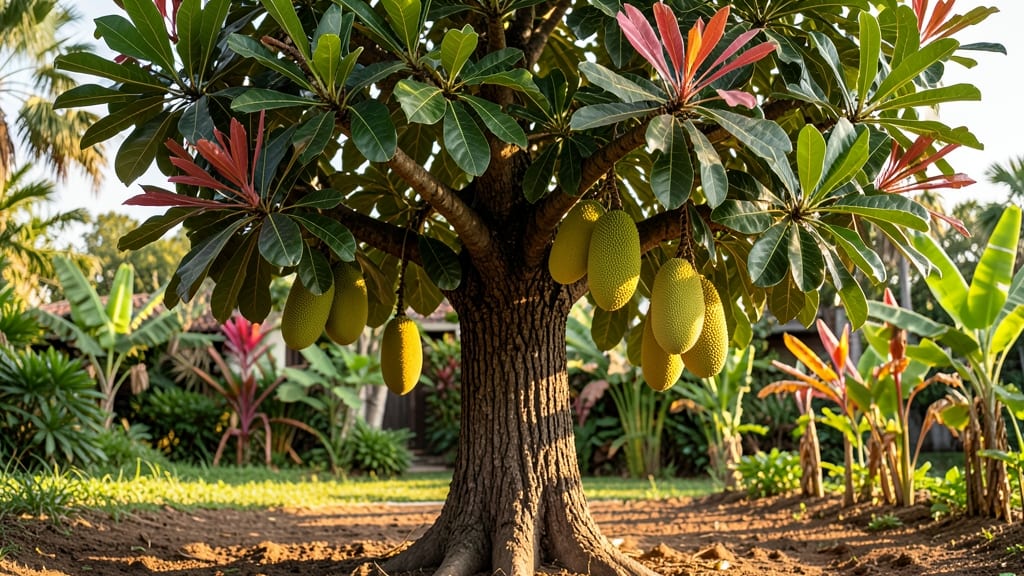
Growing a red jackfruit tree means fresh fruit straight from your yard for years to come. 🌿 I’ve watched mine produce heavy harvests in Florida’s heat, and the secret isn’t just the right soil—it’s understanding how this tropical giant thrives with minimal fuss once established.
The key starts with planting in well-draining soil with plenty of organic matter, mimicking its native tropical forests. Red jackfruit loves warmth and humidity, so zones 10-12 are ideal, but with winter protection, you can grow it as far north as zone 9.
Most gardeners underestimate how fast these trees grow—expect 3-5 feet per year if given the right conditions. You’ll start seeing fruit in just 3-5 years, but the real magic happens when you prune strategically to encourage air circulation and sunlight penetration.
A well-maintained tree can produce hundreds of pounds of fruit annually, with each harvest lasting months. The sweet, fibrous flesh is perfect for smoothies, curries, or eating fresh straight off the tree. For those in cooler climates, container growing is an option—just move it indoors during winter.
The first harvest might take patience, but once established, this tree becomes the star of your landscape and pantry.
📚 In This Guide
- What you need
- Instructions
- Tips and common mistakes
- Wrapping up and next steps
What you need
- ● Pruning shears: Sharp, bypass-style shears (for small branches, 10-12 inches cutting capacity). Pro tip: 💡 Sanitize blades with rubbing alcohol before and after use!
- ● Pruning saw: Curved-tooth saw (for thicker branches, 14-18 inches blade). Pro tip: ✨ Lubricate the blade with mineral oil for smooth cuts!
- ● Loppers: Heavy-duty loppers (for medium branches, 18-24 inches cutting capacity).
- ● Gloves: Sturdy, cut-resistant gloves (to protect hands from thorns and sap).
- ● Disinfectant: 70% isopropyl alcohol or bleach solution (1 part bleach to 9 parts water).
- ○ Pruning sealant: Optional but helpful (for sealing larger cuts to prevent disease).
- ● Ladder: Sturdy, extendable ladder (if tree exceeds 6 feet in height).
- ● Trash bags: Heavy-duty bags (for collecting pruned branches).
- ● Marking twine or tape: Colored twine/tape (to mark branches for removal).
- ● Weather check: Prune on a dry, overcast day (avoid rainy or windy conditions).
- ● Safety gear: Safety glasses (to protect from debris) and long sleeves/pants (for thorn protection).
- ● Tree health assessment: Inspect the tree for diseased or dead branches before pruning.
- ● Tools sharpened: Ensure all cutting tools are sharp and clean for clean cuts.
- ● Compost bin or mulch: Plan for repurposing pruned branches (compost or mulch for garden beds!).
How to cultivate a thriving red jackfruit tree year-round
Here's the method I've perfected for keeping these tropical beauties productive through every season.
🌱 Step 1: Select the Right Location and Prepare the Soil
Red jackfruit trees demand warmth and well-draining soil—no compromises here. Choose a spot that gets full sun (6+ hours daily) and stays above 50°F year-round. I always test soil pH first (aim for 6.0-7.0) and amend with compost if needed. These trees hate soggy roots, so raise beds or plant on mounds if your soil drains poorly.
The key is mimicking their native tropical environment. If you're in a cooler climate, grow them in large containers where you can move them indoors during winter. I've seen jackfruit trees thrive in 15-gallon pots for years when given proper care. Add a layer of 2-3 inches of mulch to retain moisture and regulate soil temperature—just keep it 6 inches away from the trunk.
☀️ Step 2: Plant at the Correct Depth and Stake Young Trees
Dig a hole twice as wide as the root ball but no deeper—jackfruit roots are shallow and sensitive to burial. Place the tree so the top of the root ball sits 1-2 inches above ground level (this prevents water pooling). I always loosen the roots slightly before planting to encourage outward growth into the surrounding soil.
Stake young trees immediately using 2-inch diameter stakes tied with soft fabric strips (never wire—it cuts into bark). The stake should support the trunk but not restrict movement. Water deeply right after planting to settle the soil and eliminate air pockets. You'll know you've done it right when the soil feels uniformly moist down to 12 inches deep.
💧 Step 3: Establish a Watering and Fertilizing Routine
First year is critical—water deeply 2-3 times per week until the tree establishes roots. You'll see new growth within 4-6 weeks if moisture is right. After establishment, water when the top 6 inches of soil feel dry—these trees are drought-tolerant once mature but produce better fruit with consistent moisture.
Fertilize monthly during growing season (spring through fall) with a balanced 10-10-10 formula, but cut back in winter. I've found that organic options like compost tea work just as well and improve soil structure over time. Watch for yellowing leaves—they're your signal to reduce nitrogen and check for overwatering.
✂️ Step 4: Prune for Shape and Fruit Production
Prune only during dormant season (late winter) to shape the tree and remove dead wood. I always cut back 1/3 of last year's growth to encourage new fruiting branches. Never prune during fruiting season—you'll sacrifice next year's harvest. Thin out crowded branches to improve air circulation, which prevents fungal diseases that plague jackfruit trees.
The real secret is training the main trunk to stand straight. If your tree leans, tie it to a stake with soft twine until it develops structural strength. You'll see the difference in fruit quality within 2-3 years—straight trees produce larger, more uniform fruit clusters. Harvest when the fruit turns bright yellow-green and gives slightly when pressed.
🌿 Step 5: Protect Against Pests and Seasonal Challenges
Watch for scale insects and mealybugs—they're the biggest threats to jackfruit trees. I treat them immediately with neem oil spray, repeating every 7-10 days until gone. For cooler climates, bring potted trees indoors before 40°F temperatures arrive, placing them near a south-facing window or under grow lights.
Here's the thing—jackfruit trees are heavy feeders. If you notice small fruit that drops prematurely, it's usually a potassium deficiency. Switch to a 5-10-10 fertilizer for a season and you'll see immediate improvement in fruit retention. The first harvest might be modest, but with proper care, your tree will produce 50+ pounds of fruit annually within 3-5 years.
Tips & tricks for year-round jackfruit tree success
These practical insights will help you avoid common pitfalls and maximize your tropical harvest.
Location and Soil Secrets: In Step 1, test your soil's drainage by digging a hole and filling it with water—if it doesn't drain within 2 hours, you'll need to amend with perlite or sand. For container growing, choose pots with drainage holes and use a mix of 60% potting soil, 20% perlite, and 20% coconut coir. This mimics the airy, well-draining conditions jackfruit trees crave in their native habitat.
Planting Depth Precision: When planting in Step 2, use a level to ensure the root ball sits exactly 1-2 inches above ground level—this prevents water pooling that leads to root rot. I've seen many gardeners bury these trees too deep, which causes stress and poor growth. The key is maintaining that slight elevation while keeping the stake secure but not constricting.
Watering Wisdom: The 2-3 times per week watering in Step 3 should be deep waterings—aim for 1-1.5 gallons per watering for established trees in 15-gallon pots. Use your finger to check moisture: if the top 6 inches feel dry, it's time to water. Overwatering is the #1 killer of jackfruit trees, so always let the top 2-3 inches dry out between waterings, especially in cooler months.
Fertilizer Timing: That monthly 10-10-10 fertilizer in Step 3 should be applied in early spring when you first see new growth. I recommend splitting the dose—half in spring and half in summer—to prevent salt buildup. For organic growers, compost tea should be applied every 2 weeks during growing season, diluted to half strength to avoid burning roots.
Pro Tips for Red Jackfruit Tree
- These practical insights will help you avoid common pitfalls and maximize your tropical harvest.
- Location and Soil Secrets: In Step 1, test your soil's drainage by digging a hole and filling it with water—if it doesn't drain within 2 hours, you'll need to amend with perlite or sand.
- Planting Depth Precision: When planting in Step 2, use a level to ensure the root ball sits exactly 1-2 inches above ground level—this prevents water pooling that leads to root rot.
Frequently asked questions
Got questions about growing, harvesting, or caring for your red jackfruit tree?
Here are answers to the most common queries to help you keep your vine thriving year-round!
How often should I prune my red jackfruit tree?
Prune your red jackfruit tree twice a year—once after the main harvest (late spring/early summer) to shape the plant and encourage new growth, and again in late winter to remove dead or weak branches. Light trimming between harvests can also help manage size and improve airflow. Pro tip: Avoid heavy pruning during fruiting season to protect your yield!
Why aren’t my jackfruits ripening evenly?
Uneven ripening often happens due to uneven sunlight exposure or inconsistent watering. Ensure your tree gets 6+ hours of direct sunlight daily and water deeply 2-3 times per week (adjust for climate). If some fruits lag, hand-pollinate with a soft brush to boost fruit set. Bonus: Harvest slightly underripe fruits—they’ll ripen off the vine!
Can I grow a red jackfruit tree in a pot?
Yes, but it’s challenging long-term. Red jackfruit trees need deep roots (10+ gallons minimum) and regular repotting every 2-3 years. Use a well-draining mix with compost, and place the pot in full sun. Container-grown trees may produce smaller yields. Alternative: Try dwarf varieties like ‘Jamaica’ for better pot success!
What do I do if my jackfruit tree leaves turn yellow?
Yellowing leaves usually signal overwatering, nutrient deficiency, or pests. Check soil moisture—let the top 2-3 inches dry out between waterings. Test soil pH (ideal: 6.0–7.0) and fertilize with a balanced citrus blend every 2 months. Inspect for spider mites or aphids and treat with neem oil if needed. Quick fix: Prune affected leaves to redirect energy!
Are there any easy alternatives to red jackfruit?
If red jackfruit seems tricky, try these low-maintenance tropical fruits:
- Sugar apple (Annona squamosa) – Fast-growing, sweet, and drought-tolerant.
- Breadfruit (Artocarpus altilis) – Hardy and produces edible starchy fruits.
- Pineapple guava (Acca sellowiana) – Cold-hardy and disease-resistant.
- Papaya (Carica papaya) – Quick harvest (6–12 months) and self-pollinating.
All thrive in warm climates and offer similar tropical flavors!
Wrapping up and next steps
The red jackfruit tree is a rewarding treasure—packed with year-round harvest potential and minimal fuss once you master the basics! 🌱 With the right tools, timing, and techniques, you can prune like a pro and keep your vine thriving for bountiful, flavorful yields.
Whether you’re a seasoned gardener or just starting, every trim brings you closer to that perfectly balanced tree.
Ready to take the next step? Start small: pick one pruning session to practice, then gradually expand your skills. Before you know it, you’ll be the neighborhood expert on red jackfruit care—and your tree will thank you with lush, vibrant growth all year long! 🌟