
Trees
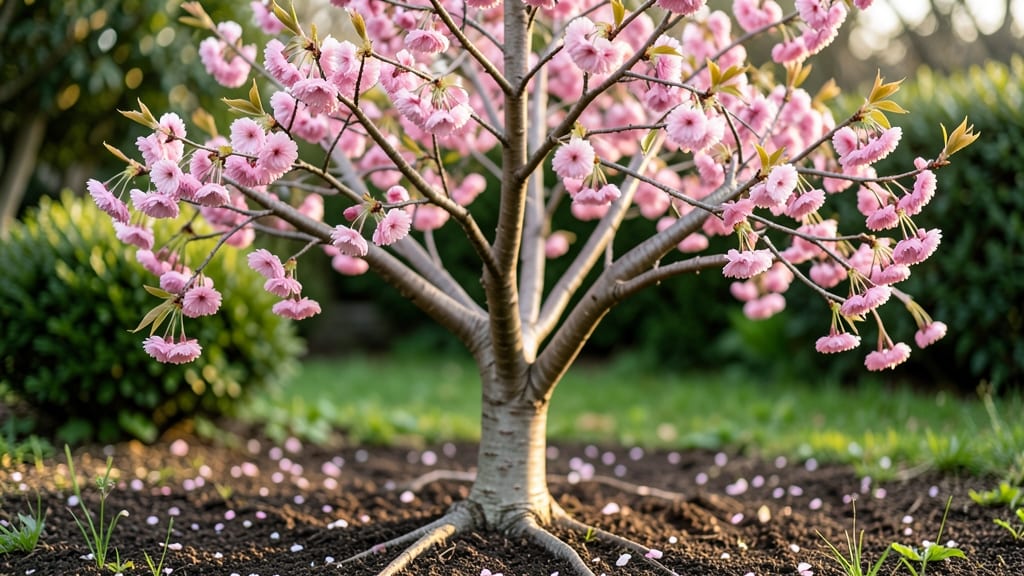
Pink flowering fruit trees turn your yard into a springtime masterpiece—vibrant blooms that later feed you. 🌸 I planted a flowering plum last spring, and now my garden bursts with color while still producing fruit. The contrast between delicate pink flowers and the eventual harvest is pure magic.
These trees work as focal points or along borders, their branches heavy with blossoms that attract pollinators. Pair them with lavender for a fragrant border or boxwood for structured contrast. The right placement makes them the star of your landscape without overwhelming smaller plants.
By summer, you’ll enjoy both shade and fruit—cherries, plums, or crabapples—while the spent blooms create interest. The tree’s layered beauty keeps your garden dynamic from spring through fall. Let’s design around it!
Flowering crabapples like ‘Adirondack’ or ‘Dolgo’ are low-maintenance and disease-resistant, perfect for beginners. Their small fruit may not be gourmet, but they’re great for wildlife and jellies. For edible blooms and fruit, Japanese cherries or ‘Santa Rosa’ plums deliver both beauty and harvests.
Place them where they’ll get full sun to partial shade, with room to grow—most reach 20-30 feet tall. Mulch around the base to retain moisture, and prune in late winter to shape the canopy. The right spot ensures years of stunning displays and tasty rewards.
Combine them with spring bulbs like daffodils for early color, or use them as a backdrop for perennials like peonies. Their spring fragrance and summer shade create a multi-seasonal impact. Even in small yards, dwarf varieties like ‘Flowering Almond’ fit perfectly.
Start with one tree this season—your garden will thank you for years to come. The blooms alone make it worth it, but the fruit is the cherry on top!
📚 In This Guide
- What you need
- Instructions
- Tips and common mistakes
- Wrapping up and next steps
What you need
- ● Pink flowering fruit tree varieties: Choose from cherry (e.g., 'Stella Pink'), plum (e.g., 'Methley'), or apple (e.g., 'Pink Pearl'). Buy 1–3 trees for optimal pollination.
- ● High-quality soil: 5–10 bags of well-draining, slightly acidic soil (pH 6.0–7.0). Mix in compost (2–3 bags) for nutrients.
- ● Fertilizer: Slow-release balanced fertilizer (10-10-10 or 20-20-20) or organic options like fish emulsion or bone meal (1–2 lbs per tree).
- ● Mulch: 2–3 cubic feet of wood chips or straw to retain moisture and suppress weeds.
- ● Hand trowel and shovel for digging.
- ● Pruning shears (sterilized with rubbing alcohol) for shaping and maintenance.
- ● Garden hose with a soaker nozzle or watering can (10+ gallons capacity).
- ● Measuring tape (for spacing trees 15–25 feet apart, depending on variety).
- ○ Grafting tools (optional): grafting knife and grafting tape if propagating from cuttings.
- ● Tree guards (metal or plastic) to protect young trunks from pests.
- ● Drip irrigation system for efficient watering.
- ● Pest control: neem oil or horticultural oil for aphids/mites.
- ● Bloom booster: Epsom salt (1 tbsp per gallon of water) to enhance flowering.
Step-by-Step guide to planting and caring for pink flowering fruit trees
Here's how to bring these stunning, dual-purpose beauties into your landscape with confidence.
🌱 Step 1: Choose the Right Tree Variety for Your Climate
Start by selecting a pink-flowering fruit tree that thrives in your USDA hardiness zone. Popular choices include pink cherry blossom trees (Prunus serrulata 'Kanzan'), pink peach trees (Prunus persica 'Bonanza'), or pink plum trees (Prunus cerasifera 'New Dawn'). These varieties offer both vibrant spring blooms and delicious summer fruit.
Check your local nursery's climate recommendations—some trees like cherry blossoms prefer zones 5-8, while peaches often thrive in zones 5-9. I always verify the mature size too; a 'Kanzan' cherry can reach 20-30 feet tall, while dwarf varieties stay under 10 feet. Measure your planting space before buying.
🪴 Step 2: Prepare the Planting Site with Proper Drainage
Pick a sunny location with at least 6 hours of direct sunlight daily—most pink flowering fruit trees need full sun for both blooms and fruit production. Avoid low spots where water pools, as these trees hate soggy roots. The hole should be twice as wide as the root ball but only as deep.
Loosen the native soil with a shovel to break up compacted layers. Mix in 3 inches of compost (from your materials) into the bottom of the hole—this improves drainage without suffocating roots. For heavier clay soils, add a handful of coarse sand too. The goal is soil that holds moisture but drains freely within 24 hours after watering.
☀️ Step 3: Plant at the Correct Depth and Water Thoroughly
Remove the tree from its container and gently separate the roots if they're circling. Place it in the hole so the top of the root ball sits 1-2 inches above ground level—this prevents settling from heavy watering. Fill around the roots with native soil, pressing lightly to remove air pockets but not compacting.
Water deeply right after planting to settle the soil. You'll know it's enough when water drains to 6 inches deep below the root ball. Mulch the base with 2-3 inches of wood chips, keeping mulch 6 inches away from the trunk to prevent rot. This helps retain moisture while protecting roots from temperature swings.
✂️ Step 4: Prune for Structure and Airflow During First Year
Wait until late winter or early spring (just before buds swell) to prune your new tree. Remove any dead, crossing, or inward-growing branches first—these compete for energy and block sunlight. Use clean, sharp pruners to make cuts at a 45-degree angle just above an outward-facing bud.
Thin the canopy to open it up; aim for a vase-shaped structure with branches spaced 12-18 inches apart. This airflow prevents fungal diseases and lets sunlight reach inner blooms. Avoid heavy pruning—you're shaping, not harvesting. After pruning, apply a balanced fruit tree fertilizer (like 10-10-10) to support new growth.
💧 Step 5: Maintain Consistent Watering and Seasonal Care
Water deeply 2-3 times per week during the first growing season, providing 1-2 gallons per inch of trunk diameter. For a young tree, that's roughly 15-20 gallons total per watering. Let the top 2-3 inches of soil dry between waterings—you'll see wilting leaves if it's too dry, or yellowing if overwatered.
In late fall, apply 3-4 inches of mulch around the base (but not touching the trunk) to insulate roots. For established trees, fertilize in early spring with a low-nitrogen formula (like 5-10-10) to encourage blooms over foliage. Watch for pests like aphids or scale—spray with neem oil at the first sign of infestation to protect both flowers and fruit.
Tips & tricks for perfect pink flowering fruit trees
Here's what nobody tells you about getting those showstopping blooms and harvests every year.
Variety Matters: When selecting your pink flowering fruit tree, consider bloom time as much as fruit production. Early bloomers like 'Bonanza' peach trees may produce fruit earlier but are more vulnerable to late frosts. I always opt for mid-season varieties—they strike a balance between frost risk and fruit yield. For small spaces, dwarf varieties like 'New Dawn' plum trees are game-changers, offering all the beauty and fruit in a fraction of the space.
Soil Prep Secret: The 3 inches of compost in Step 2 isn't just about drainage—it's about creating the perfect microbial ecosystem for your tree's roots. I like to add a handful of worm castings too (optional) for that extra boost of beneficial bacteria. For clay-heavy soils, mix in coarse sand to break up compaction, but avoid adding too much—you want to improve drainage, not create desert conditions. The goal is soil that holds moisture like a sponge but releases it freely within 24 hours.
Planting Depth Cue: That 1-2 inch elevation above ground level in Step 3 might seem small, but it's crucial. After heavy watering, soil settles and can bury the trunk, leading to rot. I use a small stake marked at the correct height to verify placement before backfilling. Pro tip: Water thoroughly right after planting to check drainage—if water pools at the surface after 6 inches of drainage, you've got a drainage issue to fix before calling it good.
Pruning Timing: The late winter/early spring window for pruning in Step 4 is non-negotiable for pink flowering varieties. Pruning too early can stimulate new growth that gets nipped by frost, while waiting too long risks removing next year's flower buds. Look for swollen buds that haven't yet opened—this is your perfect pruning cue. I always prune on a dry day to reduce disease risk, and I sterilize my pruners with rubbing alcohol between cuts to keep infections at bay.
Pro Tips for Pink Flowering Fruit Trees
- Here's what nobody tells you about getting those showstopping blooms and harvests every year.
- Variety Matters: When selecting your pink flowering fruit tree, consider bloom time as much as fruit production.
- Soil Prep Secret: The 3 inches of compost in Step 2 isn't just about drainage—it's about creating the perfect microbial ecosystem for your tree's roots.
Frequently asked questions
Got questions about pink flowering fruit trees? You’re not alone! Here are some of the most common queries—plus straightforward answers to help you grow (and enjoy) these stunning, edible beauties with confidence.
What are the best pink flowering fruit trees for small yards or containers?
If space is limited, opt for dwarf varieties like dwarf cherry trees (e.g., ‘Stella’ or ‘Balaton’) or miniature peach trees (e.g., ‘Bonanza’). These still produce vibrant pink blooms and fruit but stay compact—perfect for pots or tight gardens. Just ensure they get at least 6–8 hours of sun daily!
When do pink flowering fruit trees bloom, and how long does it last?
Blooming timing varies by type: cherry trees (like ‘Stardust’) bloom in early spring (March–April) for 1–2 weeks, while plum trees (e.g., ‘Santa Rosa’) may flower slightly later (April–May). Peach trees often bloom in late winter/early spring and last 7–10 days. Pro tip: Cool nights and warm days trigger the best displays—ideal for spring gardeners!
Can I grow pink flowering fruit trees from seed, or should I buy a grafted tree?
While you can grow from seed, grafted trees are the smarter choice. Seeds may not produce fruit true to the parent plant (e.g., a seed from a ‘Pink Pearl’ peach could yield a different variety). Grafted trees guarantee predictable blooms, fruit quality, and faster maturity—worth the investment for home growers!
Why aren’t my pink flowering fruit trees producing fruit, even though they bloom?
Several factors could be at play:
- Pollination issues: Many fruit trees need cross-pollination. Plant two compatible varieties (e.g., ‘Lapins’ and ‘Stella’ cherries) nearby to attract bees.
- Environmental stress: Extreme heat, drought, or frost during bloom can drop flowers. Mulch and water consistently to support trees.
- Age or health: Young trees (under 3 years) may focus on growth. Ensure they’re healthy with proper pruning and fertilizer (like citrus or fruit-tree-specific blends).
If problems persist, consult a local nursery or extension service for diagnosis!
Are there pink flowering fruit trees that thrive in hot climates?
For sweltering regions, try:
- Peach trees (e.g., ‘Redhaven’ or ‘Elberta’—some varieties tolerate heat better than others).
- Plum trees (e.g., ‘Methley’ or ‘Santa Rosa’), which handle heat if given afternoon shade.
- Fig trees (like ‘Celeste’), which produce edible fruit and stunning pink blossoms while thriving in USDA zones 7–11.
Always check your tree’s chill-hour requirements—some need 200–500 hours below 45°F to fruit well.
Wrapping up and next steps
Pink flowering fruit trees are a stunning way to blend beauty and bounty in your garden! 🌸 From fragrant blooms to delicious harvests, these trees offer both aesthetic charm and practical rewards.
Whether you're a seasoned gardener or just starting out, adding one to your landscape could transform your outdoor space into a vibrant, edible paradise.
Ready to take the next step? Start by researching the best variety for your climate—then roll up your sleeves and plant with confidence. Your future self (and pollinators!) will thank you.