
Pruning
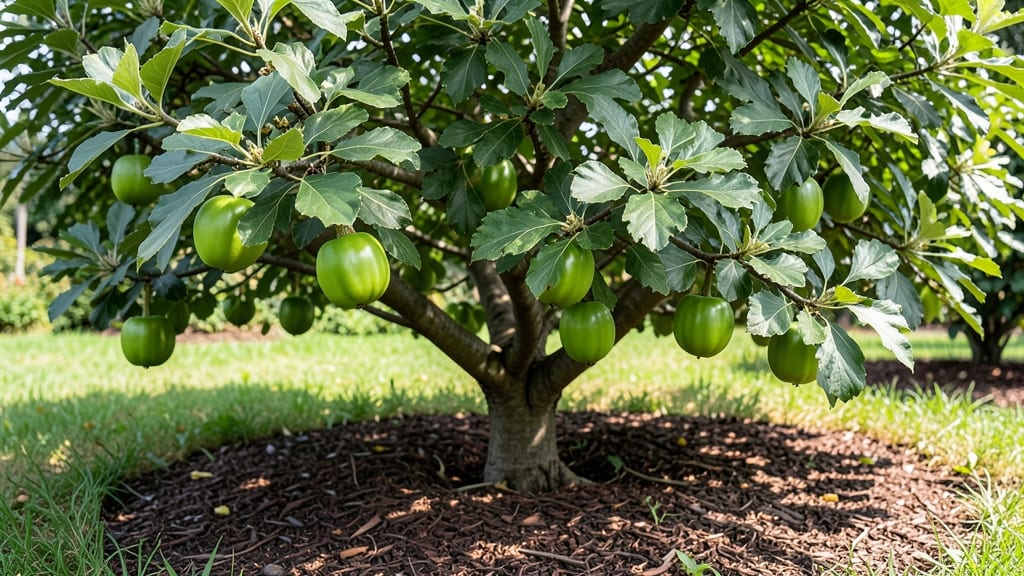
Your persimmon tree’s green fruit might be the most frustrating gardening mystery—until you know the real reasons behind it. 🌿 I’ve spent years watching persimmons stubbornly cling to their green phase, and the fixes aren’t always what you’d expect.
Some varieties need cold nights to trigger ripening, while others just need better pruning to balance growth and fruit development.
First, check your variety: astringent types (like Hachiya) turn orange and soften before they’re ripe, while non-astringent (Fuyu) stay firm and turn orange without the cold requirement. If your tree’s been producing green fruit for years, it might need thinner branches—overgrowth delays ripening by shading fruit.
Prune in late winter to open the canopy and improve airflow.
Climate plays a huge role: persimmons need 200-300 chill hours (below 45°F) to set fruit properly. Without enough cold, fruit stays green and tasteless. If your area’s too warm, consider a later-ripening variety or shade cloth to slow growth until fall. The payoff? Sweet, jelly-like fruit that’s worth the wait.
Don’t forget pests—aphids and spider mites can stress trees, stunting fruit development. A strong blast of water or neem oil usually clears them up. With the right adjustments, your tree will finally drop those green fruits in favor of ripened, ready-to-eat ones—just in time for harvest season.
📚 In This Guide
- What you need
- Instructions
- Tips and common mistakes
- Wrapping up and next steps
What you need
- ● Pruning shears: Bypass pruners (for cuts under ½ inch thick) – 1 pair (e.g., Felco F-2 or similar).
- ● Loppers: For branches ½ to 2 inches thick – 1 pair (e.g., Corona or Fiskars).
- ● Pruning saw: For thicker branches (2+ inches) – 1 saw (e.g., Fiskars or Bahco).
- ● Disinfectant: 70% isopropyl alcohol or a 10% bleach solution (to sterilize tools between cuts) – small bottle.
- ● Gloves: Heavy-duty, cut-resistant gloves (e.g., Mechanix or leather work gloves) – 1 pair.
- ○ Pruning sealant: Optional but recommended (e.g., Tanglefoot Tree Wound Pruning Seal) – small tube.
- ● Ladder or step stool: Sturdy, tall enough to reach branches safely – 1 unit.
- ● Sharpie or marking pen: For labeling branches (if grafting or training) – 1 pen.
- ● Trash bags: Heavy-duty for debris disposal – 2-3 bags.
- ● Hand saw: For precision cuts on stubborn branches.
- ● Extension pole pruners: For high branches (saves ladder use).
- ● Pruning rope: To support weak branches temporarily.
- ● Safety glasses: Protects eyes from debris.
- ● Notebook & pen: To track pruning notes (e.g., branch sizes, dates).
How to prune a persimmon tree for healthy fruit development
Pruning transforms a persimmon tree from a tangled mess into a productive, fruit-bearing powerhouse.
✂️ Step 1: Prune in Late Winter Before Bud Break
Timing is everything with persimmons. I always prune in late winter—right after the last frost date but before buds swell. This ensures the tree isn’t stressed during dormancy, and you avoid spreading diseases that thrive in wet spring conditions. Look for dormant branches that are easy to identify—they’ll be bare and leafless, with no visible buds.
Use clean, sharp pruning shears to make cuts at a 45-degree angle just above a bud or branch collar. Avoid leaving stubs, as they invite rot and disease. If you’re dealing with larger branches over ½ inch thick, switch to a pruning saw for clean cuts. The goal is to remove dead, diseased, or crossing branches first—these are the tree’s weak points and should go before anything else.
🌿 Step 2: Open the Canopy for Sunlight and Airflow
Persimmon trees need full sun to develop sweet, flavorful fruit, so your next step is to thin the canopy. I focus on removing branches that rub against each other or grow inward—these create wounds and block sunlight. Start at the center of the tree and work outward, cutting back branches that are too dense or growing at odd angles. Aim to leave an open, vase-like shape with branches spaced 12-18 inches apart.
Watch for suckers—those vigorous shoots sprouting from the base or along the trunk. These steal energy from fruit production, so snip them off at the base. If you see water sprouts (straight, vertical shoots), remove them too—they’re a sign of excess energy going to growth instead of fruit. The tree should look balanced, with no single branch dominating the structure.
☀️ Step 3: Encourage Fruit-Bearing Branches
Persimmon trees bear fruit on mature wood, so your pruning should preserve and encourage branches that are at least 2-3 years old. Look for horizontal or slightly upward-growing branches—these are prime candidates for fruit production. If you see long, whippy growth with no fruit, it’s time to shorten it by ⅓ to promote bushier, fruit-bearing growth.
Here’s the thing—persimmons produce more fruit on older wood, so avoid over-pruning. I never remove more than 20-25% of the tree’s foliage in a single year. If you see fruit buds (small, rounded swellings on branches), leave those branches alone—they’re your future harvest. Instead, focus on thinning out competing branches to give the fruit-bearing wood more energy.
⏰ Step 4: Post-Pruning Care for Recovery
After pruning, the tree needs time to heal before the growing season kicks in. I always water deeply within a week of pruning to help the tree recover and avoid fertilizing until new growth appears—usually in late spring. The open wounds from pruning are vulnerable to bacterial infections, so I apply a wound dressing (like pruning sealant) to larger cuts over ½ inch thick. For smaller cuts, let them heal naturally—they’ll callus over better without interference.
Keep an eye out for new shoots emerging from the pruning cuts. These are called epicormic shoots, and while they’re not harmful, they can divert energy. If they appear in large numbers, trim them back to 3-4 inches to redirect the tree’s focus to fruit production. The first true leaves of spring will tell you whether your pruning was successful—healthy leaves mean the tree is recovering well.
Tips & tricks for pruning persimmon trees
These essential strategies will help you maximize fruit production while keeping your persimmon tree healthy and thriving.
Timing is Critical: The late winter window—right after the last frost but before buds swell—is non-negotiable. This timing prevents stressing the tree during dormancy and avoids spreading fungal diseases that thrive in spring's wet conditions. I've seen trees stressed by early pruning fail to produce fruit that season, so don't rush this step. Check your local frost dates and mark your calendar—this precise timing makes all the difference.
Clean Tools Prevent Disease: Your pruning tools should be as sharp as they are clean. Before you begin, sterilize your shears and saw with rubbing alcohol or a 10% bleach solution. I learned this the hard way after seeing a previously healthy tree develop cankers from contaminated tools. Disinfect between cuts on different branches, especially when moving from diseased to healthy wood. This simple step can save your tree from costly infections.
Shape Matters for Fruit Production: Aim for that open vase shape with branches spaced 12-18 inches apart. This spacing isn't arbitrary—it allows sunlight to penetrate to the inner branches where fruit develops. I always start pruning from the center and work outward, removing branches that grow inward or cross others. The goal is to create a structure where every branch gets equal access to sunlight and air circulation, which directly impacts fruit sweetness and yield.
Post-Pruning Care Determines Success: The work doesn't end when you put down your pruners. Within a week of finishing, give your tree a deep watering to help it recover. I've found that applying wound dressing to cuts over ½ inch thick prevents bacterial infections that can enter through fresh wounds. For smaller cuts, resist the urge to seal them—letting them callus naturally actually helps the tree heal better. Monitor for epicormic shoots (those little sprouts that appear near cuts) and trim them back to 3-4 inches to maintain the tree's energy focus on fruit production.
Pro Tips for Persimmon Tree Green Fruit
- These essential strategies will help you maximize fruit production while keeping your persimmon tree healthy and thriving.
- Timing is Critical: The late winter window—right after the last frost but before buds swell—is non-negotiable.
- Clean Tools Prevent Disease: Your pruning tools should be as sharp as they are clean.
Frequently asked questions
Why is my persimmon fruit still green when others are ripe?
Persimmon fruit turns green to protect itself from pests and harsh weather. Asian varieties (like Fuyu) ripen while still firm and orange, but American persimmons (e.g., American Persimmon) stay green until fully soft and jelly-like. Check the tree’s maturity—young trees may take 3–5 years to produce ripe fruit.
How do I know when to prune for the best fruit production?
Prune late winter or early spring (before buds swell) to shape the tree and remove dead wood. For heavy fruit set, thin out crowded branches in summer after fruiting begins. Avoid pruning in fall—it stresses the tree and attracts pests. Pro tip: Use clean, sharp tools to prevent disease!
Can I eat green persimmon fruit? Is it safe?
Most green persimmons are inedible raw—they’re packed with tannins, which cause a bitter, astringent taste and can upset your stomach. Wait until the fruit is fully ripe (soft like a peach or firm like a tomato) to enjoy. Asian persimmons can be eaten firm, but American varieties must be very soft.
What should I do if my persimmon tree isn’t fruiting after pruning?
Several factors could be at play:
- Age: Young trees (under 3–5 years) focus on growth, not fruit.
- Variety: Some persimmons are dioecious (need male and female trees). Check your tree’s type!
- Pruning errors: Over-pruning reduces energy for fruit. Aim for 20–30% removal of old/diseased wood.
- Pollination: Hand-pollinate if bees aren’t visiting (use a small brush to transfer pollen).
Can I prune too much? What are the signs?
Yes! Over-pruning weakens the tree, leading to:
- Fewer leaves (less energy for fruit).
- Thin, sparse canopies (sunburn risk).
- Stunted growth or no fruit at all.
Wrapping up and next steps
Your persimmon tree is now ready to thrive! 🌱 By mastering the art of pruning—removing dead branches, thinning for airflow, and shaping for sunlight—you’ve set the stage for a bountiful harvest of sweet, ripe persimmons.
Remember, consistency is key: a little care now means fewer struggles later, and those green fruits will soon turn into delicious rewards.
Ready to take the next step? Mark your calendar for seasonal pruning sessions and keep an eye on your tree’s growth. With patience and practice, you’ll be enjoying homegrown persimmons in no time—and maybe even sharing tips with fellow gardeners! 🍂✨