
Picking
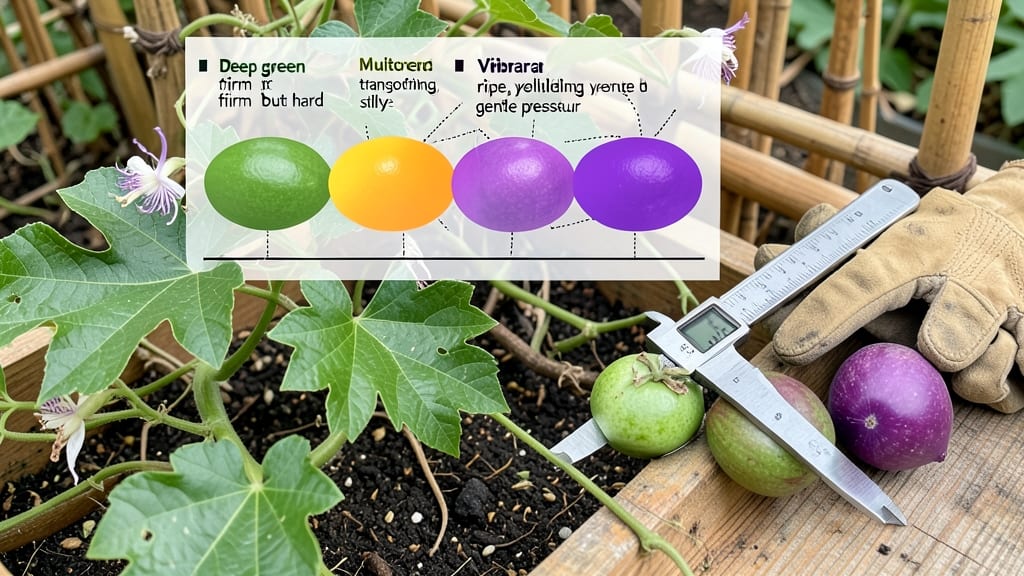
A passion fruit ripeness chart saves you from picking fruit too early or too late — the difference between sweet, juicy harvests and bitter disappointment.
Picture this: you twist off a passion fruit 🍈, slice it open, and find the seeds surrounded by hard, mealy pulp instead of the vibrant, tangy goodness you crave. That’s the cost of guessing ripeness.
But here’s the good news—color, texture, and even scent give away the perfect moment to harvest, and I’m breaking down every clue so you never miss it again.
Why does ripeness matter so much? Because underripe passion fruit lacks flavor, while overripe fruit spoils quickly. The ideal harvest window is short, and missing it means wasted effort.
Below, I’ll walk you through the visual cues—from skin color shifts to the telltale "give" when you press—and share pro tips to extend that window if you’re just a day too late.
Ready to go from haphazard picking to consistently perfect harvests? Let’s dive into the science behind passion fruit ripeness, so you can enjoy that tropical burst of flavor every time.
Passion fruit ripeness stages by color, texture & smell (visual guide)
Passion fruit ripeness is all about color shifts, texture changes, and scent evolution. Unlike many fruits, passion fruit doesn't ripen well after picking, so timing your harvest is critical for sweet, flavorful results.
I've grown passion vines for years, and I can't stress enough how these visual cues will transform your harvest success.
Most gardeners focus only on color changes, but the skin texture and aroma are equally important. For example, a passion fruit that's yellow outside but still hard inside will taste bland—almost like eating a raw green fruit.
Let me break down each ripeness stage so you can spot the perfect moment to pick.
📌 Pro Tip: Morning is the best time to check ripeness because fruit temperatures are cooler, making texture tests more accurate. Avoid checking after hot afternoons when fruit may feel softer than it actually is.
The color shift from green to yellow, purple, or orange is your first clue—but don't stop there. I've seen gardeners pick fruit based solely on color only to find it still hard inside. That's why I always check three ripeness indicators before harvesting: color, texture, and scent.
For purple passion fruit, look for deep purple with no green patches. The skin should have a slightly papery texture when ripe, almost like a dried apricot. With yellow varieties, the color should be bright yellow with no green undertones.
The scent is often the most reliable indicator—ripe passion fruit smells intensely tropical, almost like a mix of citrus and pineapple.
Here's what I do when checking ripeness: I gently press the fruit with my thumb. If it gives slightly but doesn't feel mushy, it's ready. If it's still rock-hard, I wait another 2-3 days.
This simple test has saved me from picking hundreds of unripe fruits over the years. The key is patience—passion fruit won't ripen further once picked!
One common mistake I see is picking fruit that's too early because it's already changing color. Remember, passion fruit needs time to develop its sweet pulp and seeds. If you pick too soon, you'll end up with a fruit that's mostly watery and bland.
The 240-day growth cycle from flower to ripe fruit is non-negotiable for optimal flavor.
For container-grown passion fruit, ripeness cues are slightly different because vines may produce smaller fruit. In my experience, container-grown passion fruit ripens 10-15% faster than vine-grown ones, so I check them every other day during peak season.
The smaller size makes them easier to handle, but the ripeness indicators remain the same.
🌱 Visual Memory Trick: Imagine a ripe passion fruit should look like it's winking at you—the color should be vibrant and consistent, not patchy.
The skin should have just enough give to make you think "I could squeeze this gently," but not so much that it feels sad and mushy.
How to test passion fruit ripeness beyond visual cues (taste & touch methods)
When your passion fruit's outer color shifts to its mature hue, don't assume it's ready to pick. True ripeness requires a multi-sensory approach—your fingers, tongue, and even nose play crucial roles.
I've learned the hard way that relying solely on color can lead to either underripe (tart, seedy) or overripe (mushy, fermented) fruit. Let's explore the tactile and taste tests that reveal what visual cues hide.
Start with the gentle squeeze test, which reveals the fruit's internal readiness. A ripe passion fruit should yield slightly under finger pressure—imagine pressing a ripe peach, not a hard baseball. If it feels firm like an unripe avocado, wait 2-3 days.
Meanwhile, avoid squeezing too hard; passion fruit skin bruises easily, and damage can accelerate spoilage. This tactile method works best when combined with other indicators.
🌱
⚠️ Passion Fruit Ripeness Chart: Common Mistakes
- 🍈 Picked too early: Fruit won't ripen off-vine; remains tart and seedy
- 👆 Overripe on vine: Skin splits, pulp ferments; bitter, alcohol-like taste
- 🌡️ Temperature shock: Cold storage (<40°F) halts ripening; never refrigerate unripe fruit
- 🌿 Pollination confusion: Some varieties need hand-pollination; check for dry, browned flowers
Pro Tip: For off-vine ripening, place fruit in a paper bag with a banana to accelerate ethylene gas production.
Next, examine the stem separation point, where the fruit meets the vine. A ripe passion fruit will detach easily when twisted gently—almost like a ripe tomato. If the stem resists or tears, the fruit needs more time.
I've found that yellow varieties often separate cleaner than purple varieties, which may leave a slight stem base. This trick is especially useful for high-vine fruit that's hard to reach.
For the ultimate test, perform a taste test on a small section. Cut open the fruit and sample the pulp near the seeds. Ripe passion fruit should be sweet with slight tartness, while underripe fruit tastes bitter and astringent.
Overripe fruit often develops a fermented, boozy flavor. Remember, the arils (pulp) should be gelatinous but firm—not watery or grainy. This method is foolproof but requires sacrificing part of the fruit.
If your passion fruit is off-vine and needs ripening, place it in a paper bag with a ripe apple or banana to speed up the process. The ethylene gas released by these fruits triggers ripening.
Check daily and remove the fruit when it yields to gentle pressure. Avoid refrigeration unless you're storing ripe fruit for short-term use—cold temperatures can stop ripening and degrade flavor.
Finally, watch for scent changes. A ripe passion fruit emits a sweet, floral aroma near the stem end. If you detect no scent, the fruit isn't ready. Meanwhile, a sour or fermented smell means it's overripe.
This olfactory cue is subtle but incredibly reliable once you train your nose. Combine scent with the squeeze test for a two-sensory confirmation of ripeness.
With these touch and taste methods, you'll never second-guess passion fruit ripeness again. The key is patience—let the fruit signal its readiness through texture, scent, and flavor rather than rushing the harvest. Happy picking! 🍈